Blog

  • Things to Do in Tromsø, Norway: The Complete 2026 Travel Guide

    Things to Do in Tromsø, Norway: The Complete 2026 Travel Guide

    Wondering about the best things to do in Tromsø? Norway’s Arctic capital sits roughly 350 km north of the Arctic Circle, and it is the country’s premier base for two opposite kinds of magic: chasing the northern lights through the long polar winter, and living through 24-hour daylight under the midnight sun in summer. Around those, you get dog sledding, whale watching, fjord cruises, Sami culture, easy mountain hikes and a food-and-bar scene far livelier than a town of 42,000 has any right to have. Here’s everything I’d tell a friend before they booked.

    I’ve come back to Tromsø in three different seasons now, and the thing I always end up explaining is that it isn’t one destination — it’s two, depending on when you land. Come between late September and early April and you’re here for snow, darkness and aurora. Come between late May and mid-July and you’re here for green mountains, blue fjords and a sun that never sets. This guide covers both, with real prices in Norwegian kroner (and rough US dollars), honest takes on what’s worth your money, and the practical details most articles skip. If you’re still deciding where Tromsø fits into a bigger trip, it pairs naturally with the rest of the things to do in Norway.

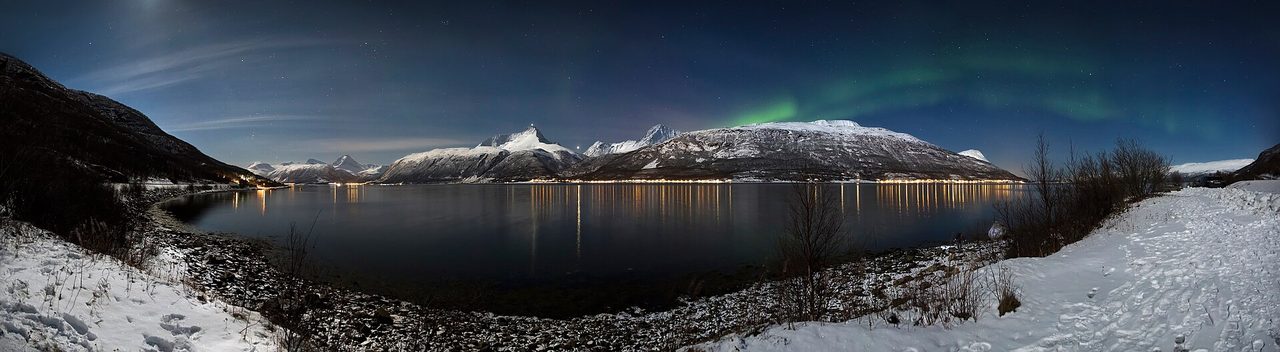
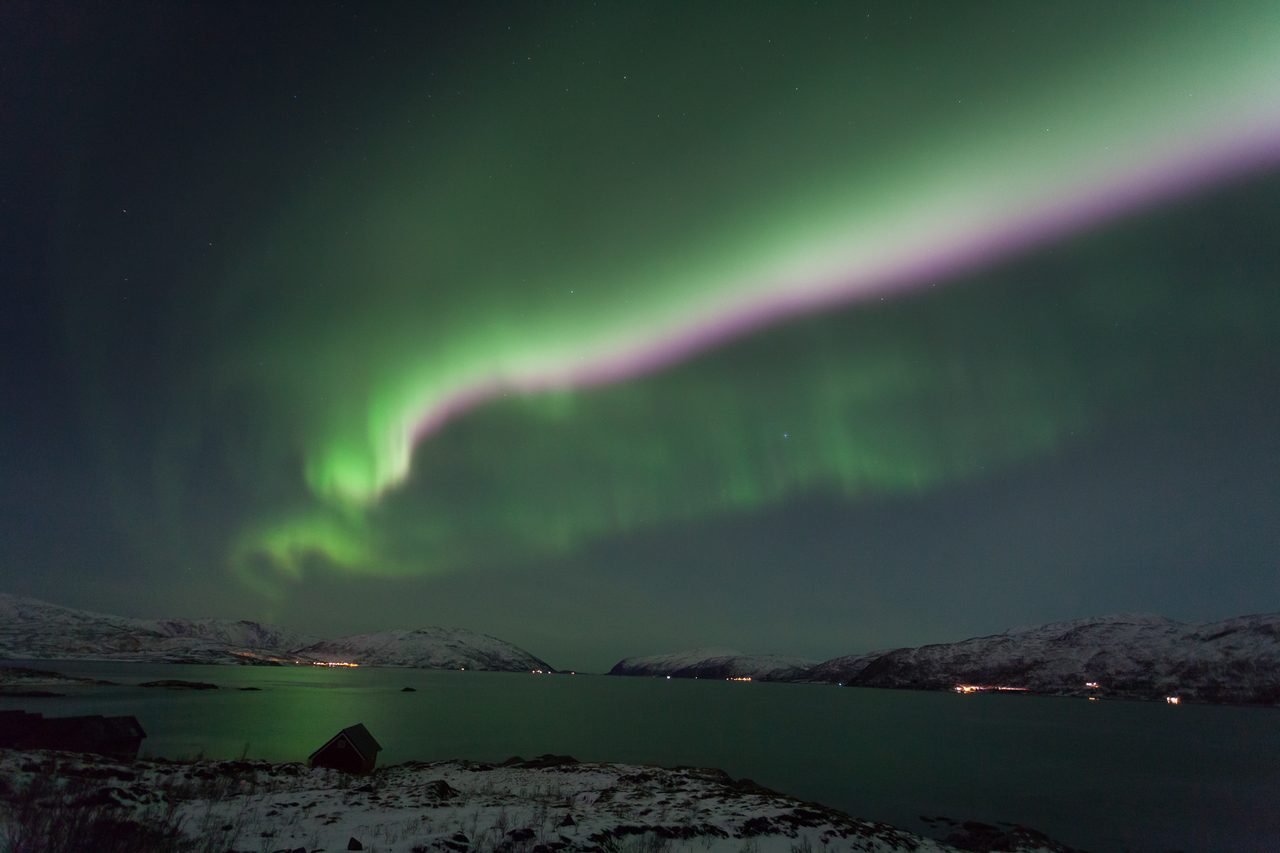
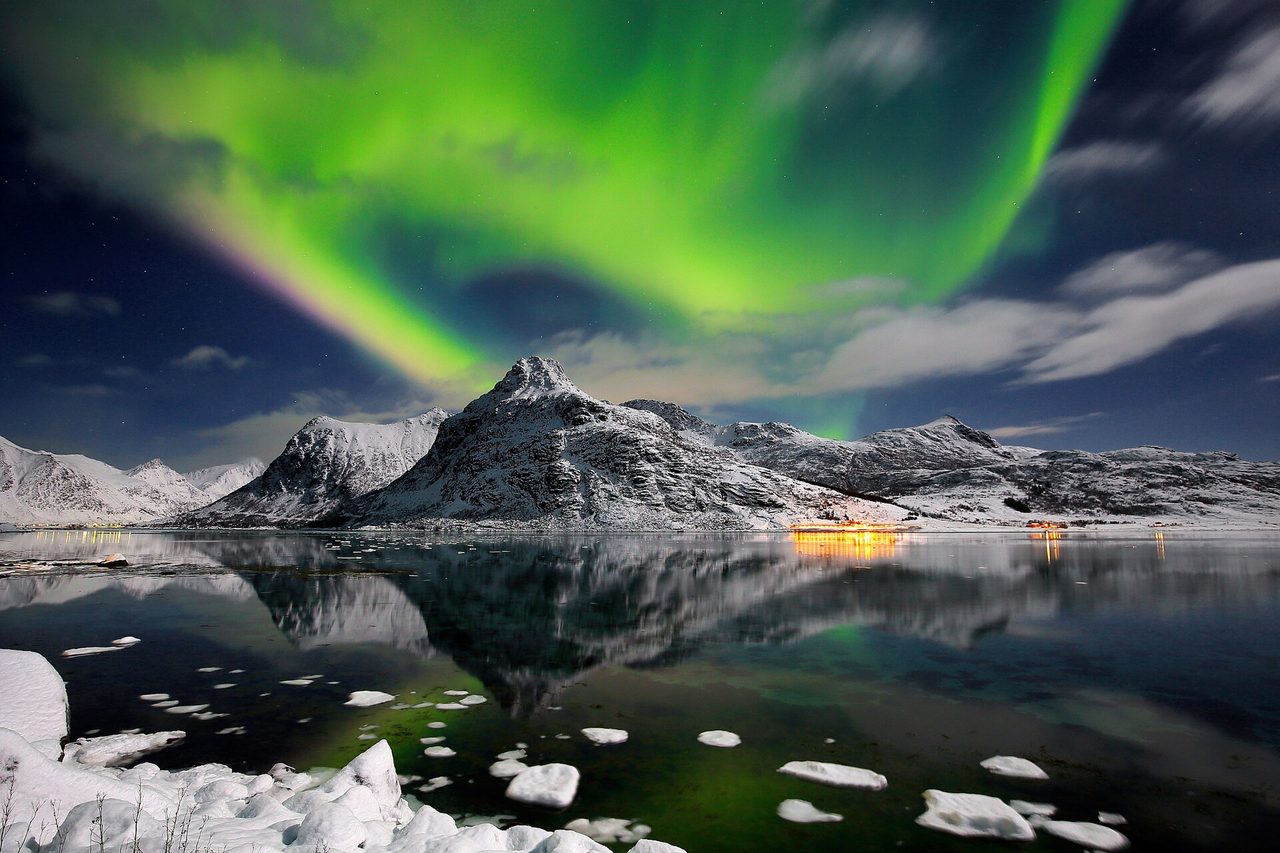
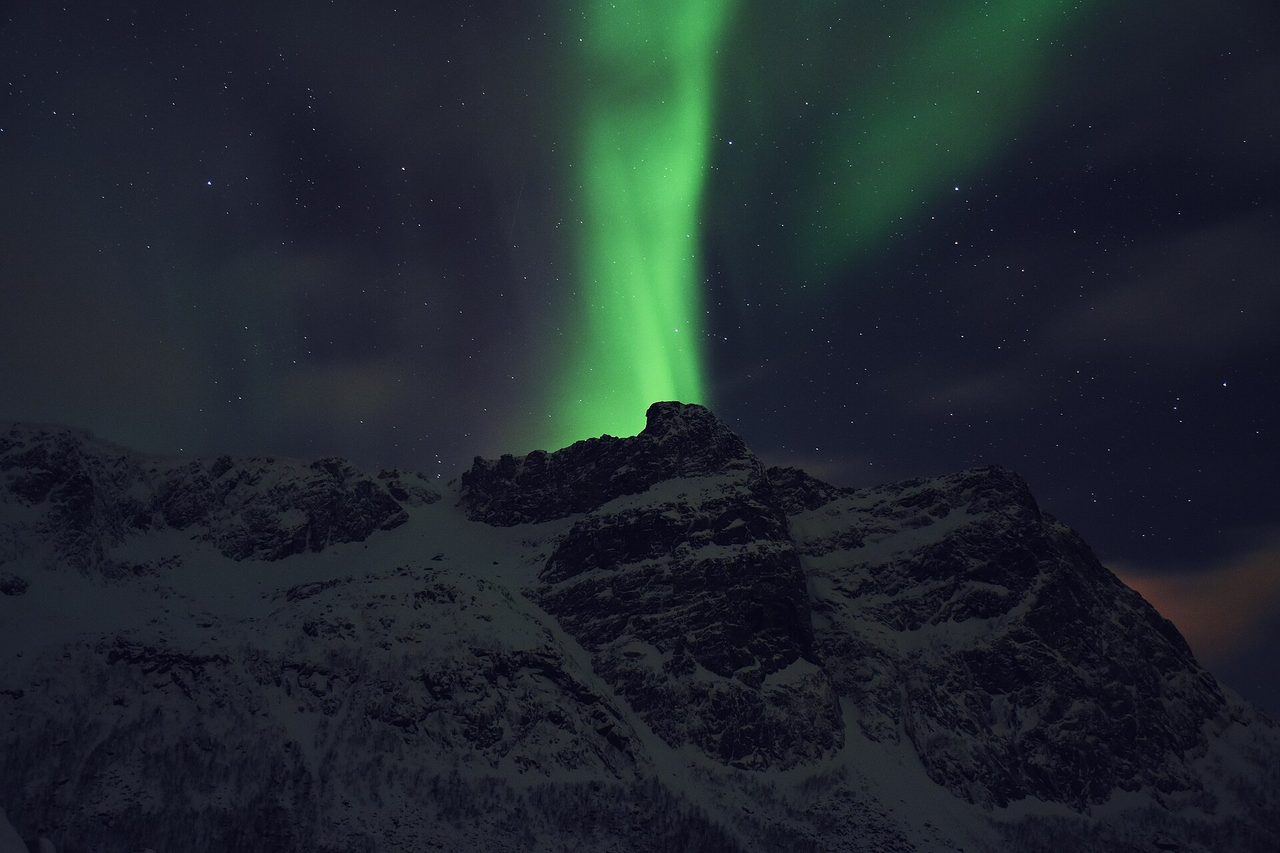
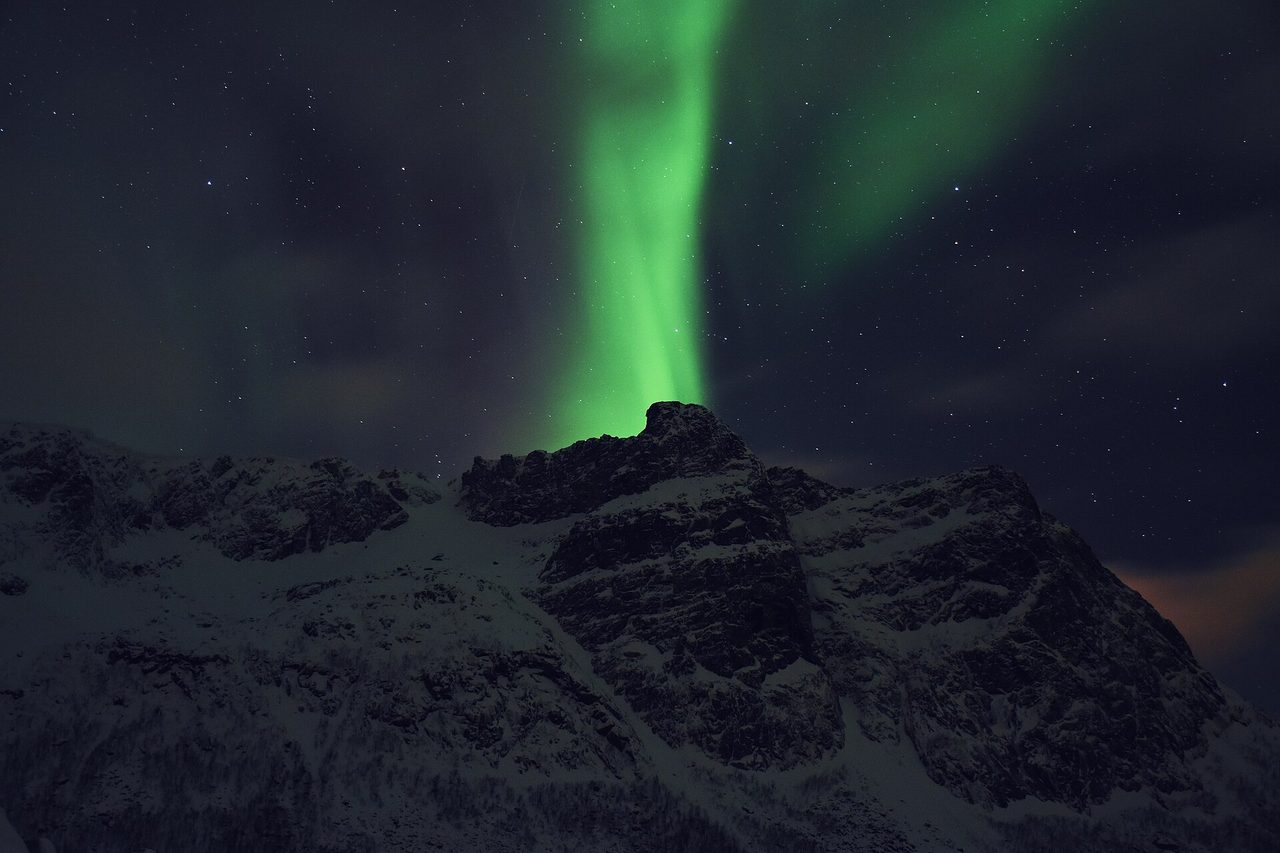
    Northern lights over Tromsø, one of the best things to do in Tromsø in winter

    Tromsø at a Glance

    Before we get into specifics, here’s the quick orientation I wish someone had handed me on my first visit.

    Detail What to know
    Where Northern Norway, 69.6°N — over 300 km (190 mi) north of the Arctic Circle, on the island of Tromsøya
    Population ~42,000 in the town, ~78,000 in the wider municipality — Norway’s biggest city in the Arctic
    Getting there Fly into Tromsø Airport (TOS); ~2 hours nonstop from Oslo. No train reaches Tromsø.
    Northern lights season Roughly late September to early April
    Midnight sun Roughly 20 May to 22 July
    Polar night Roughly 27 November to 15 January (sun never clears the horizon)
    Currency Norwegian krone (NOK). Card and phone payments accepted virtually everywhere — you rarely need cash.
    Language Norwegian (and Northern Sami); English is spoken fluently almost everywhere
    How long to stay 3–4 days for the city and a couple of big excursions; more if you add Senja, Alta or Svalbard

    Why Visit Tromsø? The “Paris of the North”

    Tromsø picked up the nickname “Paris of the North” back in the 1800s, when visitors expected a frozen fishing outpost and instead found people in proper fashion, speaking several languages, running a brewery and a busy cultural life. The wealth came from the Arctic — fish, fur and the expedition trade — and the town traded directly with Europe rather than through the south. That outward-looking, slightly cosmopolitan streak is still there. For a place this far north, Tromsø is remarkably switched-on: a real university, a serious coffee culture, good restaurants, and bars that stay loud well past midnight.

    What pulls most people here, though, is nature on a dramatic scale. The town sits on a small island between the mainland mountains and the open coast, so you’re never more than a few minutes from a fjord, a peak or a beach. It is one of the most reliable places on earth to see the aurora, one of the easier places to experience genuine Sami culture, and a launchpad for some of the wildest country in Europe — Senja, the Lyngen Alps, the North Cape and even Svalbard. If you only have time for one slice of the Arctic, Tromsø is the most rewarding and the least complicated way in.

    Best Time to Visit Tromsø

    This is the single most important decision you’ll make, because Tromsø in January and Tromsø in June are almost unrecognisable from each other. There is no “best” time in the abstract — there’s only the best time for what you want to see. And the one thing you can’t do is combine the two headline events: the northern lights need darkness, the midnight sun is the absence of it, so you’ll never catch both on the same trip. For the bigger national picture of seasons and weather, I’d pair this with our guide to the best time to visit Norway.

    Winter (October to March): northern lights and snow

    This is peak season, and for good reason. From roughly late September the skies are dark enough for aurora, and by December Tromsø is properly wintry — snow on the streets, husky tours running, the harbour steaming in the cold. The trade-off is daylight, or the lack of it. During the polar night (about 27 November to 15 January) the sun never rises above the horizon, though you still get several hours of soft blue twilight around midday, which is genuinely beautiful rather than depressing. December to February is the busiest and most expensive stretch; book flights, hotels and tours well ahead.

    Summer (late May to mid-July): the midnight sun

    The flip side. From around 20 May to 22 July the sun simply doesn’t set, and the whole rhythm of the place changes — people hike at midnight, the cafés spill outside, and the mountains turn green and walkable. Temperatures are cool (think 12–16°C / 54–61°F), it can be grey and wet, but the light is extraordinary and the crowds are thinner than the aurora months. This is the season for hiking, kayaking, fjord trips and long drives out to Senja. Bring an eye mask — sleeping when it’s bright at 1am takes some getting used to.

    Shoulder seasons (April and September–October): the sweet spot

    The locals’ quiet secret. Late September into October still gives you aurora-dark nights but with autumn colour, milder weather and lower prices. April keeps the snow and the lights while the days lengthen fast. If you want the northern lights without paying December rates, aim for late September or March–April.

    Winter (Oct–Mar) Summer (late May–mid-Jul)
    Headline draw Northern lights, snow, polar night Midnight sun, green mountains
    Daylight Very little (polar night Nov–Jan) 24 hours
    Typical high temp −3 to −6°C (21–27°F) 12–16°C (54–61°F)
    Signature activities Aurora chase, dog sledding, whale watching, snowmobiling Hiking, kayaking, fjord cruises, road trips
    Crowds & prices Highest Dec–Feb Busy but cheaper than peak winter
    Best for First-timers chasing the lights Hikers, drivers, light sleepers welcome

    How Many Days Do You Need in Tromsø?

    My honest answer is three to four days, or four nights if the northern lights are the point of the trip. Here’s the reasoning. The city itself — the cable car, the Arctic Cathedral, a museum or two, a good dinner — fills a comfortable day. Each big excursion (an aurora chase, a dog-sledding morning, a whale safari, a fjord cruise) eats most of another. And aurora is a numbers game: the more nights you’re under a dark sky, the better your odds, because any single night can be clouded out. Two nights is a gamble; four nights and you’d be unlucky to miss it entirely.

    If you’re tighter on time, two full days will still give you the highlights and one aurora attempt — just go in knowing the lights might not cooperate. If you’ve got a week, you can fold in a far-north extension: Senja for scenery, Alta for Sami culture and the ice hotel, or a flight up to Svalbard. I’d resist trying to cram all of it in; the Arctic rewards slowing down, and the weather will make some decisions for you anyway.

    Top Things to Do in Tromsø in Winter

    Winter is when Tromsø does its party trick, and almost everything below runs from roughly November through March. A word on cost before we start: guided excursions here are not cheap — most sit somewhere between 1,200 and 2,700 NOK (around $110–250) per person (for a country-wide comparison of guided experiences and operators, see our Norway tours and excursions guide) — and they’re the single biggest line on a Tromsø budget. Pick two or three that genuinely excite you rather than trying to do everything.

    See the Northern Lights

    This is the reason most people come, and Tromsø is about as good a base as exists. Sitting at 69.6°N, the city is parked right under the auroral oval — the ring around the magnetic pole where the lights are most active — which means you can see a decent display even on a quiet night for solar activity. The official line from Visit Tromsø is that there’s a good chance of aurora from September until early April, and that matches my experience.

    The big question is whether to join a tour or try it yourself. On a clear, active night you can absolutely see the lights from the edge of town — walk away from the streetlights toward the water and look north. But the enemy is rarely the aurora; it’s cloud. That’s the case for a “chase” tour: a guide watches the forecast and drives, sometimes for hours and occasionally all the way to the Finnish or Swedish border, to find a hole in the cloud. A typical small-group chase runs about 1,500–2,500 NOK ($140–235) and usually includes pickup, warm thermal suits, hot drinks around a fire, and the guide taking proper long-exposure photos of you under the lights. Budget bus tours start nearer 1,350 NOK ($125).

    Two pieces of honesty that the tour-booking pages won’t tell you. First, no one can guarantee the aurora — it’s weather plus solar activity, and some nights simply don’t deliver, so build in more than one chance and treat a sighting as a gift rather than a given. Second, the lights often look more dramatic in photographs than to the naked eye, especially when activity is low; your camera’s sensor gathers light your eyes can’t. None of that should put you off — when a strong display goes off overhead, nothing prepares you for it — but go in with calibrated expectations. For the science, the KP index, camera settings and a deeper how-to, see our full guide to the northern lights in Norway.

    Go Dog Sledding

    If you do one snow activity, make it this. Being pulled across a white plateau by a team of huskies, with nothing but the hiss of the runners and the dogs’ breathing, is the kind of thing that justifies the whole trip. Operators offer two versions: you ride as a passenger while a guide drives, or you learn to drive your own team (more expensive, far more fun). A short taster starts around 845 NOK ($79); a proper self-drive half-day with hotel transfer typically runs 1,800–2,700 NOK ($170–250), often paired with a visit to a wilderness camp like Camp Tamok and a hot meal. Cuddling the puppies afterwards is, regrettably, included at no extra charge.

    Meet Reindeer and Sami Culture

    Reindeer have been herded by the Sami — the Indigenous people of northern Scandinavia — for centuries, and several Sami-owned operators near Tromsø offer reindeer sledding, feeding, a meal in a lavvu (the traditional tent) and storytelling around the fire. Tromsø Arctic Reindeer, which is Sami-run, charges roughly 1,690–2,090 NOK ($158–195) depending on the length of the sled ride. My one piece of advice: choose a Sami-owned operator rather than a generic “Sami experience” bolt-on. The difference between a respectful cultural exchange and a slightly awkward bit of theatre comes down to who’s actually telling the story, and the money staying in the community matters.

    Go Whale Watching

    From roughly November to late January, humpback whales and orcas follow the herring into the fjords north of Tromsø, and the whale-watching season kicks off. One important caveat that trips a lot of visitors up: the whales have, in recent years, mostly gathered around Skjervøy, a couple of hours north of the city, rather than in Tromsø’s own harbour. So most tours are either a long boat day from Tromsø (6–8 hours) or a bus-plus-boat combination via Skjervøy that can run close to 12 hours. Prices land around 1,800–3,200 NOK ($170–300) depending on the boat. Where the whales are shifts year to year, so check the current situation when you book, and pick a calm day if you’re prone to seasickness — the open water up here does not mess around.

    Try Snowmobiling, Snowshoeing and the Ice Domes

    Beyond the headline acts, there’s a long tail of winter activities. Snowmobiling at Camp Tamok (about 90 minutes inland, where the weather is colder and clearer than the coast) runs from roughly 2,245 NOK ($210) and gets you out across frozen lakes and forest. Snowshoeing and guided winter hikes are a quieter, cheaper way to reach a viewpoint. One change to know about: the Tromsø Ice Domes, the snow hotel rebuilt inland each winter, is pausing for the 2026/27 season — if sleeping on ice is on your list, look to Alta or Kirkenes instead, and see our full guide to things to do in Norway in winter for every option. King-crab cruises, ice fishing and reindeer-spotting trips round out the menu; most can be booked the day before through Visit Tromsø or directly with operators.
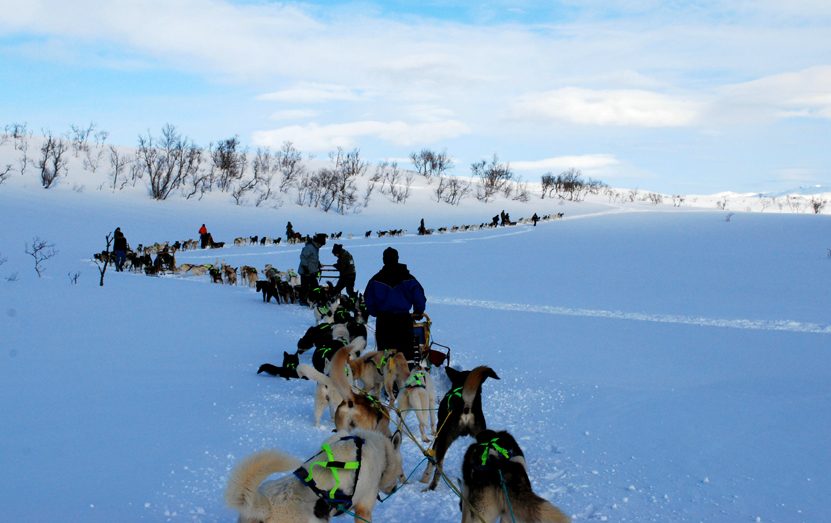
    Dog sledding with a team of huskies across the snow, a classic Arctic Norway winter excursion

    Top Things to Do in Tromsø in Summer

    Swap the snowsuit for hiking boots. From late May to mid-July the midnight sun is the headline, but the real gift of summer is access — the mountains are clear, the fjords are calm, and you can be outside at any hour. This is my preferred season for actually exploring, as opposed to chasing.

    Experience the Midnight Sun

    It sounds gimmicky until you’re standing on a summit at 11pm in full daylight, and then it reframes how you think about a day. The sun is above the horizon non-stop from roughly 20 May to 22 July, and there’s genuinely no darkness in Tromsø from late May to mid-July. Locals make the most of it with midnight hikes, late-evening boat trips and the famous Midnight Sun Marathon each June. The best free version: ride or hike up to Storsteinen near midnight and watch the sun skim along the horizon without dipping below it.
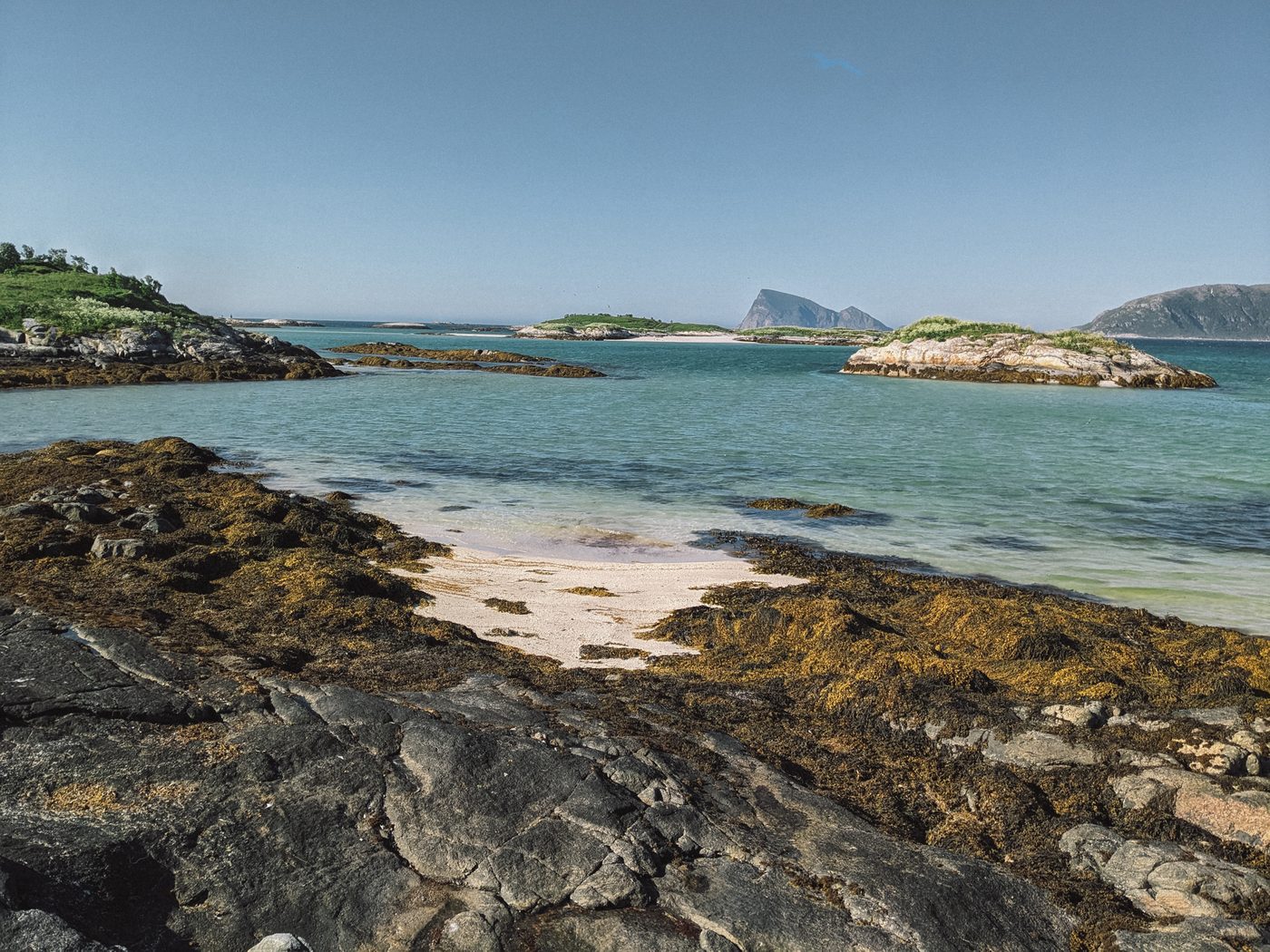
    White-sand beaches and turquoise water at Sommarøy near Tromsø in the Arctic summer

    Hike from the Summit to the Sea

    Tromsø’s signature summer walk goes up the mountainside behind the Arctic Cathedral via the Sherpa Stairs (Sherpatrappa) — 1,203 stone steps hand-built by Nepalese Sherpas — toward Fløya and the Storsteinen viewpoint at 421 m. It’s a proper calf-burner but doable in about 40 minutes to an hour, with the whole city and fjord opening up beneath you. The stairs are usually snow-free from June to October. If your legs object, the cable car (below) does the same climb in four minutes, and you can always walk down. For gentler options, the area around the city has several easy coastal and forest walks.

    Get on the Water: Kayaking, Fjord Cruises and Fishing

    Summer is fjord season. Sea-kayaking trips paddle the calm waters around the islands, sometimes timed for the midnight sun. Fjord cruises — increasingly on silent hybrid-electric boats that don’t scare off the wildlife — get you out among sea eagles and porpoises, and a sea-fishing trip is both an activity and, often, dinner. These run roughly 1,000–1,800 NOK ($95–170). The scenery out here is the same drama that makes the rest of Norway’s fjords world-famous, just with far fewer cruise ships than the south.

    Relax at Telegrafbukta Beach

    Yes, Tromsø has a beach, and yes, people swim — briefly. Telegrafbukta, on the southwest tip of the island, is a grassy park-and-shoreline that fills with locals barbecuing and sunbathing on the long summer evenings. The water is bracing (this is the Arctic), but on a warm June day it’s the most relaxed corner of the city and a lovely free way to spend an evening under the never-setting sun.

    Things to Do in Tromsø Year-Round

    These don’t care what season it is — they’re good whenever you visit.
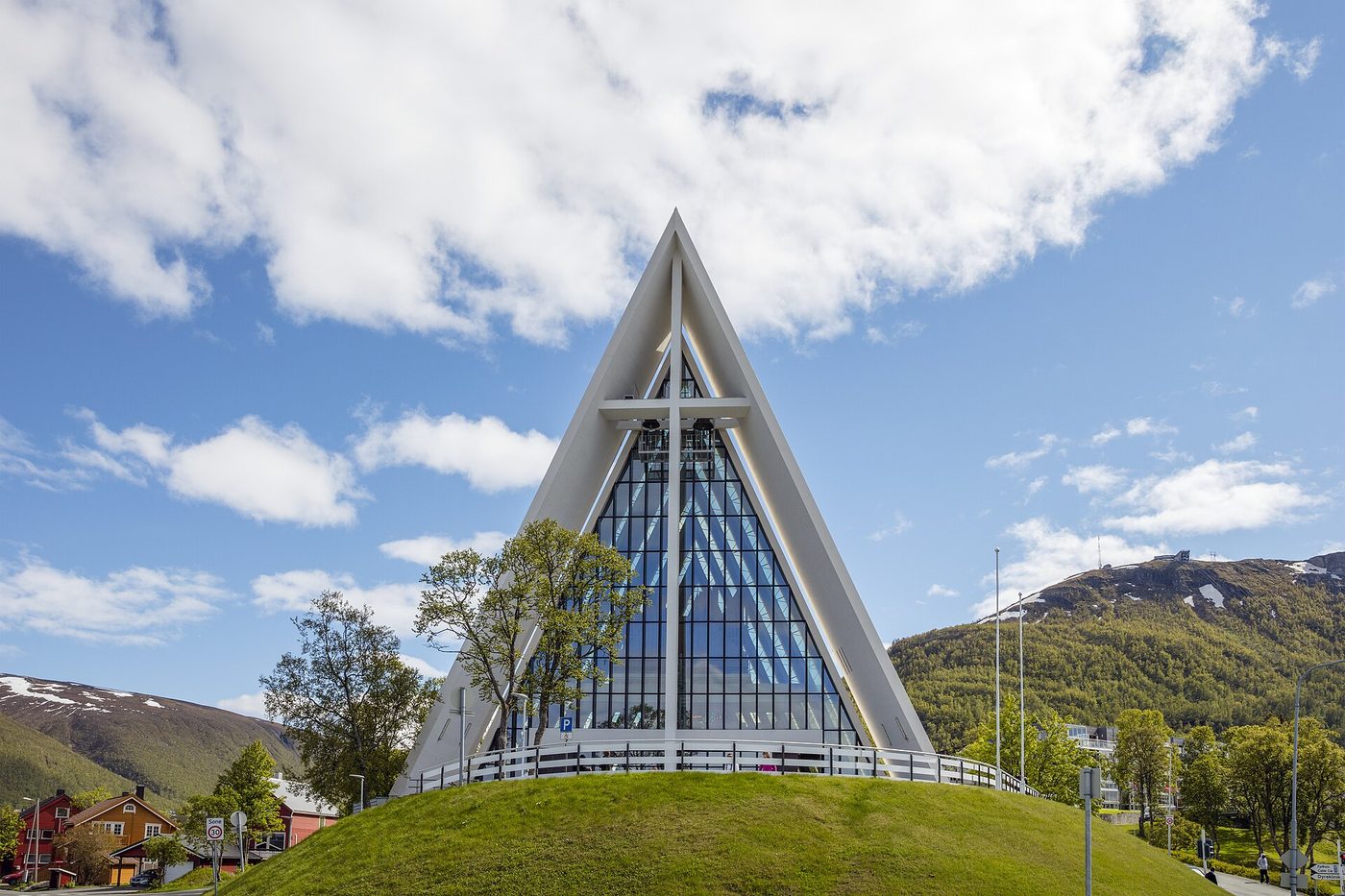
    The triangular white Arctic Cathedral (Ishavskatedralen) in Tromsø, Norway

    Ride the Fjellheisen Cable Car

    The single best-value thing in Tromsø. The Fjellheisen cable car climbs from Tromsdalen up to Storsteinen at 421 m in about four minutes, and the view from the top — the whole island city laid out below, ringed by fjord and peaks — is the postcard shot in every season. A return ticket is around 495 NOK ($46) as of 2026; there’s a café at the top, and it’s a prime spot for both the midnight sun and the aurora. Go on a clear evening and don’t rush back down. (Prices here have crept up year on year, so check the current rate before you go.)
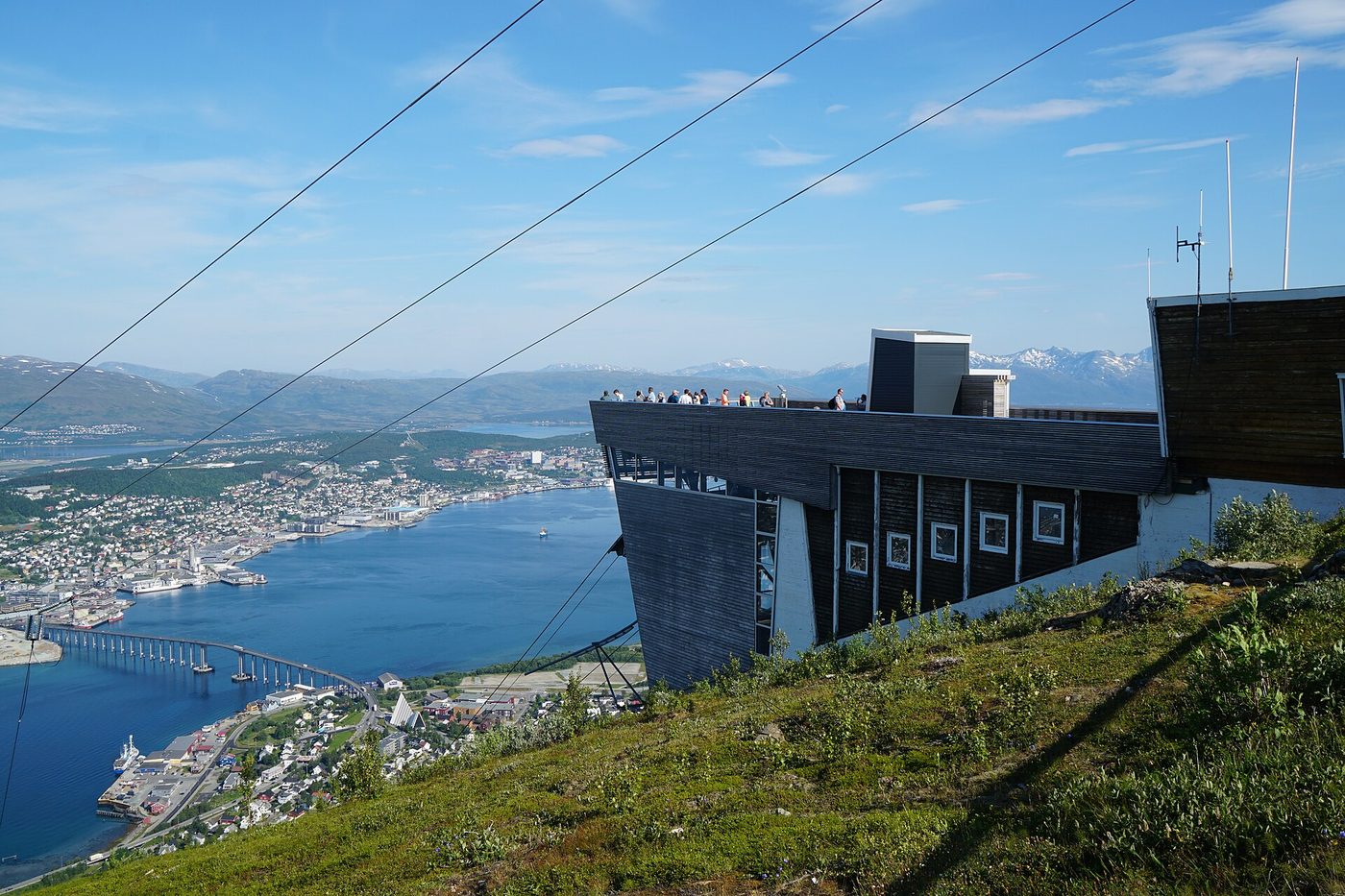
    The Fjellheisen cable-car station and the panoramic view over Tromsø from Storsteinen

    Visit the Arctic Cathedral

    The Arctic Cathedral (Ishavskatedralen) is the white, triangular, glacier-like building you’ll see from the plane — eleven concrete A-frames clad in aluminium, finished in 1965, with an enormous stained-glass window at the eastern end. One small thing to know so you sound clever: despite the name, it isn’t actually a cathedral. It’s the parish church of Tromsdalen. The real cathedral is the wooden Tromsø Cathedral in the centre of town — Norway’s only wooden cathedral and the world’s northernmost Protestant one. Entry to the Arctic Cathedral is a modest 70–80 NOK ($7); better still, catch one of its midnight-sun or aurora concerts.

    Soak in a Floating Harbour Sauna

    A newer Tromsø ritual that I’m fully on board with: book a session in one of the floating saunas moored in the harbour, roast yourself, then plunge straight into the Arctic sea and yelp. It’s invigorating in the strict, slightly painful sense of the word, and a brilliant thing to do on a cold, dark winter afternoon or a bright summer evening alike. Bring a swimsuit and your dignity.

    Dive into Tromsø’s Museums

    For a small city, Tromsø punches above its weight on rainy-day options. The Polar Museum, in an atmospheric old customs warehouse on the harbour, tells the gripping, sometimes grim story of Arctic exploration and trapping — Amundsen, Nansen and the men who wintered alone on the ice (around 130–165 NOK / $12–15). Polaria, the world’s northernmost aquarium, has Arctic tanks, a bearded-seal pool with daily feedings, and a panoramic film (around 395 NOK / $37, which has jumped lately, so check). The Arctic University Museum and the Northern Norway Art Museum are both worth an hour if the weather turns.

    Wander Downtown and the Harbour

    Don’t overlook simply walking the compact centre. Storgata, the main pedestrian street, is lined with painted wooden houses, cafés and shops; the harbour is busy with fishing boats and the daily arrival of the coastal ferry. The Arctic-Alpine Botanic Garden — the world’s northernmost, free and open around the clock — is a lovely, low-key stop in the flowering months from May to October. Tromsø is eminently walkable, and half its charm is just being out in it.

    Eating and Drinking in Tromsø

    Tromsø eats well, and given the latitude that’s a genuine surprise. The Arctic larder is the star: reindeer (usually served as a rich stew or seared fillet), Arctic char and cod, dried stockfish, king crab, and cloudberries — the tart golden berries that grow on the tundra and turn up on every dessert menu. You’ll pay for it; a main at a casual spot starts around 200 NOK ($19) and a nice three-course dinner can run 900 NOK ($85) and up. It’s worth doing at least once.

    For drinking, the institution is Mack Brewery, founded in Tromsø in 1877 and long billed as the world’s northernmost brewery — a title that’s been gently disputed since most production moved inland in 2012 and a brewery in Greenland muscled in, but Mack still brews in town and leans into the branding. The place to drink it is Ølhallen, Mack’s cellar pub from 1928 and the oldest bar in the city, with up to 72 taps. From there, Tromsø’s nightlife genuinely earns the “Paris of the North” tag — for a town this size, the bars are busy, late and friendly, especially on a dark winter weekend.

    Best Day Trips from Tromsø

    Some of the best of the region is a short drive from the city. These four are all doable as a day out (a rental car helps for the first three).

    Kvaløya and Sommarøy

    Just across the bridge west of the city, Kvaløya (“Whale Island”) is the easy escape — mountains, fjords and trailheads barely 20 minutes from downtown. Keep going to its western tip and you reach Sommarøy, a fishing village ringed by improbably white-sand beaches and turquoise water that looks tropical until you dip a toe in. On a bright summer evening it’s one of the prettiest spots in northern Norway, and a popular aurora foreground in winter.

    The Lyngen Alps

    East of Tromsø, across the fjord, the Lyngen Alps rise straight out of the sea in a wall of glaciated peaks. It’s serious mountain country — a magnet for ski-touring in spring and steep hiking in summer — and even if you only drive and gawk, the scenery is the most alpine in the region. Reaching the peninsula involves a ferry, so check timetables and give yourself the day.

    Senja

    If I could send you on only one day trip, it would be Senja. More on why below — it deserves its own section.

    Going Further: Tromsø as Your Arctic Gateway

    Here’s where Tromsø earns its “gateway to the Arctic” reputation. It’s the most practical base for some of the most remarkable places in Europe, whether you’ve got a spare day or a spare week. These are the far-north extensions worth building a longer trip around.

    Dramatic jagged peaks on Senja island near Tromsø in Arctic Norway

    Senja: Norway’s Scenic Secret

    Norway’s second-largest island, about two to three hours’ drive southwest of Tromsø, Senja is what people picture when they imagine the Lofoten Islands — jagged peaks dropping into fjords, fishing villages, white beaches — but with a fraction of the crowds. The Senja National Tourist Route between Gryllefjord and Botnhamn is the spine of it, with knockout stops: the timber boardwalk at Tungeneset facing the serrated “Devil’s Teeth” peaks, the 44-metre Bergsbotn viewing platform cantilevered over the fjord, and the iconic shark-fin summit of Segla above Fjordgård (a serious hike, often photographed from neighbouring Hesten). You can do it as a very long day trip, but Senja rewards an overnight. In summer you can shortcut the drive with the Brensholmen–Botnhamn ferry.

    The North Cape (Nordkapp)

    The North Cape is the famous cliff at 71°N, marketed as the northernmost point of Europe you can drive to, topped by the North Cape Hall visitor centre and its globe monument. Two honest caveats. First, it’s a long way from Tromsø — roughly 530 km to the gateway town of Honningsvåg and around an eight-hour drive to the cape itself, so this is a multi-day undertaking or a stop on a coastal voyage, not a day trip. Second, it isn’t actually the northernmost point: the neighbouring Knivskjellodden headland reaches further north (you can hike to it), and the mainland’s true tip is further east still. None of that dents the drama of standing on that cliff above the Arctic Ocean, especially under the midnight sun — just go in knowing what it is.

    Svalbard

    For the full High Arctic, fly two hours north from Tromsø to Svalbard, where Longyearbyen at 78°N is about as far north as you can travel on a scheduled flight. This is polar-bear country in the literal sense — there are more bears than people, and you’re not allowed to leave the settlement without protection and, sensibly, a guide. Come for glaciers, dog sledding across the ice, snowmobiling, and the strange thrill of the world’s northernmost town. You can walk up to (but not inside) the Global Seed Vault, the “doomsday” vault built into the permafrost. Fair warning: Svalbard is expensive and logistically involved — treat it as a premium add-on, not a casual side trip.

    Alta and Finnmark

    Inland to the east, about a 35-minute flight or a five-and-a-half-hour drive from Tromsø, Alta bills itself as the “City of the Northern Lights” — the surrounding Finnmark plateau has famously stable, clear inland skies, and the world’s first permanent aurora observatory was built nearby back in the 1920s. Alta also has the UNESCO-listed rock carvings, some up to 7,000 years old; the striking titanium-clad Northern Lights Cathedral; and the Sorrisniva ice hotel, rebuilt from snow each winter. It’s the gateway to Sami heartland towns like Kautokeino and Karasjok, and a great choice if cloud keeps spoiling your aurora luck on the coast.

    Colourful buildings and the wooden Tromsø Cathedral in the city centre

    A Sample Tromsø Itinerary (3–4 Days)

    Here’s how I’d sequence a winter trip to balance the city, the big excursions and your aurora chances. Flip the activities for a summer version (hiking and fjord trips in place of sledding and whale watching), and you’ve got a template either way. If you want to slot this into a longer route through the country, our Norway itinerary guide shows how the north connects to the south.

    Day 1 — Settle in and look up. Arrive, drop your bags, and walk the centre: Storgata, the harbour, the wooden cathedral. Ride the Fjellheisen cable car at dusk for the lay of the land. If the forecast is clear and active, you don’t even need a tour tonight — head to the water’s edge away from the lights and look north.

    Day 2 — Big excursion, then chase. Use the daylight hours for a flagship activity: dog sledding or, in season, a whale safari. Rest in the afternoon, then join an evening northern-lights chase so a guide can drive you to clear skies. This is your best aurora night — protect it.

    Day 3 — Culture and a second aurora shot. Slow morning, then the Polar Museum and Polaria, lunch on reindeer or king crab, and the Arctic Cathedral across the bridge. Cap it with a harbour-sauna session, then a second aurora attempt — either another tour or a self-guided spot — to bank your odds.

    Day 4 (optional) — Go further. With a fourth day, rent a car for Senja or Kvaløya and Sommarøy, or take a fjord cruise. This is also your weather-insurance day: if clouds wrecked your earlier aurora nights, a flexible fourth evening is often what saves the trip.

    What Does a Trip to Tromsø Cost?

    No way around it: Tromsø is expensive, even by Norwegian standards, and the guided excursions are what really add up. Here’s a realistic snapshot as of 2026 (US dollars at roughly 10.7 NOK to the dollar — check the current rate, as it moves).

    Item Typical price (NOK) Approx. USD
    Northern-lights chase tour 1,350–2,500 $125–235
    Dog sledding (self-drive, half day) 1,800–2,700 $170–250
    Whale-watching safari 1,800–3,200 $170–300
    Fjellheisen cable car (return) ~495 ~$46
    Museum admission 130–395 $12–37
    Restaurant main course 200–350 $19–33
    Pint of beer 110–135 $10–13
    Hotel, mid-range (per night) 2,000–3,000 $185–280
    Hostel dorm bed (peak winter) 1,000–1,100 $95–105
    City bus (single / 24-hr pass) 48 / 137 $4.50 / $13
    Taxi, airport to centre 350–400 $33–37

    Add it up and a budget traveller can do Tromsø on around 1,700 NOK ($160) a day if they skip the guided tours, while a mid-range trip with a couple of excursions runs closer to 5,000 NOK ($470) a day. The excursions are the variable that matters — each one is a 1,500–2,700 NOK decision.

    How to Do Tromsø Cheaper

    A few tactics that genuinely move the needle. Visit in the shoulder months (late September, March–April) when hotels drop and the lights are still out. Take the airport bus instead of a taxi. Buy a 24-hour bus pass through the app rather than paying onboard. Lean on your hotel’s included breakfast and stock up at a Kiwi or Rema 1000 supermarket — a packed lunch here saves real money. Choose group tours over private ones, and prioritise one or two excursions you’ll remember rather than booking the whole catalogue. And try to see the northern lights yourself on at least one clear night before you pay for a chase.

    Book Early — Everything Together

    The one logistical warning I’d underline: in peak winter, Tromsø’s tours and hotels sell out, and the supply of good accommodation is genuinely tight for the demand. Book your flights, your hotel and your headline excursions at the same time, as soon as your dates are firm. Waiting until you arrive to sort out a dog-sledding spot in January is how people end up disappointed.

    Know Before You Go: Practical Tromsø Tips

    Getting There and Getting Around

    You’ll fly in. Tromsø Airport (TOS) is about five km from the centre, with nonstop flights from Oslo in just under two hours, plus direct links to Bergen, Trondheim, Bodø and seasonal European cities. There is no train to Tromsø — the rail network stops far to the south at Bodø and at Narvik (reached via Sweden) — so it’s fly, drive or the coastal ferry. If you’re routing up from the capital, our Oslo travel guide covers the southern end of the journey. The Hurtigruten and Havila coastal voyages also call at Tromsø daily in each direction, which makes a scenic arrival or departure.

    Once here, the compact centre is easily walkable, and the airport bus (Flybussen) or a city bus beats the 350–400 NOK taxi. Do you need a car? In the city, no. For Senja, Kvaløya, Sommarøy or Lyngen, a rental gives you freedom — but think twice about driving yourself in deep winter if you’re not used to ice and snow; the excursion transfers exist for a reason.

    Where to Stay

    Stay in or near the centre if you can — it puts the restaurants, the harbour and the tour pickups on your doorstep, which matters when it’s dark and cold. You’ll find the familiar Scandinavian chains (Scandic, Thon, Radisson, Clarion, and the budget Smarthotel) plus apartments. Harbour-front rooms cost a premium; a short walk inland is cheaper. If you’ve rented a car and want quiet and aurora-friendly darkness, a place out on Kvaløya is a fine trade-off. Whatever you choose, book early for winter — see the warning above.

    What to Pack and How to Dress

    In winter, layering is non-negotiable: thermal base layers, an insulating mid-layer, and a windproof, waterproof shell, plus a warm hat, proper gloves and insulated waterproof boots. The secret weapon locals swear by is a set of strap-on traction spikes (“brodder”) for the icy pavements — the streets thaw and refreeze into skating rinks. Most aurora and snow tours lend you a thermal oversuit and boots, so you don’t need to buy expedition gear. In summer, bring layers anyway (it’s cool by the sea), a rain jacket, and an eye mask for sleeping through the midnight sun.

    Money, Payments and the Rules Nobody Tells You

    Norway is effectively cashless — cards and phone payments work everywhere, and you can comfortably visit without touching a krone of cash. A few quirks to file away: shops keep shorter hours and many close on Sundays; alcohol stronger than light beer is sold only at the state Vinmonopolet shops, which also close early and on Sundays, so buy ahead if you want wine or spirits for the weekend; tipping is modest and not expected (round up for good service); and the tap water is excellent, so bring a reusable bottle and skip the pricey bottled stuff.

    Travelling Responsibly in the Arctic

    Tromsø has leaned into sustainable tourism, and a little care goes a long way up here. Stick to marked trails to protect fragile tundra, give wildlife room (especially on whale and bird trips), and take your litter with you. When it comes to Sami experiences, choose Sami-owned operators and engage respectfully — this is living culture, not a costume. The Arctic is having a moment, and keeping it worth visiting is partly on us.

    Frequently Asked Questions

    How many days do you need in Tromsø?

    Three to four days is the sweet spot — enough for the city sights plus two or three big excursions, with extra nights to improve your northern-lights odds. Two days works if you’re tight, but treat aurora as a maybe. Add days for Senja, Alta or Svalbard.

    Is Tromsø worth visiting?

    Yes — it’s one of the most rewarding and accessible ways to experience the Arctic, with world-class northern lights in winter, the midnight sun in summer, and a surprisingly good food and bar scene year-round. The main downside is cost, which is manageable with planning.

    What is Tromsø famous for?

    The northern lights above all — it sits right under the auroral oval — plus the midnight sun, Sami and reindeer culture, dog sledding, whale watching, and its “Paris of the North” nickname for being unexpectedly cosmopolitan for somewhere this far north.

    What is the best time of year to visit Tromsø?

    For the northern lights, late September to early April. For the midnight sun and hiking, late May to mid-July. You can’t see both on one trip, since the lights need darkness. The shoulder months (late September, March–April) balance aurora odds with milder weather and lower prices.

    Can you see the Northern Lights in Tromsø city centre?

    Sometimes — on a clear, active night you can see them from the dark edges of town, away from streetlights, looking north. But cloud is the usual spoiler, which is why “chase” tours that drive to find clear skies are popular and often worth it.

    Will I definitely see the Northern Lights?

    No one can guarantee them — they depend on solar activity and clear skies. The way to improve your odds is to stay several nights (three or four) and go on a chase tour at least once. Over a multi-night winter stay, your chances are good, but never certain.

    Is Tromsø expensive?

    Yes, even for Norway. Guided excursions (1,500–2,700 NOK each) are the biggest cost, followed by hotels and dining. A budget day without tours runs around 1,700 NOK ($160); a mid-range day with excursions closer to 5,000 NOK ($470).

    Do you need to rent a car in Tromsø?

    Not for the city — it’s walkable and tours include transfers. A rental helps for day trips to Senja, Kvaløya, Sommarøy or Lyngen, but reconsider self-driving in deep winter if you’re not confident on ice and snow.

    How cold does Tromsø get in winter?

    Milder than you’d expect for 69°N, thanks to the Gulf Stream — daytime highs around −3 to −6°C (21–27°F), colder at night. It rarely drops below −15°C in the city. Wind and icy pavements are the bigger challenge, so dress in layers and pack traction spikes.

    Is there daylight in Tromsø in winter?

    During the polar night (roughly 27 November to 15 January) the sun never rises above the horizon, but you still get a few hours of soft blue twilight around midday. It’s atmospheric rather than pitch-black, and the darkness is exactly what makes the aurora visible.

    Final Thoughts: Is Tromsø Worth It?

    For my money, Tromsø is the most rewarding way to step into the Arctic without it becoming an expedition. You fly in, and within a day you can be standing under the northern lights, mushing a husky team, or watching the midnight sun roll along the horizon — and then be back in town for a plate of reindeer and a local beer that night. It’s wild and civilised at the same time, which is a rare combination. Yes, it’s expensive, and yes, the weather and the aurora will do as they please. But plan for a few days, pick your excursions with care, dress properly, and Tromsø delivers the kind of trip you find yourself talking about for years. Go north.

    About This Guide

    This guide was written and fact-checked by the Norway Tourism Guide editorial team, drawing on repeat visits to Tromsø across different seasons and on current information from Visit Tromsø, Visit Norway and local operators. Prices are in Norwegian kroner with approximate US-dollar conversions and reflect 2026 rates — always confirm current prices and opening times before you travel, as Arctic tourism is seasonal and costs change. Spotted something out of date? We update our guides regularly.

    Last updated: June 2026

    Sources and Further Reading

    Photo Credits

    • Northern lights over Tromsø, one of the best things to do in Tromsø in winter — Photo: Adithya Ananth hashinclude (CC0) via Wikimedia Commons. Source
    • Dog sledding with a team of huskies across the snow, a classic Arctic Norway winter excursion — Photo: User: (WT-shared) Osopolar at wts wikivoyage (public domain) via Wikimedia Commons. Source
    • White-sand beaches and turquoise water at Sommarøy near Tromsø in the Arctic summer — Photo: Evgenii Salganik / CC BY-SA 4.0 via Wikimedia Commons. Source
    • The triangular white Arctic Cathedral (Ishavskatedralen) in Tromsø, Norway — Photo: Godot13 / CC BY-SA 4.0 via Wikimedia Commons. Source
    • The Fjellheisen cable-car station and the panoramic view over Tromsø from Storsteinen — Photo: Olivier Bruchez / CC BY-SA 2.0 via Wikimedia Commons. Source
    • Dramatic jagged peaks on Senja island near Tromsø in Arctic Norway — Photo: Ximonic (Simo Räsänen) / CC BY-SA 4.0 via Wikimedia Commons. Source
    • Colourful buildings and the wooden Tromsø Cathedral in the city centre — Photo: Diego Delso / CC BY-SA 4.0 via Wikimedia Commons. Source
  • Things to Do in Bergen, Norway: The Complete 2026 Travel Guide

    Things to Do in Bergen, Norway: The Complete 2026 Travel Guide

    I’ve lost count of how many times I’ve stood on the old wharf at Bryggen in the drizzle, watching the light shift across the harbour, and thought: this might be my favourite city in Norway. Bergen does that to people. It’s a working port wrapped around a medieval core, hemmed in by seven steep green mountains, and somehow both grand and cosy at the same time. It also rains here. A lot. We’ll get to that.

    The best things to do in Bergen start with riding the Fløibanen funicular up Mount Fløyen for the view, wandering the UNESCO-listed Bryggen wharf, browsing the Fish Market, and taking a fjord cruise straight from the harbour. Bergen is Norway’s “gateway to the fjords,” so it’s also the launch pad for day trips to the Nærøyfjord and the Flåm Railway. Two to three days covers the city comfortably.

    This guide is the version I wish I could hand to friends before they go: every major sight with current-ish prices in kroner (and rough US-dollar equivalents), how long to spend, how to skip the tourist traps, four ready-made itineraries, the honest verdict on the Bergen Card, and what to do when the forecast is, inevitably, “rain.” If you’re still mapping out the wider trip, pair this with our guide to the best things to do in Norway and our overview of the Norwegian fjords.

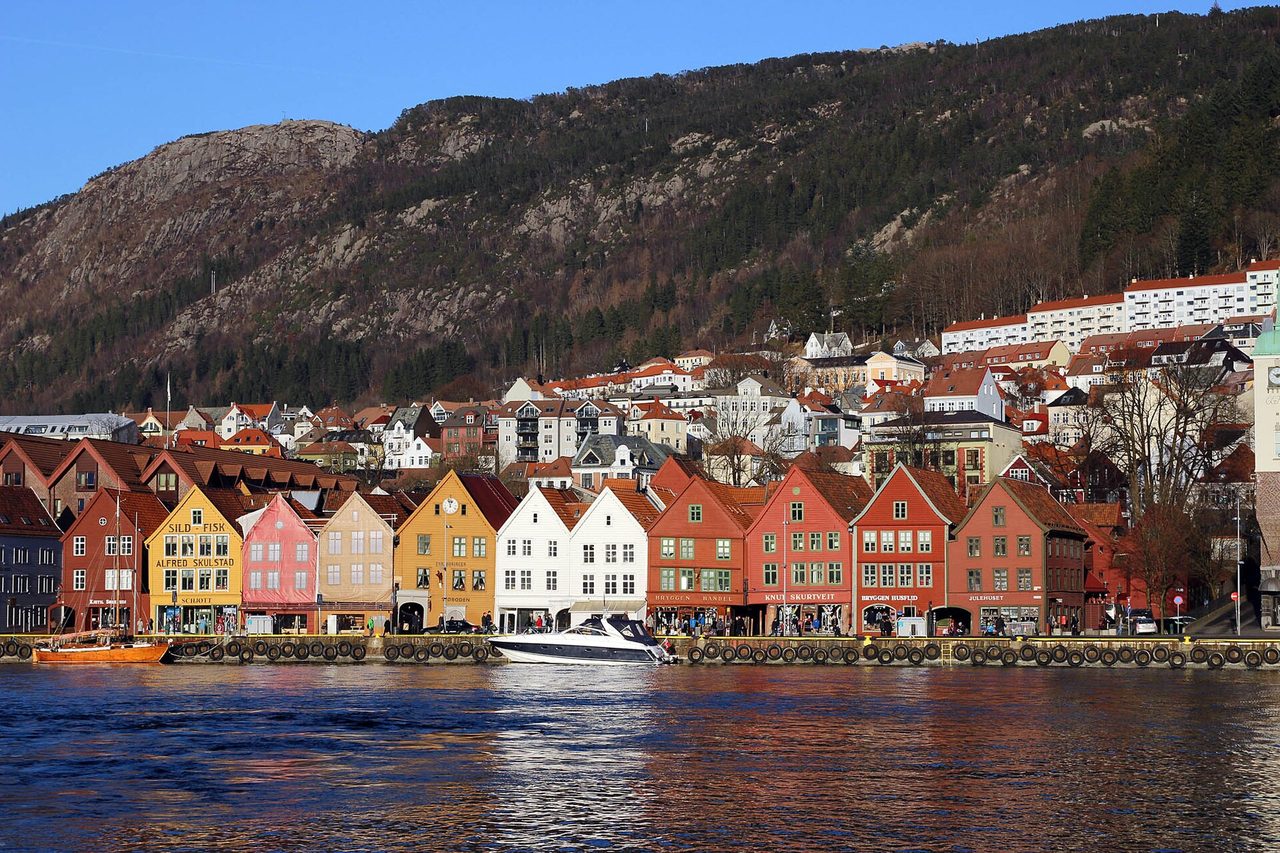
    The colorful wooden Hanseatic houses of Bryggen, one of the top things to do in Bergen, Norway

    Bergen at a glance

    Bergen is Norway’s second-largest city, with roughly 290,000 people, founded around 1070 as Bjørgvin (“the green meadow among the mountains”). It was Norway’s capital in the Middle Ages and, for some four centuries, a powerful Hanseatic League trading post — that legacy is the colourful row of wooden merchant houses at Bryggen, Norway’s first UNESCO World Heritage Site (listed in 1979). Today it’s a UNESCO Creative City of Gastronomy, a major cruise port, and the most popular base for exploring the western fjords.

    Quick facts Detail
    Population ~290,000 (Norway’s 2nd city)
    Airport Bergen Airport, Flesland (BGO), ~20 min from centre by light rail
    Currency Norwegian krone (NOK); ~10.5 NOK ≈ 1 USD as of 2026; nearly cashless
    Language Norwegian; English spoken almost everywhere
    Rain One of Europe’s wettest cities — count on 200+ rainy days a year
    Ideal stay 2–3 days for the city; 3–4 with a fjord day trip
    Famous for Bryggen, the fjords, Mount Fløyen, seafood, Edvard Grieg, seven mountains

    Here’s the shortlist most visitors build their trip around. Prices are adult, full-price, and current as of 2026 — always double-check the operator’s site, since Norwegian attractions adjust fares seasonally.

    Attraction Price (NOK / approx USD) Time to allow
    Bryggen wharf (walk around) Free 1–2 hrs
    Fløibanen funicular (return) ~200 / $19 (summer); ~145 winter 2–3 hrs incl. the top
    Mount Ulriken cable car (return) ~435 / $41 Half day with a hike
    KODE Art Museums (all four) ~200 / $19 (under 18 free) 2–3 hrs
    Bergen Aquarium Family ~700 / $67 2–3 hrs
    Gamle Bergen open-air museum ~170 / $16 (under 18 free) 1.5–2 hrs
    Fjord cruise to Mostraumen (Rødne) ~890 / $85 3–3.5 hrs
    Norway in a Nutshell (round trip) from ~1,595 / $152 Full day (10–12 hrs)
    Fish Market & Bergenhus grounds Free to browse/walk 1 hr

    How many days do you need in Bergen?

    Two full days is the honest minimum to enjoy Bergen without speed-walking. That’s enough to do Bryggen, ride up Fløyen, eat your way through the Fish Market and a couple of cafés, see one or two museums, and still have an evening to wander Nordnes at golden hour. Add a third day and you can climb Ulriken, visit Grieg’s home at Troldhaugen, or simply slow down — Bergen rewards dawdling.

    If the fjords are why you came (and for many people they are), give yourself three to four days: two for the city, one or two for a fjord day trip like the Mostraumen cruise or Norway in a Nutshell. Cruise passengers with a single port day can still hit the highlights — I’ve put a tight one-day plan in the itineraries section below. And if Bergen is one stop on a bigger loop, our Norway itinerary guide shows how it slots into 7-, 10- and 14-day routes.

    Best time to visit Bergen

    Short version: May to September for the long days and the best odds of dry weather, with May and September the sweet spot for thinner crowds and lower hotel prices. But let’s talk honestly about the rain, because it’s the single thing that surprises people most.

    The rain (yes, really)

    Bergen is one of the rainiest cities in Europe. Depending on how you count, it sees somewhere around 230 days of precipitation a year and well over 2,000 mm of rain — locals quote the figure with a kind of weary pride. The upside: it keeps everything impossibly green, the waterfalls thunder, and a moody, mist-wrapped Bryggen is genuinely beautiful. The practical takeaway is to pack a proper waterproof jacket and shoes, skip the umbrella (the wind eats them), and never let a grey forecast cancel your plans. Bergeners certainly don’t.

    Summer (June–August)

    Peak season. Daylight stretches to nearly 19 hours around the solstice — sunrise just after 4 a.m., light until past 11 p.m. — and temperatures sit around 15–20°C (59–68°F) on a good day. Everything is open, the outdoor Fish Market is in full swing, fjord cruises run most frequently, and the city hums. The trade-off is crowds (especially on cruise-ship days) and the highest hotel rates of the year. Book accommodation well ahead for July and August.

    Shoulder season (May & September)

    My favourite time. May is statistically the driest month, the hillsides are vivid green, and 17 May (Norway’s Constitution Day) fills the streets with marching bands and national dress — a wonderful, slightly chaotic spectacle. September brings crisp air, autumn colour, and noticeably cheaper rooms. Some seasonal sights (Gamle Bergen, parts of Troldhaugen, Fantoft) wind down from mid-September, so check dates if those are priorities.

    Winter & Christmas

    Bergen in winter is dark and wet more than snowy — the coast rarely freezes hard — but it has real charm. Days are short (under six hours of light around the December solstice), the Fløibanen runs year-round, and from late November the city stages Pepperkakebyen, claimed as the world’s largest gingerbread town, plus a cosy Christmas market. For the northern lights you’d do far better farther north; see our guide to the northern lights in Norway for why latitude matters. For a region-by-region breakdown of timing across the whole country, our best time to visit Norway guide goes deeper.

    The best things to do in Bergen

    Bergen packs an unusual amount into a small, walkable centre. You could tick off the marquee sights in a focused day, but the city is more fun if you let it breathe. Here’s everything worth your time, roughly in the order most people tackle it.

    Wander Bryggen, the Hanseatic Wharf

    Start where Bergen started. Bryggen is the row of tilting, timber merchant houses along the eastern side of the harbour, painted in ochre, oxblood and mustard, and it’s the reason Bergen made the UNESCO World Heritage list in 1979. German Hanseatic traders ran their dried-cod empire from here for the better part of 400 years, from around 1360 until 1761. What you see today largely dates from after the great fire of 1702, rebuilt on the medieval foundations — about 62 buildings survive. It’s free to wander, and you should: duck into the narrow wooden passageways between the buildings, where the floors slope and creak and tiny galleries, ceramicists and woodworkers have set up shop. Go early or late to beat the cruise crowds, and don’t skip the back alleys — that’s where Bryggen still feels like a living place rather than a postcard.

    Ride the Fløibanen funicular up Mount Fløyen

    A red Floibanen funicular car climbing toward Mount Floyen above Bergen

    If you do one “paid” thing in Bergen, make it this. The Fløibanen funicular has been hauling people up Mount Fløyen (320 m) since 1918, and the cherry-red carriages climb from a station a two-minute walk behind the Fish Market to the summit in about six minutes. A return ticket is around 200 NOK (about $19) in summer and roughly 145 NOK in winter; the Bergen Card knocks 50% off the return fare. At the top you get the classic panorama — the whole city, the harbour and the islands laid out below — plus a café, a big adventure playground, resident goats, the little Skomakerdiket lake, and a web of forest trails.

    Panoramic view over Bergen and its harbour from the top of Mount Floyen

    Here’s my favourite trick: ride up, then walk down. The signposted path through the trees back to the city takes 30–45 minutes, is free, and is genuinely lovely. Fitter walkers can climb up the Fjellveien or Skredderdalen routes and ride down instead. Either way, the view at the top is the photo you’ll come home with.

    Take the cable car up Mount Ulriken

    The Ulriken cable car and Bergen's city lights at dusk, seen from the highest of the seven mountains

    Fløyen gets the crowds; Ulriken gets the altitude. At 643 m, Ulriken is the tallest of Bergen’s seven mountains, and the Ulriksbanen cable car whisks you up in about seven minutes for a more dramatic, wide-open view than Fløyen’s. A return ticket runs around 435 NOK (about $41); you can add the Ulriken Express shuttle bus from the city centre for roughly 150 NOK return if you don’t want to figure out the local bus. There’s a restaurant at the top (Skyskraperen) and, for the brave, a zipline.

    The reason serious walkers come, though, is the Vidden hike — the high plateau traverse from Ulriken across to Fløyen. It’s around 13–15 km and takes most people four to six hours, and you finish by riding the Fløibanen back down into town. Do it only in clear summer weather and with proper shoes; the plateau is exposed and the fog rolls in fast. On a good day it’s one of the best half-day hikes you can do straight from a European city. For more routes across the country, see our things to do in Norway guide.

    Graze the Bergen Fish Market (Fisketorget)

    Fresh seafood on display at Bergen's Fish Market (Fisketorget)

    The Fish Market has stood at the head of the harbour for centuries, and it now comes in two flavours. The year-round indoor Mathallen is a smart food hall of fishmongers and small restaurants; the open-air stalls outside run roughly May to September. Let me be straight with you: the outdoor market is touristy and not cheap — a plate of king crab or a seafood sampler can sting. But it’s still a fun browse, the vendors are happy to let you taste, and trying a sliver of whale, a fresh prawn, or a bowl of creamy Bergen fish soup is part of the experience. For better value, buy from the indoor counters or eat your seafood at one of the harbourside restaurants nearby. The city’s tourist information office is right here too, which makes it a handy first stop.

    Climb Rosenkrantz Tower at Bergenhus Fortress

    Rosenkrantz Tower and Bergenhus Fortress beside Bergen harbour

    At the mouth of the harbour sits Bergenhus, one of Norway’s oldest and best-preserved fortresses. Two buildings anchor it: Håkon’s Hall, a vast stone royal banqueting hall built between 1247 and 1261 under King Håkon Håkonsson, when Bergen was the seat of the Norwegian crown; and the Rosenkrantz Tower, a 1560s fortified residence you can climb via tight stone staircases to cannon-lined ramparts with harbour views. Entry to each is modest (around 120–150 NOK; under-16s free), and the grassy fortress grounds are free to stroll — a popular spot for a picnic on a rare sunny afternoon. Hours shift around concerts and events, so check before you go.

    See the KODE Art Museums

    KODE is one of the Nordic region’s largest art and design museum groups — four buildings in a row along the Lille Lungegårdsvann lake in the centre. The headline is the art: KODE holds one of the world’s largest collections of Edvard Munch outside Oslo, plus rooms of Norwegian greats like Nikolai Astrup, Harriet Backer and J.C. Dahl, and a scattering of Picasso. One ticket — around 200 NOK (about $19), under-18s free — covers all four buildings on the same day, and the Bergen Card gets you in free from October to April. Allow two to three hours, more if it’s raining and you want to linger. KODE also runs the composer homes, including Grieg’s Troldhaugen (below).

    Visit Troldhaugen, Edvard Grieg’s home

    Norway’s most famous composer, Edvard Grieg, built a villa on a wooded hill above Lake Nordås, about 8 km south of the centre, and lived there for the last 22 years of his life. Troldhaugen is now a lovely museum: the preserved house, his tiny lakeside composing hut, his and Nina’s graves cut into the rock, and a modern concert hall, Troldsalen, with a glass wall behind the stage looking out over the very landscape that inspired him. The summer lunchtime piano recitals are the thing to time your visit around. You can reach it by Bybanen light rail toward Nesttun plus a walk, or buy KODE’s all-inclusive ticket (around 700 NOK) that bundles round-trip transport with entry to the composer homes and art museums. Note the villa itself usually closes for preservation around mid-August, though the park, café and concerts continue.

    Step back in time at Gamle Bergen

    A short bus ride north in Sandviken, Gamle Bergen (“Old Bergen”) is an open-air museum of around 55 historic wooden houses relocated and arranged into cobbled lanes, staffed in summer by costumed guides who play shopkeepers and townsfolk. It’s gentle, atmospheric and great with kids. The buildings are open roughly 20 May to mid-September (adults around 170 NOK, under-18s free); the surrounding park is free and open year-round if you just want the stroll.

    Take a fjord cruise straight from the harbour

    Bergen calls itself the gateway to the fjords, and the easiest way to feel it without committing to a full day is the Mostraumen cruise. Rødne’s catamaran leaves from Zachariasbryggen right by the Fish Market, sails up the narrowing Osterfjord to the tight Mostraumen strait — waterfalls close enough to touch, steep walls, the odd sea eagle — and is back in about three to three and a half hours. It’s around 890 NOK (about $85) for adults, 20% off with the Bergen Card, and it runs year-round, rain or shine. If you have a full day and want the famous fjords, jump to the day-trips section below; for the bigger picture, our Norwegian fjords guide covers them all.

    Detour to Fantoft Stave Church

    South of the centre near the Bybanen line, Fantoft is a dark, dragon-gabled stave church straight out of a Norse fever dream. Important context: what you see is a faithful 1997 reconstruction. The original medieval church that stood here (moved to Fantoft in 1883) was destroyed by arson in 1992, during the notorious wave of church burnings linked to Norway’s black-metal scene. It was painstakingly rebuilt and reconsecrated in 1997. The interior is open to visitors roughly mid-May to mid-September (around 70–100 NOK); the brooding exterior is free to admire any time.

    Pick a museum for a rainy hour

    Bergen has a museum for every interest, which is handy given the weather. The Leprosy Museum, in the old St. Jørgen’s Hospital, tells a genuinely fascinating, sobering story — it was here in 1873 that Dr. Gerhard Armauer Hansen identified the leprosy bacillus (hence “Hansen’s disease”); it’s open seasonally, roughly mid-May to early September. The Hanseatic Museum‘s main building (Finnegården) is closed for a major restoration expected to run until around 2027, but its story is told in the meantime at the atmospheric Schøtstuene assembly rooms nearby. The Bergen Maritime Museum, the University Museum with its natural-history halls, and the hands-on VilVite science centre (great for kids) round out the wet-weather options.

    Bring the kids to the Bergen Aquarium

    Out on the tip of the Nordnes peninsula — a pleasant 20-minute harbourside walk from the centre, or a short hop on the little Beffen ferry — the Akvariet is one of Europe’s older aquariums and a reliable family win. Penguins, sea lions, seals, snakes and crocodiles, plus daily feedings. A family ticket is around 700 NOK; the Bergen Card gets you in free from November to February and discounted the rest of the year. It’s open almost every day of the year.

    Sweat and swim like a local

    Here’s the thing most guidebooks miss: Bergeners love a sauna-and-sea-dip, and you can join them. Floating saunas and harbour swimming spots have popped up around the city — Nordnes Sjøbad on the peninsula has an outdoor heated seawater pool in summer, and various community saunas let you roast, then plunge into the cold fjord. In a city this rainy, embracing the water rather than hiding from it is exactly the right mindset, and it’s a brilliant, very local way to spend a grey afternoon.

    Hunt for street art

    Bergen is, quietly, one of Europe’s best street-art cities — this is the town that produced Dolk, and the scene is taken seriously enough that the city has a street-art plan. Wander the lanes around Kong Oscars gate, Skostredet and the alleys behind the centre and you’ll find stencils, murals and the occasional Banksy-adjacent surprise. It costs nothing and turns a wander into a treasure hunt.

    Free (and cheap) things to do in Bergen

    Bergen has a reputation as an expensive city, and it’s earned. But some of its best experiences cost nothing. Walking Bryggen and its hidden passages is free. So is browsing the Fish Market, strolling the Bergenhus fortress grounds, and the lovely downhill forest walk from the top of Fløyen. You can climb any of the seven mountains on free public trails, wander the Nordnes peninsula to the aquarium point at sunset, admire Fantoft’s exterior, and hunt down street art for the price of a coffee. The Bergen Public Library and the cathedral (with a cannonball still lodged in its wall from a 1665 naval battle) are free to enter. If you’re watching the budget, build your days around these and treat the funicular and one museum as your splurges.

    What to eat in Bergen

    Bergen earned its UNESCO Creative City of Gastronomy title in 2015 — the only Norwegian city on that list — and seafood is the heart of it. A few things you shouldn’t leave without trying:

    Bergen fish soup (bergensk fiskesuppe) is the local signature: creamy, delicately sweet, full of fish and root vegetables. Order it at least once. Skillingsboller, the giant Bergen cinnamon bun, is the city’s beloved pastry — buy one warm from a bakery and eat it by the harbour. Beyond that, look for persetorsk (pressed, salted cod), raspeballer (potato dumplings, traditionally eaten on Thursdays), fresh prawns by the bag, and, if you’re adventurous, whale or king crab from the market.

    For sit-down meals across budgets: Bryggeloftet & Stuene is the classic, slightly old-school spot on Bryggen for traditional Norwegian fare; Pingvinen serves homely Norwegian comfort food to a local crowd; Søstrene Hagelin is a cheap, much-loved counter for fishcakes and fish soup; and the indoor Fish Market hall is your best bet for fresh seafood without full restaurant prices. To drink well on a budget, remember that wine and spirits are sold only at state Vinmonopolet shops and that a beer out can easily run 100+ NOK.

    Best day trips from Bergen

    This is where being in Bergen really pays off. Some of Norway’s most spectacular scenery is within a few hours, and you don’t need a car for most of it.

    Norway in a Nutshell & the Flåm Railway

    The Flam Railway at Flam station, a classic fjord day trip from Bergen

    The classic. “Norway in a Nutshell” is a self-guided combo ticket from Fjord Tours that strings together the scenic Bergen Railway, the famous Flåm Railway, a fjord cruise and a bus into one big day. From Bergen the usual round trip runs you out by train to Voss and Myrdal, down the Flåmsbana — about 20 km of switchbacks and waterfalls from the mountain station at Myrdal (867 m) to the fjord village of Flåm at sea level, with a photo stop at the Kjosfossen waterfall — then onto a cruise through the narrow, UNESCO-listed Nærøyfjord to Gudvangen, and back. Budget from around 1,595 NOK (about $152) for the round trip and a full 10–12 hours. You can also do it one-way all the way to Oslo, which makes a stunning way to cross the country.

    Sognefjord, the Nærøyfjord & Aurland

    The Nærøyfjord is an arm of the mighty Sognefjord, Norway’s longest and deepest. Beyond the Nutshell route, Flåm and nearby Aurland are worth an overnight if you can spare it, with the vertiginous Stegastein viewpoint cantilevered out over the Aurlandsfjord. It’s classic big-fjord country.

    Hardangerfjord & Rosendal

    South of Bergen, the Hardangerfjord is gentler and famous for spring fruit blossom, thundering waterfalls like Vøringsfossen and Steinsdalsfossen, and the Barony at Rosendal. Rødne runs an express boat from Bergen to Rosendal (around two hours each way) that makes a doable day out. The serious hike to Trolltunga starts in this region, but it’s a long, strenuous outing better given its own day from a closer base, not a casual trip from Bergen.

    Voss & Folgefonna

    Adrenaline seekers head to Voss, about 75 minutes away by train and Norway’s unofficial extreme-sports capital (skydiving, rafting, paragliding, a gondola). Farther south, the Folgefonna glacier offers guided blue-ice walks in summer for those who want crampons in the picture. For the full menu of fjord-country options, our Norwegian fjords guide is the companion to read next.

    Suggested Bergen itineraries

    However long you’ve got, here’s how I’d spend it. Mix and match to taste, and don’t over-schedule — half the pleasure of Bergen is unplanned wandering.

    1 day in Bergen (and the cruise-passenger version)

    Start early at Bryggen before the crowds, then walk two minutes to the Fløibanen and ride up Mount Fløyen for the view. Walk back down through the forest, browse the Fish Market for lunch, and spend the afternoon on the Bergenhus grounds and Rosenkrantz Tower, or in the KODE museums if it’s wet. If you’re off a cruise ship, this exact loop works — everything is within a 15-minute walk of the port, so skip transport and just move on foot. Squeeze in a skillingsbolle and you’ve done Bergen proud in a day.

    2 days in Bergen

    Day one as above, unhurried. On day two, go higher and wider: take the cable car up Ulriken (or hike the Vidden plateau back to Fløyen if the weather’s clear), then spend the afternoon at Troldhaugen for Grieg’s house and a lunchtime concert. Finish with dinner on Nordnes and a sauna-and-swim if you’re game.

    3 days in Bergen

    With a third day, add a half-day Mostraumen fjord cruise from the harbour in the morning, then use the afternoon for the things the first two days squeezed out — Gamle Bergen, the Leprosy Museum, more KODE, or simply café-hopping and shopping for a Norwegian sweater. Three days is the comfortable sweet spot for the city.

    4 days (city + a fjord day trip)

    Devote your extra day to a full-day fjord trip — Norway in a Nutshell to Flåm and the Nærøyfjord, or the express boat to Rosendal on the Hardangerfjord. You’ll come back to Bergen in the evening having seen the city and the scenery that made western Norway famous. If you’re continuing onward, this is the natural point to take the Bergen Railway east toward Oslo; see our Oslo travel guide for the other end of that line.

    Where to stay in Bergen

    Stay central. Bergen’s core is compact, and being able to walk to Bryggen, the Fish Market and the funicular is worth a lot, especially in the rain. The area around Bryggen and the harbour (Vågen) is the most atmospheric and convenient; Nordnes, the peninsula just west, is quieter and charming, near the aquarium; and the streets around Skostredet behind the centre put you close to bars and cafés.

    Budget level Rough nightly rate (NOK / USD) What you get
    Budget / hostel ~800–1,300 / $75–125 Dorms or simple rooms (e.g. Citybox, Marken Gjestehus)
    Mid-range ~1,300–2,100 / $125–210 Comfortable harbourside hotels (e.g. Clarion Admiral)
    Luxury ~2,500–4,000+ / $240–430 Design hotels on Bryggen (e.g. Opus XVI, Det Hanseatiske)

    Rates swing hard with season — peak summer can be 50–80% more than a quiet week in November — so book early for July and August. For how to think about accommodation across the whole country, we’ll be expanding our dedicated Norway lodging guide soon.

    Getting to and around Bergen

    Bergen's colorful Bryggen wharf and harbour seen across the water

    From Bergen Airport (Flesland) to the city

    The easy, cheap answer is the Bybanen light rail (Line 1), which runs from right outside the terminal to the city centre in about 45 minutes for a single fare of roughly 51 NOK (about $5). The Flybussen airport coach is a touch faster (~30 minutes) but costs more, around 149–179 NOK. A taxi is quick but pricey, and there’s no Uber. If you’ve bought a Bergen Card, the light rail — including the airport line — is already included, which is a neat way to start the clock.

    Airport option Price (NOK) Time
    Bybanen light rail (Line 1) ~51 ~45 min
    Flybussen airport coach ~149–179 ~30 min
    Taxi ~400+ ~20–25 min

    From Oslo to Bergen by train

    If you have the time, arriving by the Bergen Railway (Bergensbanen) is an experience in itself — about 6.5 to 7.5 hours and 471 km across the wild Hardangervidda plateau, one of the great scenic rail journeys of the world. Fares run roughly 800–1,100 NOK one-way, much less if you book early “minipris” tickets through Vy. There’s a night train too.

    Getting around the city

    Bergen’s centre is best on foot — almost everything is within a 15-minute walk. For the outlying sights (Troldhaugen, Fantoft, Gamle Bergen, the airport), the Bybanen light rail and Skyss buses cover you; a single adult ticket is around 51 NOK and a 24-hour ticket about 136 NOK. The tiny Beffen passenger ferry hops across the harbour to Nordnes for a few kroner and a bit of fun. You really don’t need a car unless you’re road-tripping beyond the city.

    Is the Bergen Card worth it?

    Often, yes — if you’ll actually use it. The Bergen Card bundles free public transport (buses and light rail, including the airport line) with free or discounted entry to most museums and discounts on the big-ticket experiences.

    Bergen Card Adult (NOK / USD) Child 3–15
    24 hours ~400 / $38 ~100
    48 hours ~500 / $48 ~125
    72 hours ~600 / $57 ~150
    96 hours ~700 / $67 ~175

    Do the maths on your plans. If you’ll ride in from the airport on the light rail (saving the fare both ways), take the funicular (50% off), and visit two or three museums (several free), a 48- or 72-hour card usually pays for itself and saves queuing. If you’re a cruise passenger in town for under nine hours and mostly walking, it probably won’t — buy individual tickets instead. Buy it online and activate it only when you’re ready, since it counts down from first use.

    How much does a trip to Bergen cost?

    Norway is expensive, and Bergen is no exception — but it’s manageable if you know where the money goes. Some rough 2026 reference prices to set expectations:

    Item Typical price (NOK / approx USD)
    Cappuccino ~45 / $4.30
    Casual takeaway meal ~120–170 / $11–16
    Sit-down dinner (mains) ~200–350 / $19–33
    Beer (0.5 L, bar) ~100 / $9.50
    Single transit ticket ~51 / $5
    Hostel dorm bed ~300–400 / $29–38
    Mid-range hotel (double) ~1,300–2,100 / $125–210

    To keep costs sane: cook or picnic some meals (groceries are reasonable), drink tap water (it’s excellent), buy any wine or spirits at Vinmonopolet, lean on the free sights, and let the Bergen Card cover transport and a couple of museums. Tipping isn’t expected — service is included, and rounding up for great service is plenty.

    Bergen travel tips & FAQ

    Is Bergen worth visiting?

    Absolutely. Between the UNESCO wharf, the mountain views, the seafood and the fjords on its doorstep, Bergen is one of Norway’s most rewarding cities — and compact enough to enjoy in a couple of days. The rain is real, but it’s part of the character, not a dealbreaker.

    How many days do you need in Bergen?

    Two days for the city highlights, three to be comfortable, and four if you want to add a full-day fjord trip. Cruise passengers can cover the central sights in a single well-planned day on foot.

    Is Bergen expensive?

    Yes — Norway is one of the pricier countries to travel in, and Bergen is no bargain. But you can keep it reasonable by leaning on free sights (Bryggen, the mountains, fortress grounds), self-catering some meals, drinking tap water, and using the Bergen Card for transport and museums.

    What is the best time to visit Bergen?

    May to September for the long days and best weather, with May and September offering thinner crowds and cheaper rooms. July and August are busiest. Winter is dark and wet but has its own cosy, gingerbread-town charm.

    What is there to do in Bergen when it rains?

    Plenty. The KODE art museums, the Hanseatic story at Schøtstuene, the Leprosy Museum, VilVite science centre, the indoor Fish Market hall, and a sauna-and-swim session are all great wet-weather options. And honestly, Bryggen and a fjord cruise are atmospheric in the rain too — just dress for it.

    Can you see the northern lights in Bergen?

    Rarely. Bergen is too far south and too cloudy for reliable aurora. For a real shot at the northern lights you want Tromsø or the Arctic north in winter — our northern lights guide explains where and when to go.

    How do you get from Bergen to the fjords?

    Easily. The Mostraumen cruise leaves right from the city harbour (about 3.5 hours). For the big-name fjords, the Norway in a Nutshell route combines train, the Flåm Railway and a Nærøyfjord cruise into a full day, and the express boat reaches the Hardangerfjord at Rosendal in around two hours.

    Is Bergen walkable and safe?

    Very walkable — the centre is small and most sights are within a 15-minute stroll — and Bergen is very safe by international standards, with the usual big-city common sense around nightlife areas late at night.

    What food is Bergen known for?

    Seafood above all: Bergen fish soup, fresh prawns, salted cod and the catch at the Fish Market. Save room for a skillingsbolle, the city’s giant cinnamon bun. Bergen has been a UNESCO Creative City of Gastronomy since 2015.

    About this guide

    This guide was researched and written by the Norway Tourism Guide editorial team, drawing on official sources including Visit Bergen, Visit Norway, and individual attraction operators, cross-checked against current 2026 pricing and opening information. Prices and hours in Norway change with the season — we’ve flagged figures as approximate and dated them, but always confirm directly with operators before you travel. We update this guide regularly as fares and seasonal details change.

    Last updated: June 2026.

    Sources & further reading

    Photo credits

    All images are freely licensed via Wikimedia Commons. Full attribution below.

    • The colorful wooden Hanseatic houses of Bryggen, one of the top things to do in Bergen, Norway — Photo: Anna Anichkova (CC BY-SA 3.0) via Wikimedia Commons. Source
    • A red Floibanen funicular car climbing toward Mount Floyen above Bergen — Photo: [[User:Ad Meskens|Ad Meskens
      You are free to use this picture for any purpose as (CC BY-SA 4.0) via Wikimedia Commons. Source
    • Panoramic view over Bergen and its harbour from the top of Mount Floyen — Photo: [[User:Ad Meskens|Ad Meskens
      You are free to use this picture for any purpose as (CC BY-SA 4.0) via Wikimedia Commons. Source
    • The Ulriken cable car and Bergen’s city lights at dusk, seen from the highest of the seven mountains — Photo: Svein-Magne Tunli – tunliweb.no (CC BY-SA 4.0) via Wikimedia Commons. Source
    • Fresh seafood on display at Bergen’s Fish Market (Fisketorget) — Photo: Wolfmann (CC BY-SA 4.0) via Wikimedia Commons. Source
    • Rosenkrantz Tower and Bergenhus Fortress beside Bergen harbour — Photo: Tor-Egil Farestveit (Public domain / CC0) via Wikimedia Commons. Source
    • The Flam Railway at Flam station, a classic fjord day trip from Bergen — Photo: Alasdair McLellan (Public domain / CC0) via Wikimedia Commons. Source
    • Bergen’s colorful Bryggen wharf and harbour seen across the water — Photo: Odd Roar Aalborg (CC BY-SA 4.0) via Wikimedia Commons. Source
  • Things to Do in Oslo: The Complete 2026 Travel Guide

    Things to Do in Oslo: The Complete 2026 Travel Guide

    I’ve lost count of how many times I’ve landed at Oslo and watched first-timers do the same thing: drop their bags, glance at the grey-and-glass skyline, and quietly wonder whether they should have just skipped straight to the fjords. Stick around two or three days and that doubt evaporates. Oslo is a city you walk into expecting “Scandinavian capital, tick the box” and walk out of having swum off a downtown island, eaten reindeer in a converted factory, and stood ten centimetres from a painting that defined modern anxiety.

    The best things to do in Oslo range from walking the marble roof of the Opera House and wandering Vigeland Sculpture Park to island-hopping the Oslofjord, soaking in a wood-fired floating sauna, and standing in front of Munch’s The Scream. Norway’s compact capital pairs world-class museums with forest, fjord and bathing beaches that are all reachable on a single transit ticket. This is our complete, honest, regularly-updated guide to what to do, what it costs, and how to do it without quietly going broke.

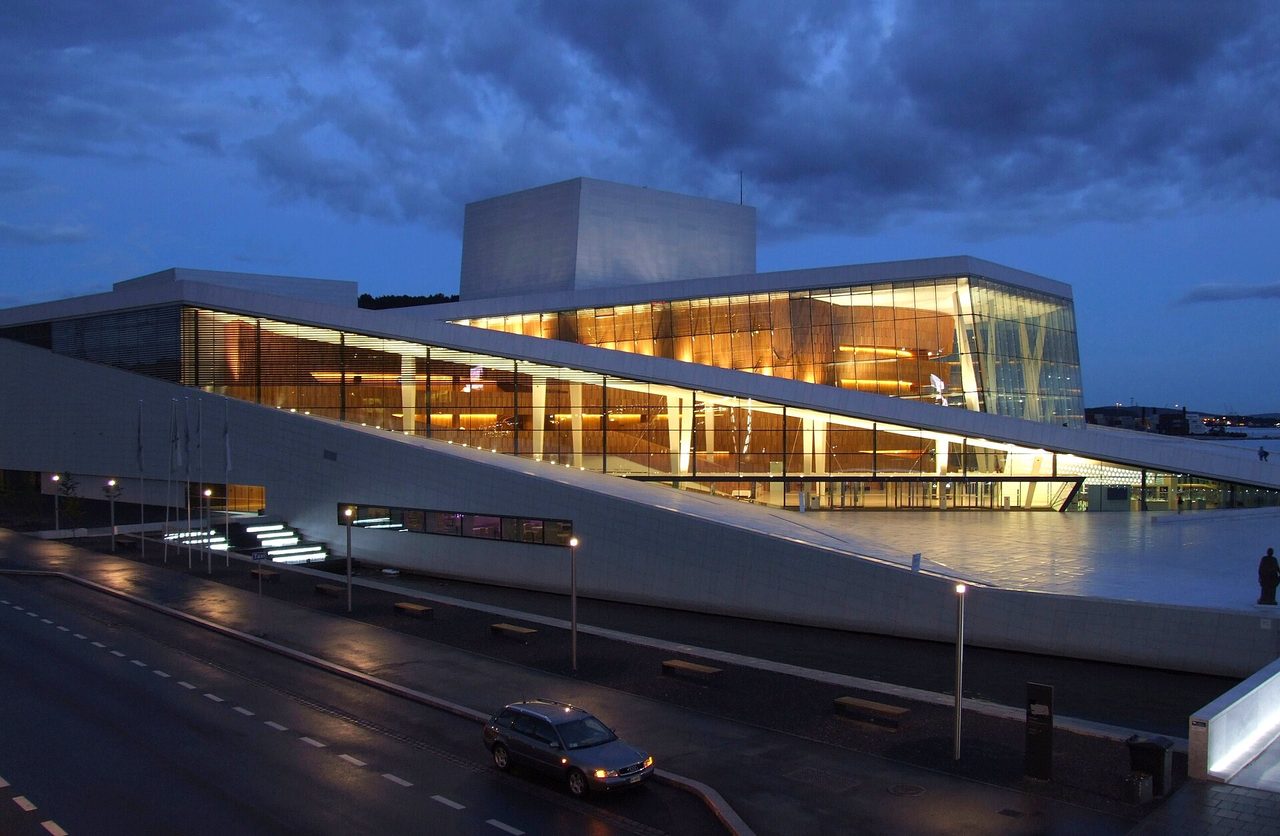
    Things to do in Oslo: the white marble Oslo Opera House illuminated at dusk beside the fjord

    Oslo at a Glance: Top Attractions, Costs and Time Needed

    If you only skim one thing, skim this. Prices are 2026 adult rates in Norwegian kroner (NOK) with rough US-dollar equivalents at about 10.5 NOK to the dollar; always check current pricing before you go, as Norwegian attractions adjust fares most years.

    Attraction What it is Cost (2026, approx.) Time needed
    Opera House roof Walk up a marble glacier for fjord views Free 30–45 min
    Vigeland Sculpture Park 200+ Gustav Vigeland sculptures, open-air Free 1–2 hrs
    MUNCH museum 13-storey home of Munch’s work, incl. The Scream ~220 NOK (~$21) 2–3 hrs
    National Museum Nordics’ largest art museum; the 1893 Scream ~180 NOK (~$17) 2–3 hrs
    Bygdøy museums (Fram, Kon-Tiki, Folkemuseum) Polar ships, balsa rafts, open-air history ~180–200 NOK each Half day
    Akershus Fortress Medieval castle and free harbour ramparts Grounds free; castle ~150 NOK 1–2 hrs
    Holmenkollen Ski Jump Iconic jump, ski museum, viewing deck ~190 NOK (~$18) 2–3 hrs
    Oslofjord island ferry Public boat to swimming islands Standard transit ticket (~44 NOK) Half day

    Bottom line up front: two full days cover Oslo’s headline sights; three days is the sweet spot. Budget honestly for around 1,500–2,500 NOK ($145–240) a day per person including a mid-range hotel, and seriously consider the Oslo Pass if you’re a museum person. More on all of that below.

    Is Oslo Worth Visiting? An Honest Take

    Let me get the elephant out of the room. You’ll meet Norwegians who shrug at their own capital, and travel forums where someone insists Oslo is “boring” and you should give it a single day on the way to Bergen. I think that take is dated and lazy, but I understand where it comes from. Oslo isn’t a chocolate-box city of cobbled lanes and pastel facades; it’s a working capital that spent the last fifteen years rebuilding its waterfront into one of the most interesting architectural stretches in Europe.

    What Oslo actually does brilliantly: museums (genuinely world-class, and now spread across spectacular new buildings), modern architecture (the Opera House, the MUNCH tower, the Deichman library and the whole Bjørvika “Barcode” district), and the rare trick of having real wilderness inside the city limits. You can finish a museum at noon, ride the metro twenty minutes, and be hiking in pine forest or swimming off a rock by early afternoon. Add a cold-plunge sauna culture, excellent coffee, and some of the cleanest tap water on earth, and “boring” stops making sense.

    The honest cons: it’s expensive (we’ll be very specific about that), museum opening hours are short — often only six or seven hours a day — so you have to plan, and the weather can be grey and wet for big chunks of the year. And yes, if you’re choosing between Oslo and Bergen for scenery alone, Bergen wins. But Oslo isn’t competing on scenery; it’s competing on culture, design and easy access to nature, and on that scorecard it more than earns two or three of your days. For the bigger picture of how it fits a national trip, see our overview of the best things to do in Norway.

    How Many Days Do You Need in Oslo?

    Short version: two days minimum, three if you can. Here’s how the math works out in practice.

    One day is enough to get a feel for the city if you’re transiting — roof of the Opera House, a stroll up Karl Johans gate, Vigeland Park, and one big museum. You’ll leave having seen the highlights reel and nothing more. Two days is the realistic minimum to enjoy rather than sprint: add the Bygdøy museum peninsula and a neighbourhood like Grünerløkka. Three days is the sweet spot — you get the museums, the parks, a sauna or an island swim, and time to slow down. Four days or more earns you a day trip: a fjord-side village like Drøbak, the old fortress town of Fredrikstad, or the start of the famous train west.

    The Best Things to Do in Oslo

    This is the heart of the guide. I’ve grouped Oslo’s attractions into the way you’ll actually experience them — icon sights, museums, the fjord, the hills, and the neighbourhoods — rather than a numbered list you’ll lose track of. Each entry has the practical stuff: rough cost, how long to budget, and how to get there.

    Oslo’s Icon Sights

    Walk the roof of the Opera House. Start here, because it’s free and it tells you everything about modern Oslo. The Snøhetta-designed Opera House (2008) rises out of the Bjørvika waterfront like a slab of white Carrara marble pretending to be an ice floe, and the genius of it is that the public is invited to walk straight up the sloping roof to a viewpoint about 18 metres up. Do a slow loop for 30–45 minutes and you’ll get the fjord, the islands, and the new skyline in one sweep. One warning from experience: the marble is treacherously slippery when wet or icy, so wear shoes with grip in winter.

    Vigeland Sculpture Park (Frogner Park). If you do one “tourist” thing in Oslo, make it this. Set inside the leafy Frogner Park, Vigeland is the world’s largest sculpture park by a single artist — more than 200 bronze, granite and wrought-iron works that Gustav Vigeland spent two decades creating. The 14-metre granite Monolith, carved with 121 intertwined human figures, is the centrepiece; the furious little bronze toddler nicknamed Sinnataggen (“the Angry Boy”) is the crowd favourite. It’s free, open around the clock, and at its magical best early in the morning before the tour groups arrive. Allow an hour or two; longer if the sun’s out and you fancy a picnic.

    Akershus Fortress. The medieval castle and fortress on the harbour dates to around 1300 and is still a working military site. The ramparts and grounds are free to wander — superb harbour views, especially at golden hour — and you can pay around 150 NOK to go inside the castle itself. The on-site Armed Forces Museum is free; the moving Norwegian Resistance Museum (Hjemmefrontmuseet) charges a small entry. Budget an hour or two.

    The Royal Palace and Changing of the Guard. At the top of Karl Johans gate, the Royal Palace anchors the city’s grand axis. The park around it is free to stroll year-round, and the Changing of the Guard happens daily at 13:30 — free to watch, often with a marching band in summer. You can only tour the palace interior in summer (the 2026 season runs roughly 20 June to 16 August), with English-language tours costing about 230 NOK; book ahead through Ticketmaster because the handful of walk-up tickets vanish fast.

    Stroll Karl Johans gate. Oslo’s grand main street runs about 1.2 km from Central Station up to the Palace, passing the Cathedral, Parliament (Stortinget, with free guided tours on selected days), the National Theatre and the historic University. It’s the city’s promenade — touristy, yes, but a good orientation walk on arrival and lively on a summer evening.

    The Best Museums in Oslo

    Oslo punches absurdly above its weight on museums, and the last few years have given several of them spectacular new homes. If you’re a museum person, this is where the Oslo Pass starts paying for itself.

    MUNCH. The home of Edvard Munch’s work moved in 2021 into a leaning 13-storey tower in Bjørvika, right next to the Opera House, and rebranded simply as MUNCH. Inside you’ll find the world’s deepest collection of Munch, including painted, drawn and printed versions of The Scream — typically one version is on display at a time, rotated through the day to protect the fragile works. Adult entry is around 220 NOK (~$21); under-18s are free, and it’s included with the Oslo Pass. There’s free entry on Wednesday evenings outside July and August, and the top-floor bar has a view worth the price of a coffee. Book a timed slot in advance.

    The National Museum. Opened in 2022 near the City Hall waterfront, this is the largest art museum in the Nordic countries, and it holds the version of The Scream most people actually picture: the painted 1893 original. Yes, Oslo has two Screams in two museums — the National Museum’s painting and MUNCH’s own versions — which is a fun bit of trivia and a genuine reason to visit both. Adult entry is around 180 NOK (~$17, and possibly a touch higher in 2026 — check current pricing); under-18s are free. It’s open late on Thursdays, which is the quietest time to go.

    The Bygdøy museum peninsula. A short bus 30 ride or a seasonal ferry from the City Hall pier takes you to Bygdøy, a green peninsula packed with Norway’s blockbuster history museums. The Fram Museum houses the actual polar ship Fram that carried Nansen and Amundsen toward the poles — you can climb aboard — for around 180 NOK; a combo ticket with the neighbouring Kon-Tiki Museum (Thor Heyerdahl’s original balsa-wood raft from the 1947 Pacific crossing) runs about 325 NOK. The open-air Norwegian Museum of Cultural History (Norsk Folkemuseum) gathers 160-plus historic buildings, including the c. 1200 Gol Stave Church, with costumed interpreters and folk dancing in summer; adult entry is around 200 NOK. All are free with the Oslo Pass.

    A heads-up on the Viking ships. This trips up a lot of visitors, so plan around it: the old Viking Ship Museum on Bygdøy is closed. It shut in 2021–22 for a complete rebuild and is being replaced by the much larger Museum of the Viking Age (Vikingtidsmuseet), currently scheduled to open in 2027 — though that date has slipped before, so check the latest before counting on it. The famous Oseberg, Gokstad and Tune ships are not viewable in 2026. In the meantime, you can see genuine Viking-age artefacts at the VÍKINGR exhibition in the Historical Museum downtown, or get a family-friendly digital fix at The Viking Planet near City Hall.

    Two more worth your time. The Nobel Peace Center by the harbour tells the story of the Peace Prize (awarded in Oslo, while the other Nobels are handed out in Stockholm). And out at Tjuvholmen, the Renzo Piano-designed Astrup Fearnley Museum is a sail-roofed contemporary-art gem with Warhol, Hirst and Koons, for around 180 NOK.

    Bronze figures reaching skyward among the sculptures of Vigeland Sculpture Park in Oslo

    The Oslofjord: Islands, Ferries, Saunas and Swimming

    Here’s the secret most one-day visitors miss entirely: Oslo sits at the head of a fjord dotted with small islands, and getting out onto the water is cheap and easy. Public ferries leave from the Rådhusbrygge piers by City Hall to a string of islands — Hovedøya, Lindøya, Gressholmen, Bleikøya, Nakholmen and Langøyene — and they’re covered by an ordinary transit ticket or the Oslo Pass, not some inflated tourist fare.

    Hovedøya, the closest at about ten minutes out, has 12th-century monastery ruins, swimming coves and easy walking trails. Langøyene has the best sandy beach for a proper swim. Buy a 24-hour transit ticket, ride out, picnic, swim, hop to another island, and you’ve got yourself a half-day “fjord cruise” for the price of a couple of bus rides. In summer the boats run every 15–20 minutes; the full island schedule kicks in from around mid-May.

    If you’d rather be guided, sightseeing cruises and dinner cruises leave from Aker Brygge, and you can rent a kayak to paddle the inner fjord. There’s even GreenKayak, which lends you a kayak for free in exchange for collecting any litter you find — a genuinely lovely (and Instagram-friendly) way to get on the water for nothing.

    Sauna and cold-plunge culture. One of the most quintessentially modern-Oslo things to do is book a floating sauna on the harbour, roast yourself, then leap into the fjord. Operators like KOK and SALT have wood-fired saunas right on the waterfront in Bjørvika and Aker Brygge; you can do a public drop-in session or rent a private floating sauna for a group. In winter, the contrast of a 80°C sauna and a 4°C fjord is the kind of thing you’ll be telling people about for years.

    People relaxing on the Aker Brygge waterfront in central Oslo, with the City Hall behind

    Parks, Hills and Nature Without Leaving the City

    This is Oslo’s superpower. The metro will carry you from downtown straight to the edge of the forest, and the city is ringed with hills and lakes that locals treat as their back garden.

    Holmenkollen Ski Jump. Ride metro line 1 about 30 minutes uphill and you reach the most famous ski jump in the world, looming over the city like a giant ski-shaped sculpture. The site includes the world’s oldest ski museum and a viewing deck at the top of the jump tower with sweeping views over Oslo and the fjord; combined entry is around 190 NOK. There’s a ski simulator, and in some seasons a zipline that fires you down the landing slope — though it’s weather-dependent and not always running, so don’t build your day around it. Holmenkollen is a year-round attraction, not just a winter one.

    Nordmarka and the lakes. Stay on that same line to Frognerseteren and you’re in Nordmarka, a vast forest of hiking and cross-country ski trails, with a classic timber lodge serving waffles and hot chocolate and a sledging run in winter. For an easy nature fix closer in, the lake at Sognsvann (end of metro line 5) has a flat 3.3 km loop that locals walk, run and swim at all summer.

    Ekebergparken. On the wooded hillside east of the centre, this free sculpture park mixes art by Dalí, Renoir and others with the city’s best panoramic viewpoint — reputedly the very spot where Munch heard the “scream of nature.” Take tram 18 or 19. Open around the clock, free, and far quieter than Vigeland.

    The Holmenkollen ski jump rising above the forested hills of Oslo

    Neighbourhoods to Wander

    Oslo rewards aimless walking, and a few districts are worth setting aside time for.

    Grünerløkka is the hip former-industrial quarter northeast of the centre — vintage shops, third-wave coffee, street art, riverside bars and a Sunday flea market at Birkelunden. Walk there along the Akerselva, the river that powered Oslo’s early industry, now a green corridor of waterfalls and old brick mills. While you’re up there, swing by Mathallen, an indoor food hall with 30-plus vendors selling seafood, cheese, baked goods and coffee — one of the better-value ways to eat well in this pricey city.

    Aker Brygge and Tjuvholmen form the polished waterfront promenade west of City Hall: a converted shipyard turned restaurant-and-bar strip, with the upscale Tjuvholmen “art island” tacked on the end, complete with a little free sculpture park and a tiny city beach. It’s where the ferries to the islands and Bygdøy depart.

    Damstredet and Telthusbakken are the answer to anyone who claims Oslo has no old charm: two preserved cobbled lanes of brightly painted wooden houses, around two centuries old, tucked minutes from the centre. Nearby sit Oslo’s oldest building, the c. 1100 Old Aker Church, and the cemetery where both Munch and Ibsen are buried. Finally, don’t skip the Deichman Bjørvika library beside the Opera House — yes, a library — a stunning 2020 building with cinema, reading terraces and free fjord views that locals use as their living room.

    Suggested Oslo Itineraries

    Here’s how I’d actually structure your time, depending on how long you’ve got. These are built to minimise backtracking and to mix indoor and outdoor so a rainy spell doesn’t wreck your day.

    One Day in Oslo

    Start on the roof of the Opera House at opening, then walk up Karl Johans gate to the Royal Palace, timing it for the 13:30 Changing of the Guard. Pick one big museum — the National Museum is the most central — then spend late afternoon at Vigeland Sculpture Park, and finish with dinner at Aker Brygge or Mathallen. It’s a highlights reel, but a good one.

    Two Days in Oslo

    Day one as above. On day two, head to the Bygdøy peninsula by ferry and pick two museums (Fram plus the Folkemuseum is a good combo), then spend the afternoon in Grünerløkka, walking up the Akerselva and grazing through Mathallen. If the weather’s warm, swap an afternoon for an Oslofjord island swim — Hovedøya is a ten-minute ferry from the centre.

    Three Days in Oslo

    With a third day you can slow down and add the things that make Oslo special rather than just famous: ride the metro up to Holmenkollen and Frognerseteren for forest air and waffles, book a floating sauna and a fjord plunge, and leave a few unhurried hours for MUNCH and the Bjørvika waterfront. A third day also opens the door to a half-day trip out of the city. If Oslo is one stop on a longer trip, our full Norway itinerary and road-trip guide shows how to thread it together with the fjords and the north.

    Best Day Trips from Oslo

    Oslo makes a comfortable base for day trips, and a fourth or fifth day in the city is well spent getting out of it.

    Drøbak and Oscarsborg Fortress. The fjord-side village of Drøbak is about 40 minutes south by bus, or a scenic 1.5-hour ferry down the Oslofjord in summer. It’s a cluster of white wooden houses with a year-round Christmas shop and, just offshore, Oscarsborg Fortress — the island fort whose guns sank the German cruiser Blücher in April 1940, buying Norway’s king and government the hours they needed to escape. It’s a genuinely gripping bit of WWII history with a great boat-and-walk day around it.

    Fredrikstad. About 70 minutes south by train, Fredrikstad’s Gamlebyen (“Old Town”) is one of the best-preserved star-shaped fortress towns in Northern Europe — moats, ramparts, cobbles and cannons, plus cafés and galleries inside the walls.

    Lillehammer. Two hours north by train, the 1994 Winter Olympics town is home to the excellent Maihaugen open-air museum and the Olympic bobsled track. It’s an easy, scenic rail day trip and a taste of inland Norway.

    Seeing the “real” fjords from Oslo — a reality check. A lot of visitors arrive hoping to see Norway’s dramatic western fjords on a day trip from Oslo. Be realistic: those fjords are hundreds of kilometres west, and a same-day round trip means 12–16 hours of travel for a couple of hours at the water. The better move is to treat the journey as the attraction. The Bergen Railway from Oslo is one of the world’s great train rides — about seven hours across the high Hardangervidda plateau — and the popular “Norway in a Nutshell” routing peels off it to Flåm and the Nærøyfjord. For the full picture of where to go and what to expect, read our guide to Norway’s fjords before you book anything.

    Sunset over the Oslofjord with a sailboat and people relaxing on the rocks in summer

    Where to Stay in Oslo: Best Neighbourhoods

    Oslo is compact and its transit is excellent, so you don’t need to obsess over location — but each area has a distinct feel. Hotel prices swing hard with the season; the ranges below are rough per-night figures for a double room, with summer (especially June) at the top end. For how Oslo’s neighbourhoods fit into a whole-country accommodation plan — cabins, rorbuer and fjord hotels included — see my full guide on where to stay in Norway.

    Area Vibe Best for Rough nightly rate
    Sentrum (city centre) Walk to everything; near Central Station and the Opera First-timers, short stays 1,500–2,800 NOK
    Bjørvika New waterfront; MUNCH, Opera, Deichman on the doorstep Design lovers 1,800–3,000 NOK
    Grünerløkka Hip, café-and-bar district; short tram to centre Younger travellers, foodies 1,300–2,200 NOK
    Frogner / Majorstuen Leafy, residential, near Vigeland Park Couples, quieter stays 1,400–2,400 NOK
    Aker Brygge / Tjuvholmen Polished waterfront dining and nightlife Splurgers 2,200–5,000+ NOK
    Grønland Gritty, diverse, cheap eats; near centre Budget travellers 900–1,600 NOK

    For most first-timers I’d point you at Sentrum or Bjørvika for convenience, or Grünerløkka if you want to feel like you’re living somewhere rather than just visiting. Hostels and basic hotels start around 500–1,000 NOK, with dorm beds from roughly 395 NOK; flagship luxury like The Thief on Tjuvholmen runs 5,000 NOK and up.

    What Does a Trip to Oslo Cost? Is Oslo Expensive?

    Yes. Oslo is genuinely one of the more expensive cities you’ll visit, and pretending otherwise helps no one. The good news is that the city’s best assets — the parks, the Opera roof, the fortress ramparts, the island ferries, the forest trails — are free or nearly so, and the tap water is free and excellent, so you can manage the damage. Here’s the honest picture in 2026 prices.

    Item Typical price (NOK) Approx. USD
    Coffee (caffè latte) ~65 NOK ~$6
    Draught beer (0.5L) 100–130 NOK $10–12
    Casual meal / food-hall plate 150–250 NOK $14–24
    Sit-down dinner main 250–400 NOK $24–38
    Single transit ticket ~44 NOK ~$4
    Museum entry 180–220 NOK $17–21
    Mid-range hotel (double/night) 1,500–2,500 NOK $145–240

    Daily budget, roughly: a careful backpacker doing free sights, hostel beds and food-hall or grocery meals can keep it near 800–1,000 NOK ($75–95) a day. A typical mid-range traveller with a hotel, a couple of paid museums and restaurant dinners should plan for around 1,800–2,800 NOK ($170–265) a day. Add drinks and it climbs fast.

    How to spend less without missing out: eat at Mathallen, Vippa or the Oslo Street Food halls instead of full-service restaurants; grab a pølse (hot dog in a flatbread wrap) or a bakery pastry for lunch; shop at Kiwi or Rema 1000 supermarkets; drink the tap water; and lean on the free attractions, which in Oslo happen to be some of the best. Norway is also nearly cashless — cards and the Vipps app work essentially everywhere — so you don’t need to carry kroner.

    Is the Oslo Pass Worth It?

    The Oslo Pass bundles free entry to 30-plus museums and attractions with unlimited public transport (including the regular Vy train to and from the airport), plus assorted discounts. Current adult prices:

    Pass Adult price Worth it if…
    24 hours ~580 NOK (~$55) You’ll do 2–3 paid museums in a day
    48 hours ~845 NOK (~$80) You’re museum-hopping both days
    72 hours ~995 NOK (~$95) Three full sightseeing days

    The break-even is simple. Stack just MUNCH (220), the National Museum (180) and the Fram–Kon-Tiki combo (325) and you’re already at 725 NOK in one day — more than a 24-hour pass — before you’ve ridden a single tram. So if you’re a museum person, buy it. If your Oslo is mostly parks, ramparts, island swims and waterfront walks (all free), you’ll likely come out ahead paying à la carte and buying a 24-hour transit ticket separately. Do the quick sum against your actual plan.

    The modern Barcode high-rises of the Bjorvika district on the Oslo waterfront

    Getting to and Around Oslo

    Oslo is one of the easiest European capitals to navigate. Here’s what you need to know from the moment you land.

    Heading beyond the capital? Our guide to getting around Norway covers the trains, buses, ferries and flights that connect Oslo to the fjords and the Arctic.

    From Oslo Airport (Gardermoen) to the City

    The airport (OSL) is about 50 km north, and two trains run into the centre. The key thing to know: they’re only a few minutes apart in journey time but very different in price.

    Option Time to Oslo S Adult price Notes
    Flytoget (Airport Express) ~19–20 min ~268 NOK Every 10 min; kids under 16 free with an adult
    Vy regional train (R10/R11/R12) ~23 min ~114–124 NOK The budget pick; covered by the Oslo Pass
    Airport bus / coach ~45–70 min ~200 NOK Slower; only worth it for specific stops
    Taxi ~40–50 min ~700–900 NOK Fixed-price options; rarely worth it solo

    For most people the Vy train is the smart choice — it’s barely slower than the famous Flytoget for less than half the price. Note that the airport sits outside Oslo’s standard transit zones, so a normal city ticket won’t cover it; the Oslo Pass does cover the Vy train, though, which is a nice perk if you’ve bought one.

    Public Transport in the City

    Ruter runs Oslo’s metro (T-bane), trams, buses and local ferries on one integrated ticket. Almost everything you’ll want is in Zone 1, including the islands. Buy tickets in the Ruter app (easiest), at machines, or in Narvesen and 7-Eleven kiosks. A single ticket is around 44 NOK and valid for 60 minutes including transfers; a 24-hour ticket is about 135 NOK and pays off after three rides; a 7-day ticket runs roughly 330–350 NOK. There are no turnstiles — just hold a valid app ticket for inspection. Prices reset each January, so treat these as approximate.

    Above ground, Oslo is very walkable, and the city is dense with docked e-scooters and city bikes if you want to cover more ground. For a deeper dive on trains, buses and the practicalities of moving around the whole country, our wider Norway transport coverage is on the way as part of this guide series.

    Karl Johans gate, Oslo's main street, lit up at night with cafes and historic facades

    Best Time to Visit Oslo

    There’s no bad time, only trade-offs. Summer (June–August) is peak: warm days around 18–22°C, outdoor dining, island swimming, ferries running, and astonishingly long daylight — Oslo sits below the Arctic Circle so there’s no true midnight sun, but from roughly mid-May to late July the sky never fully darkens and you’ll be out at 11pm wondering where the evening went. It’s also the most crowded and most expensive stretch, with June often the priciest month for hotels.

    The shoulder seasons — May, and September into early October — are my favourite: mild enough, far fewer crowds, autumn colour in the parks, and hotel rates often 30–40% cheaper. Winter (November–March) is cold, dark and atmospheric: Christmas markets, skiing and sledging in Nordmarka, museum-focused days, and the lowest hotel prices of the year. Just remember winter museum hours are short, so plan tightly. For a month-by-month breakdown across the whole country, see our guide to the best time to visit Norway.

    What to Eat in Oslo

    Oslo’s food scene has come a long way, and eating well here is one of the quiet pleasures of a visit — if you know where to look past the eye-watering restaurant prices. Traditional Norwegian things to try: brunost (caramel-brown whey cheese) on a waffle, reindeer or elk in a hearty stew, pinnekjøtt (salted, dried lamb ribs, a Christmas staple), fresh seafood, and the humble pølse i lompe — a hot dog wrapped in a soft potato flatbread that’s the unofficial national snack.

    For value, the food halls are your friends: Mathallen in Vulkan, Vippa down by the water, and the various Oslo Street Food halls let you eat properly without the full sit-down markup. Grønland and Tøyen have the city’s best cheap and diverse eats. And if you want to splurge at the very top end, Oslo is home to Maaemo, one of the few three-Michelin-star restaurants in the Nordics — book months ahead.

    Oslo Travel Tips: Things to Know Before You Go

    A few practical things that smooth out a first visit:

    • Currency: Norway uses the krone (NOK), not the euro. You almost never need cash — cards and the Vipps app are accepted virtually everywhere, including on transit and at most market stalls.
    • Tipping: Not expected. Service is effectively included; locals might round up or leave 5–10% for genuinely great service, no more. Card terminals increasingly prompt for a tip — it’s fine to decline.
    • Tap water: Free, safe and excellent. Carry a refillable bottle and skip the 40-NOK bottled water.
    • English: Spoken fluently almost everywhere. You’ll have no language trouble at all.
    • Safety: Oslo is very safe by international standards, including for solo and female travellers. Normal city common sense around Grønland and the central station late at night is plenty.
    • Weather: Pack layers and a waterproof whatever the season — Oslo can be grey and showery, and the evenings cool off even in summer.

    Frequently Asked Questions

    What is the number one thing to do in Oslo?

    If you can only do one thing, walk the roof of the Opera House for the view, then spend an hour in Vigeland Sculpture Park — both are free and both capture what’s special about the city. If you only have time for one paid attraction, make it MUNCH or the National Museum to see a version of The Scream.

    Can you see the northern lights in Oslo?

    Realistically, no — Oslo is too far south and too light-polluted for reliable aurora. On rare nights of very strong solar activity you might catch a faint glow, but if seeing the lights is a priority you need to head far north, to Tromsø and the Arctic. Our complete guide to the northern lights in Norway covers where and when to go.

    Is one day enough in Oslo?

    One day lets you tick the highlights — Opera roof, Karl Johans gate, Vigeland Park and one museum — but you’ll be rushing. Two days is the realistic minimum to actually enjoy the city, and three is ideal.

    Is Oslo or Bergen better?

    Different jobs. Bergen wins on postcard scenery and is the gateway to the western fjords; Oslo wins on museums, modern architecture, food and easy access to forest and islands. On most Norway trips you’ll want both — many people fly into Oslo and take the scenic train across to Bergen.

    Do you need a car in Oslo?

    No — in fact a car is a liability here. Parking is expensive, the city has congestion and toll charges, and public transport plus walking covers everything. Rent a car only when you leave the city for the wider countryside.

    What is Oslo famous for?

    Edvard Munch and The Scream, the Nobel Peace Prize, Viking heritage, the Holmenkollen ski jump, bold modern architecture along the fjord, and being one of the greenest, most nature-laced capitals in Europe.

    Is Oslo good for families?

    Very. The Fram and Folkemuseum on Bygdøy, the Opera roof, island ferries, the Holmenkollen jump and free outdoor swimming at Bjørvika and Sørenga all play well with kids, and under-18s are free at most museums.

    About This Guide

    This guide is written and maintained by the editorial team at Norway Tourism Guide, a group of writers and travellers who spend our time exploring Norway and reporting back without the tourist-board gloss. We’ve walked the Opera roof in driving sleet, missed the last island ferry, paid 130 NOK for a beer and lived to warn you about it. Our aim is simple: to be more useful and more honest than the listicles, and to keep prices and practical details current. Spot something that’s changed? Tell us, and we’ll fix it.

    Last updated: June 2026. Prices, opening hours and seasonal schedules change — especially museum hours and transit fares, which Oslo adjusts most years — so use the official links below to confirm anything time-sensitive before you travel.

    Sources and Further Reading

    Photo Credits

    All images are freely licensed via Wikimedia Commons. Thanks to the photographers:

    • Oslo Opera House — Photo: Pudelek (Marcin Szala) / CC BY-SA 4.0 via Wikimedia Commons (source).
    • Vigeland Sculpture Park — Photo: 5snake5 / CC0 via Wikimedia Commons (source).
    • Aker Brygge waterfront — Photo: W. Bulach / CC BY-SA 4.0 via Wikimedia Commons (source).
    • Sunset over the Oslofjord — Photo: Andreas Rønningen andozo / CC0 via Wikimedia Commons (source).
    • Holmenkollen Ski Jump — Photo: Ralf Roletschek / GFDL 1.2 via Wikimedia Commons (source).
    • Bjorvika Barcode skyline — Photo: Tim Adams / CC BY 3.0 via Wikimedia Commons (source).
    • Karl Johans gate — Photo: Jorge Franganillo / CC BY 3.0 via Wikimedia Commons (source).
  • Norway Itinerary: 5, 7, 10 & 14-Day Routes + Road Trip Guide

    Norway Itinerary: 5, 7, 10 & 14-Day Routes + Road Trip Guide

    Planning a Norway itinerary is mostly an exercise in restraint. Norway is the longest country in Europe — it’s farther from the southern tip to the North Cape than it is from Oslo to Rome — and the scenery is so relentlessly good that the temptation is to cram in everything. Resist it. The trips that work are the ones that pick a region and slow down, because the roads here are winding, the fjords force detours, and a “two-hour drive” on the map can easily eat half a day once you factor in ferries, single-lane stretches, and the constant urge to pull over for one more photo.

    So this guide hands you ready-made plans instead of a blank map. You’ll find complete day-by-day itineraries for 5, 7, 10 and 14 days, the best self-drive routes, an honest breakdown of what it all costs, the full logistics of driving in Norway (tolls, ferries, EVs and all), and a car-free option for those who’d rather take the train. It pulls together the wider pillars — our guides to the best time to visit Norway, the Norwegian fjords, and the best things to do in Norway — into actual routes you can follow.

    How many days do you need for a Norway itinerary?

    The honest answer: as many as you can give it, but here’s what each length realistically buys you. The golden rule first — pick one region per week. The most common first-timer mistake is trying to combine the southern fjords, the far north, and the cities in 7–10 days, which leaves you with a blur of driving and not much actually seen.

    • 5 days: The fjord highlights from a single base, or a quick Oslo–Bergen run. Best done car-free by train and boat.
    • 7 days: The sweet spot for first-timers — the classic Oslo → fjords → Bergen route, with time to breathe.
    • 10 days: The fjords done properly, adding the great mountain roads (Geiranger, Trollstigen) and Ålesund.
    • 14 days: Southern and western Norway without rushing — or split it and fly north to add Lofoten or Tromsø.

    And a reality check on distances. Norwegian roads are slow, so take map estimates and add roughly 25% for real-world driving, ferries, and stops.

    Route Driving time (no stops) Distance
    Oslo – Bergen ~7–8 hrs ~460–490 km
    Oslo – Stavanger ~7 hrs ~550 km
    Bergen – Ålesund ~7.5 hrs (+ ferries) ~420 km
    Bergen – Stavanger ~5 hrs (+ ferries) ~210 km
    Oslo – Trondheim ~6.5 hrs ~500 km
    Oslo – Tromsø ~21 hrs (fly: ~2 hrs) ~1,650 km

    That last row is the clincher: to reach the Arctic, you fly. Trying to drive there and back inside two weeks turns a holiday into an endurance event.

    Norway itinerary: 5 days (the fjords, fast)

    Five days is enough to fall for the fjords if you base yourself smartly and don’t sprawl. This works brilliantly without a car, using the train and fjord boats.

    • Day 1 — Bergen. Fly in, wander Bryggen (the UNESCO Hanseatic wharf), ride the Fløibanen funicular up Mount Fløyen, and graze the Fish Market. Overnight Bergen.
    • Day 2 — Bergen. A half-day fjord cruise (the Mostraumen trip up the narrow Osterfjord is the easy local pick), then more of the city. Overnight Bergen.
    • Day 3 — Bergen to Flåm. Take the Bergen Railway to Voss, then the bus/train down to Flåm; or drive via the Lærdal Tunnel. Overnight Flåm.
    • Day 4 — Nærøyfjord and Aurland. The Flåm–Gudvangen cruise through the UNESCO Nærøyfjord, then up to the Stegastein viewpoint 650 m above the water. Overnight Flåm or Aurland.
    • Day 5 — Flåm Railway and out. Ride the famous Flåm Railway up to Myrdal and back, then connect to Bergen or Oslo to fly home.

    If you only have a long weekend and want the absolute shortcut, the self-guided “Norway in a Nutshell” route packs the Bergen Railway, Flåm Railway and Nærøyfjord cruise into a single day between Oslo and Bergen.

    Norway itinerary: 7 days (the classic first-timer route)

    Seven days is the sweet spot, and the classic shape is an open-jaw trip — fly into Oslo, out of Bergen (or reverse) — so you never backtrack. This is the Norway itinerary I’d hand most first-timers. Before you head west, our dedicated Oslo travel guide covers the best things to do in the capital.

    • Day 1 — Oslo. Arrive and explore: walk the marble roof of the Opera House, wander Vigeland Sculpture Park, and see the museums on the Bygdøy peninsula. Overnight Oslo.
    • Day 2 — Oslo to Hardanger. Drive the Rv7 over the Hardangervidda plateau (Europe’s largest mountain plateau), stopping at the dramatic Vøringsfossen waterfall, down into the orchards of the Hardangerfjord. Overnight Eidfjord/Ulvik.
    • Day 3 — Hardangerfjord. Waterfalls (walk behind Steinsdalsfossen), fjord-side orchards and cider farms, and a relaxed drive toward Voss. Overnight Voss or Flåm.
    • Day 4 — Flåm and the Aurlandsfjord. The Flåm Railway, the Stegastein viewpoint, and the village of Undredal with its goat cheese and tiny stave church. Overnight Flåm.
    • Day 5 — Nærøyfjord to Bergen. The Flåm–Gudvangen cruise through the Nærøyfjord, then on to Bergen (about 2.5–3 hours). Overnight Bergen.
    • Day 6 — Bergen. A full day in the “capital of the fjords” — Bryggen, Fløyen, the fish market, and Edvard Grieg’s lakeside home at Troldhaugen. Overnight Bergen.
    • Day 7 — Depart Bergen.

    Prefer a round trip from one airport? Reverse it into a Bergen-based loop (Bergen → Hardanger → Sognefjord → Flåm → Voss → Bergen) to dodge the one-way car-hire fee. Spending time in the city first? Our Bergen travel guide rounds up the best things to do in Bergen.

    Norway itinerary: 10 days (the full fjord road trip)

    Ten days is the standard road-trip length, and it lets you add Norway’s legendary mountain roads to the classic fjord route without a single rushed day. This one really wants a car.

    • Day 1 — Oslo. Ease in with the capital’s highlights. Overnight Oslo.
    • Day 2 — Oslo to Lom. Drive up the Gudbrandsdalen valley to Lom, gateway to the Jotunheimen mountains, with its handsome stave church. Overnight Lom.
    • Day 3 — The Sognefjellet road. Cross the Sognefjellet scenic route — northern Europe’s highest mountain pass at 1,434 m — down to the inner Sognefjord. Overnight Skjolden/Lustrafjord.
    • Day 4 — Sognefjord to Geiranger. Work north via ferries and the Stryn area to Geiranger. Overnight Geiranger.
    • Day 5 — Geirangerfjord. A sightseeing cruise past the Seven Sisters, the Dalsnibba skywalk (1,500 m), and the Eagle Road’s hairpins. Overnight Geiranger.
    A panorama over the Geirangerfjord from a clifftop viewpoint
    • Day 6 — Trollstigen to Åndalsnes. The short ferry to Linge, then the white-knuckle hairpins of Trollstigen down to Åndalsnes. Overnight Åndalsnes or Molde.
    • Day 7 — The Atlantic Ocean Road. Drive the famous bridge-hopping coastal road, then on to the Art Nouveau town of Ålesund. Overnight Ålesund.
    • Day 8 — Ålesund to the Sognefjord. A long, scenic day south by road and ferry toward Flåm/Aurland. Overnight Flåm.
    • Day 9 — Flåm and the Nærøyfjord. The Flåm Railway and a Nærøyfjord cruise, then drive to Bergen. Overnight Bergen.
    • Day 10 — Bergen, then home.

    Norway itinerary: 14 days (fjords plus the Arctic)

    Two weeks lets you do the whole south and west at a civilised pace — or, better, run the 10-day fjord route above and then fly north for the grand finale. Don’t drive to the Arctic; the domestic flights are frequent and save you days behind the wheel.

    • Days 1–9 — The fjord grand tour. Follow the 10-day itinerary above (perhaps trimmed by a day), ending in Bergen.
    • Day 10 — Fly Bergen to Tromsø. The Arctic capital: the Fjellheisen cable car, the Arctic Cathedral, and — in summer — the midnight sun and whale or fjord cruises. Overnight Tromsø.
    • Day 11 — Tromsø. Dog sledding (in season), a Sami experience, or a day on the water. Overnight Tromsø.
    • Days 12–14 — Lofoten. Fly down to Lofoten (via Bodø or Svolvær) and drive the E10 spine — Henningsvær, Reine, Hamnøy, and the road’s end at Å — sleeping in a converted rorbu cabin. Fly out from Svolvær/Leknes or Bodø.

    Travelling in winter? Flip the northern leg into a Northern Lights base in Tromsø and lean on guided tours rather than self-driving icy Arctic roads — our northern lights in Norway guide has the full playbook.

    The E10 road winding through the Lofoten Islands

    The best Norway road-trip routes

    If you’d rather build your own trip than follow a fixed itinerary, these are the routes worth building around.

    The classic Southwest fjords loop

    The signature first-timer drive: Oslo or Bergen out through Hardanger, up the Sognefjord arms to Flåm and Aurland, and back. It strings together the greatest hits — Vøringsfossen, the Nærøyfjord, Stegastein, the Flåm Railway — on good roads, and can be done in anything from 5 to 14 days depending on how often you stop. For the fjords themselves, our Norwegian fjords guide breaks down which is which.

    Oslo to Bergen: Hardangervidda or the Lærdal Tunnel

    The two ways across the spine of southern Norway. The Rv7 over the Hardangervidda plateau (~470 km) is the more scenic, passing Vøringsfossen and Europe’s largest mountain plateau. The E16 via Lærdal is faster and all-weather, threading the 24.5 km Lærdal Tunnel — the longest road tunnel in the world, and toll-free. Neither requires a ferry.

    The Golden Route: Geiranger, Trollstigen and the Atlantic Road

    The most dramatic stretch of tarmac in the country: the UNESCO Geirangerfjord, the Eagle Road and Dalsnibba above it, the 11 hairpins of Trollstigen, and the bridge-hopping Atlantic Ocean Road out on the open coast. It’s the centrepiece of the 10-day itinerary and, for many, the whole reason to rent a car.

    The Storseisundet Bridge on Norway's Atlantic Ocean Road

    The 18 National Scenic Routes

    Norway has designated 18 National Tourist Routes — stretches of road furnished with architect-designed viewpoints and rest stops purely to celebrate the scenery. The standouts: Geiranger–Trollstigen, the Atlantic Ocean Road, the Aurlandsfjellet “Snow Road” (which climbs past Stegastein), Sognefjellet (the highest pass), and, up north, the Lofoten and Senja routes. Most of the mountain ones are summer-only.

    The mountains along the Sognefjellet scenic route, northern Europe's highest pass

    Lofoten and the Arctic north

    A road trip in its own right: fly to Lofoten (or Bodø, with the car ferry to Moskenes) and drive the E10 through the islands, optionally extending across to Senja and Vesterålen for a 7–10 day Arctic loop. Best in summer for the midnight sun and snow-free roads.

    The South Coast: Oslo to Stavanger

    Quieter and gentler than the dramatic west, Norway’s south coast (“Sørlandet”) makes a relaxed alternative or add-on, and it’s a good shoulder-season choice when the mountain passes are still closed. From Oslo, the E18/E39 runs past white-painted summer towns like Risør, Lillesand and Grimstad to Kristiansand (about 3.5 hours), then on toward Lindesnes lighthouse — the country’s southernmost point — and finally Stavanger, gateway to the Lysefjord and the Pulpit Rock hike. It’s flatter, sunnier and faster-driving than the fjord roads, with skerry-dotted coast and easy beach towns rather than towering cliffs.

    Driving in Norway: the self-drive logistics

    Self-driving is the best way to see fjord and mountain Norway, but there’s a learning curve. Here’s everything you actually need to know before you pick up the keys.

    Renting a car

    Expect roughly $60–85 a day for a compact in summer (more for an SUV, much less in shoulder season), and book early — peak-season cars sell out. Two things catch people out: most Norwegian rental cars are manual, so reserve an automatic well ahead if you need one; and one-way drop-off fees (picking up in Oslo, dropping in Bergen) can be steep, so weigh that against the time an open-jaw route saves. You’ll usually need to have held your licence at least a year and have a credit card in the main driver’s name. EU/EEA and most other foreign licences are fine for a visit.

    Tolls and AutoPASS

    Norway’s toll roads, bridges and city rings are almost all automatic — cameras read your plate, and there are no booths. Rental cars come fitted with an AutoPASS tag, and the tolls are billed to your card (foreign-registered cars can register or pay at autopass.no). Individual passages run from about €1 to €15. It adds up over a long road trip, so budget for it rather than being surprised.

    Car ferries

    Fjord country runs on car ferries, and they’re a scenic part of the trip rather than a chore. Most are turn-up-and-go — you drive on, a conductor takes payment at the window or your plate is read automatically, and crossings are short (often 10–20 minutes). Short hops cost roughly 60–100 NOK for car and driver. A handful of routes now run free, and a few busy summer ones (Geiranger–Hellesylt, Bodø–Moskenes for Lofoten) are worth pre-booking.

    A car ferry crossing a Norwegian fjord, a routine part of any road trip

    Driving an electric car

    Norway is the world’s EV capital, so road-tripping in an electric rental is genuinely easy: there are well over 15,000 charging points, including thousands of fast chargers, and most now take a contactless tap-to-pay card (apps like Recharge and Circle K still help). Plan a charge stop every 300–400 km, unplug around 80% (it slows after that, and idle fees apply), and enjoy the EV perks of reduced tolls. One quirk: some reserved EV parking and charging spots are for Norwegian-plated cars — which a Norwegian rental is, so you’re fine.

    Campervans

    A motorhome is a popular way to do Norway, rolling your transport and bed into one — figure roughly 1,500 NOK a day for a small van, more in peak summer. But know the rule that trips people up: Norway’s celebrated “right to roam” lets people wild-camp on uncultivated land, but it does not let you park a campervan there. Use designated sites and lay-bys, and note that Lofoten and parts of fjord Norway now restrict van camping — stick to campsites in those areas.

    Rules of the road

    A few essentials: headlights stay on at all times, even on a bright summer day; the drink-drive limit is effectively zero (0.02% BAC); and speeding fines are eye-watering and strictly enforced (limits are typically 80 km/h on open roads, up to 110 on motorways, 50 in towns). You’ll drive through a lot of tunnels — including the 24.5 km Lærdal Tunnel — so use a low gear on long descents to save your brakes, and watch for sheep and reindeer on northern and mountain roads.

    Mountain passes and seasonal closures

    This is the big one for road-trippers: most high mountain passes and scenic routes are closed in winter and only open roughly late May to October. Trollstigen is the cautionary tale — closed for much of 2024 and 2025 for rockfall work, reopened in 2026, but still liable to short closures in heavy rain. Whatever the month, check live road status with the Norwegian Public Roads Administration (vegvesen.no) the morning you plan to drive a pass.

    How to visit Norway without a car

    You can absolutely do the classic fjord trip car-free — Norway’s trains, fjord boats and buses are excellent, and Bergen makes a perfect car-free base. The backbone is the “Norway in a Nutshell” route, which combines the Bergen Railway, the Flåm Railway, and a Nærøyfjord cruise between Oslo and Bergen; you can do it in a single long day or stretch it over several with overnights in Flåm. Beyond it, the scenic rail network is a destination in itself — the Bergen Railway over the Hardangervidda, the steep little Flåm Railway, the Rauma Railway past the Trollveggen wall, and the Nordland Railway across the Arctic Circle to Bodø. Book each leg yourself through the Entur app to save money versus the packaged ticket; reservations are required on the scenic trains and the Flåm Railway sells out in summer.

    If you would rather skip the rental car entirely, our complete guide to getting around Norway by train, bus, ferry and plane walks through every option, with current fares and the apps that make it painless.

    A 7-day car-free Norway itinerary

    Here’s how the classic week looks with no car at all, using trains, boats and your own two feet:

    • Days 1–2 — Oslo. Two nights in the capital; everything’s walkable or a short metro ride away.
    • Day 3 — Oslo to Flåm by rail. The Bergen Railway over the Hardangervidda to Myrdal, then the steep little Flåm Railway down to the fjord. Overnight Flåm.
    • Day 4 — Nærøyfjord and Stegastein. The electric Flåm–Gudvangen cruise through the UNESCO Nærøyfjord, with the Stegastein viewpoint by shuttle bus. Overnight Flåm or Aurland.
    • Day 5 — On to Bergen. Cruise or bus to Gudvangen and Voss, then the train into Bergen. Overnight Bergen.
    • Days 6–7 — Bergen. The city sights, a half-day fjord cruise, then fly home.

    Book it through the Entur app, which sells tickets across every train, bus and ferry operator in one place — and you’ll usually pay less than the packaged “Nutshell” fare for the identical route. Bergen makes the best car-free base if you’d rather stay put and day-trip.

    How much does a Norway trip cost?

    Norway is famously expensive — though the weak krone of recent years has made it noticeably cheaper for foreign visitors than it once was. As a rough per-person daily budget excluding flights, plan on around $100–130 a day backpacking (hostels, self-catering, public transport), $190–255 mid-range (a 3-star hotel or rental, one restaurant meal, some paid activities), and $300+ at the top end. On a road trip, add the car (roughly $60–85 a day for a compact), fuel (petrol is around $2 a litre), tolls and ferries.

    Travel style Per person / day 7 days (+ car & fuel)
    Budget $100–130 ~$700–900 + car
    Mid-range $190–255 ~$1,300–1,800 + car
    Luxury $300+ ~$2,100+ + car

    Put together, a 7-day mid-range trip tends to land around $1,300–1,800 per person plus the car and fuel, and a 10-day trip around $1,900–2,600 — less per head if a couple shares a car and rooms. The biggest savings come from self-catering: cook from the discount supermarkets (Rema 1000, Kiwi, Coop Extra), drink the excellent free tap water, use the free ferries where they exist, book trains early, and travel in shoulder season. Our guide to the best time to visit Norway covers how prices swing across the year.

    Where to stay on a Norway road trip

    Norway’s small fjord hubs have limited beds and fill up fast in summer, so book accommodation as soon as your route is set — especially in tiny, in-demand spots like Flåm, Geiranger and Reine. A few pointers by base: Bergen and Oslo have the widest hotel choice and make easy first and last nights; Flåm and Aurland are the handiest fjord bases for the Sognefjord arms and the railways; Geiranger puts you right on the UNESCO fjord (though it empties of charm when cruise ships dominate the middle of the day); and Ålesund is a characterful coastal base for the northwest. Beyond hotels, Norway does memorable stays well: converted fishermen’s cabins (rorbuer) in Lofoten and the fjords, farm stays in Hardanger, glass-roofed cabins in the north, and well-equipped campsites with simple hytter (cabins) that are a real budget alternative to hotels. Wherever you land, a room with a fjord view is worth the small premium.

    Is a Norway road trip good for families?

    Very. The driving days are broken up by ferries (kids love them), waterfalls, and short walks to viewpoints, and the trains — especially the Flåm Railway — are a hit with all ages. Skip the all-day endurance hikes with little ones and lean on the cable cars and drive-up viewpoints for the big scenery without the slog. Pack layers and waterproofs, build in downtime, and don’t over-schedule the days: the travel between places is part of the adventure, but it runs long, and a tired family in a winding-road queue is nobody’s idea of a holiday.

    The best time of year for a Norway itinerary

    For a road trip, June to September is the window: the mountain passes and scenic routes are open, the days are long (the midnight sun north of the Arctic Circle), and the weather is at its kindest. July is the busiest and priciest; May and September are the value sweet spots — fewer crowds, lower prices, roaring waterfalls in May and golden colour in September — with the caveat that some high passes are still snow-closed in early May or closing by late September. Winter is a different trip entirely: most scenic mountain roads close, so a winter visit means the Arctic and the Northern Lights, generally by guided tour rather than self-drive. For the full month-by-month picture, see our best time to visit Norway guide.

    First-timer mistakes to avoid

    • Trying to see too much. The number-one error. Combining the south, the west, and the Arctic in a week means you spend the holiday in transit. Pick a region.
    • Underestimating drive and ferry times. Map estimates are optimistic — add about 25% for winding roads, ferry waits, and photo stops, and never cut it fine for a flight or tour.
    • Not pre-booking the bottlenecks. The Flåm Railway, popular summer ferries, and automatic rental cars all sell out — reserve ahead for June to August.
    • Booking a manual you can’t drive. Most rentals are stick-shift; lock in an automatic early if you need one.
    • Expecting a winter fjord road trip. The iconic mountain roads are closed in winter; that season is for the Arctic and the aurora.
    • Forgetting the running costs. Tolls, ferries and ~$2/litre fuel add up on top of the rental — budget for them.

    What to pack for a Norway road trip

    Norway can serve up four seasons in a single day, so pack for all of them: waterproof layers, a warm mid-layer even in summer, and sturdy shoes for the viewpoint walks. Bring a reusable water bottle (the tap water is superb and free), sunglasses and an eye mask for the long summer light, and a credit card with a PIN for tolls, ferries and fuel — Norway is very nearly cashless. If you’re driving in winter, bring proper boots and leave the high mountain roads to the snowplough. Download offline maps and the Entur transport app before you set off, because phone coverage thins out in the long tunnels and up in the mountains.

    Can you do a Norway road trip in winter?

    You can, but it’s a different — and more limited — trip. Most high mountain passes and scenic routes (Trollstigen, Sognefjellet, the Atlantic-region passes) are closed from roughly November to May, so the classic fjord-and-mountain loop simply isn’t drivable in deep winter. What stays open are the main roads and the long tunnels: the E16 between Oslo and Bergen runs all year via the Lærdal Tunnel, and the coastal routes are kept clear. Winter rentals come with studded or winter tyres, but you’ll want to be genuinely comfortable on snow and ice, with very short daylight hours to plan around. For most visitors, the smarter winter move is to base in the Arctic — Tromsø or Lofoten — and chase the Northern Lights by guided tour rather than self-driving icy roads in the dark. If you do drive, check road status daily at vegvesen.no, carry warm gear and food, and never gamble on a mountain pass in bad weather.

    Frequently asked questions

    How many days do you need in Norway?

    Five days covers the fjord highlights from one base; seven is the comfortable sweet spot for a first-timer’s Oslo–fjords–Bergen route; ten lets you add the great mountain roads and Ålesund; and fourteen lets you reach the Arctic. The key rule is to focus on one region per week rather than racing the whole country.

    Is Norway good for a road trip?

    It’s one of the best road-trip countries on earth — scenic routes, fjord ferries and mountain passes are practically designed for it. Just plan for slow, winding roads, frequent ferry crossings, and the cost of tolls and fuel, and don’t over-schedule your days. And before you set off, skim our Norway travel tips for the know-before-you-go essentials.

    What is the best Norway itinerary for first-timers?

    The classic seven-day open-jaw route: fly into Oslo, travel west through the Hardanger and Sognefjord country (via the Flåm Railway and a Nærøyfjord cruise), and finish in Bergen. It balances cities and fjords, needs no backtracking, and works by car or entirely by train and boat.

    Can you visit Norway without a car?

    Yes — the classic fjord trip is easily done car-free using the Bergen and Flåm railways, fjord cruises and buses, with Bergen as a base. The “Norway in a Nutshell” route is purpose-built for it. You only really need a car for the Atlantic Road, remote fjord country, and a Lofoten road trip.

    What is the best route from Oslo to Bergen?

    By car, the scenic choice is the Rv7 over the Hardangervidda plateau (past Vøringsfossen); the faster, all-weather choice is the E16 through the 24.5 km Lærdal Tunnel. Neither needs a ferry. By train, the Bergen Railway is one of the world’s great rail journeys at about seven hours.

    How much does a trip to Norway cost?

    Budget roughly $100–130 per person per day backpacking, $190–255 mid-range, and $300+ at the luxury end, excluding flights. A mid-range seven-day trip tends to run $1,300–1,800 per person plus the car and fuel; ten days around $1,900–2,600. Self-catering and shoulder-season travel cut costs significantly.

    What is the best time of year for a Norway road trip?

    June to September, when the mountain passes and scenic routes are open and the days are long. May and September are great value with fewer crowds, though some high roads may still be closed. Winter closes most scenic mountain roads, so it’s for Arctic and Northern Lights trips instead.

    Is 10 days enough for Norway?

    Ten days is ideal for the southern and western fjord region — enough to drive the classic route plus the Geiranger–Trollstigen–Atlantic Road “Golden Route” without rushing. It’s not enough to add the Arctic by road, but you could fly north for a couple of those days.

    How do tolls work in Norway for foreigners?

    Tolls are automatic — cameras read your number plate and there are no booths. Rental cars come with an AutoPASS tag and bill the tolls to your card; foreign-registered cars can register or pay online at autopass.no. Expect roughly €1–15 per passage, plus city toll rings around Oslo, Bergen and Stavanger.

    How do car ferries work in Norway?

    Most fjord car ferries are turn-up-and-go: you drive on, pay at the window or via automatic plate recognition, and crossings are short. Short hops cost about 60–100 NOK for car and driver; some routes are now free. Pre-book busy summer routes like Geiranger–Hellesylt and Bodø–Moskenes.

    Can you do a Norway road trip in an electric car?

    Easily — Norway has the densest charging network in the world, with thousands of fast chargers and contactless payment increasingly standard. Plan a stop every 300–400 km, charge to about 80%, and enjoy reduced tolls. A Norwegian rental EV also qualifies for EV-only parking and charging spots.

    What is “Norway in a Nutshell” and is it worth it?

    It’s a self-guided combination ticket linking the Bergen Railway, the Flåm Railway and a Nærøyfjord cruise into one greatest-hits journey between Oslo and Bergen. It’s genuinely scenic and saves planning; if you’re comfortable booking each leg yourself through Entur, you can usually do the identical route for less.

    What is the most scenic drive in Norway?

    The “Golden Route” combination of the Geirangerfjord, Trollstigen and the Atlantic Ocean Road is the showstopper, but the country has 18 designated National Scenic Routes. Others worth building a trip around include the Aurlandsfjellet “Snow Road,” Sognefjellet (the highest pass), and the Lofoten E10.

    Should I rent a campervan in Norway?

    A campervan is a popular, flexible way to road-trip Norway, rolling transport and accommodation together. Just remember the “right to roam” lets you wild-camp on foot but not park a van on uncultivated land — use designated sites and lay-bys, and note that Lofoten and parts of fjord Norway now restrict van camping.

    Oslo to Bergen — train or car?

    Take the train if you want to sit back and watch the Hardangervidda roll by, or you’re going car-free; it’s about seven hours and superb. Take the car if you want to detour to Vøringsfossen, the orchards of Hardanger, and the fjord villages along the way at your own pace.

    Final thoughts: building your Norway itinerary

    The best Norway trips come from a simple decision: choose one region, give it more time than you think it needs, and let the ferries and viewpoints set the pace. Pick the itinerary length that fits, anchor it to a route that excites you, and leave a buffer day for the weather. When you’re ready to flesh out the details, our guides to the best time to visit Norway, the Norwegian fjords, the northern lights, and the best things to do in Norway will help you turn the route into a trip.

    Road conditions, mountain-pass openings, ferry timetables and prices change with the season — always check current status (vegvesen.no for roads) before you travel. Last updated: June 2026.


    About this guide

    Written and maintained by the NorwayTourism.org editorial team — travelers and writers focused on practical, first-hand Norway trip planning. Routes, distances and logistics draw on Norway’s official tourism and roads resources; we refresh our guides regularly. Last updated: June 2026.

    Sources & further reading

    Photo credits

    All photos are used under their respective Creative Commons licenses.

    • The hairpin bends of Trollstigen, a highlight of any Norway road trip — Photo: W. Bulach / CC BY-SA 4.0 via Wikimedia Commons. Source
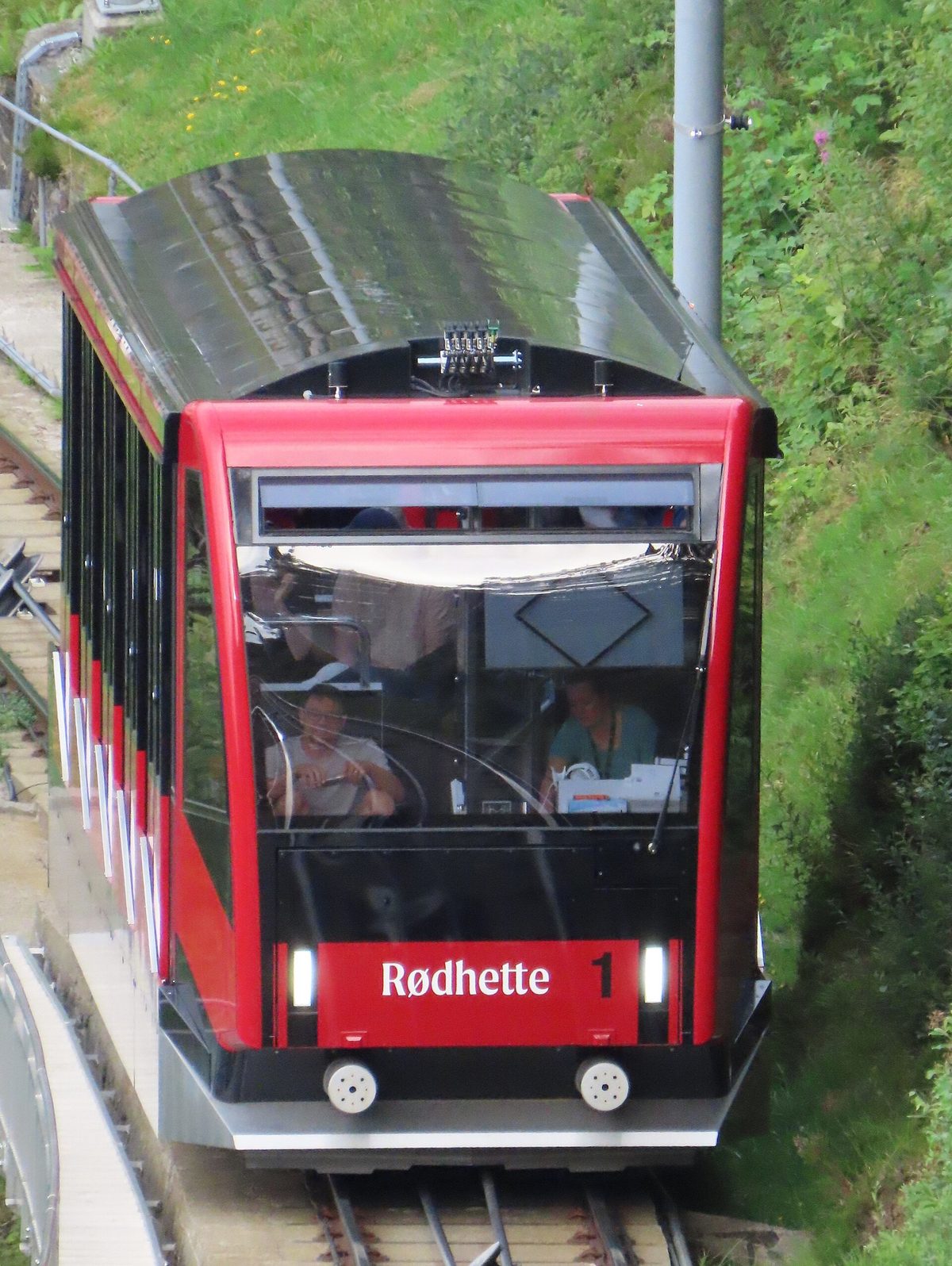
    • A panorama over the Geirangerfjord from a clifftop viewpoint — Photo: Philippe Teuwen / CC BY-SA 2.0 via Wikimedia Commons. Source
    • The E10 road winding through the Lofoten Islands — Photo: Ximonic (Simo Räsänen) / CC BY-SA 3.0 via Wikimedia Commons. Source
    • The Storseisundet Bridge on Norway’s Atlantic Ocean Road — Photo: CHG / CC BY 3.0 via Wikimedia Commons. Source
    • The mountains along the Sognefjellet scenic route, northern Europe’s highest pass — Photo: Pjacklam / CC BY 2.5 via Wikimedia Commons. Source
    • A car ferry crossing a Norwegian fjord, a routine part of any road trip — Photo: Ximonic (Simo Räsänen) / CC BY-SA 4.0 via Wikimedia Commons. Source
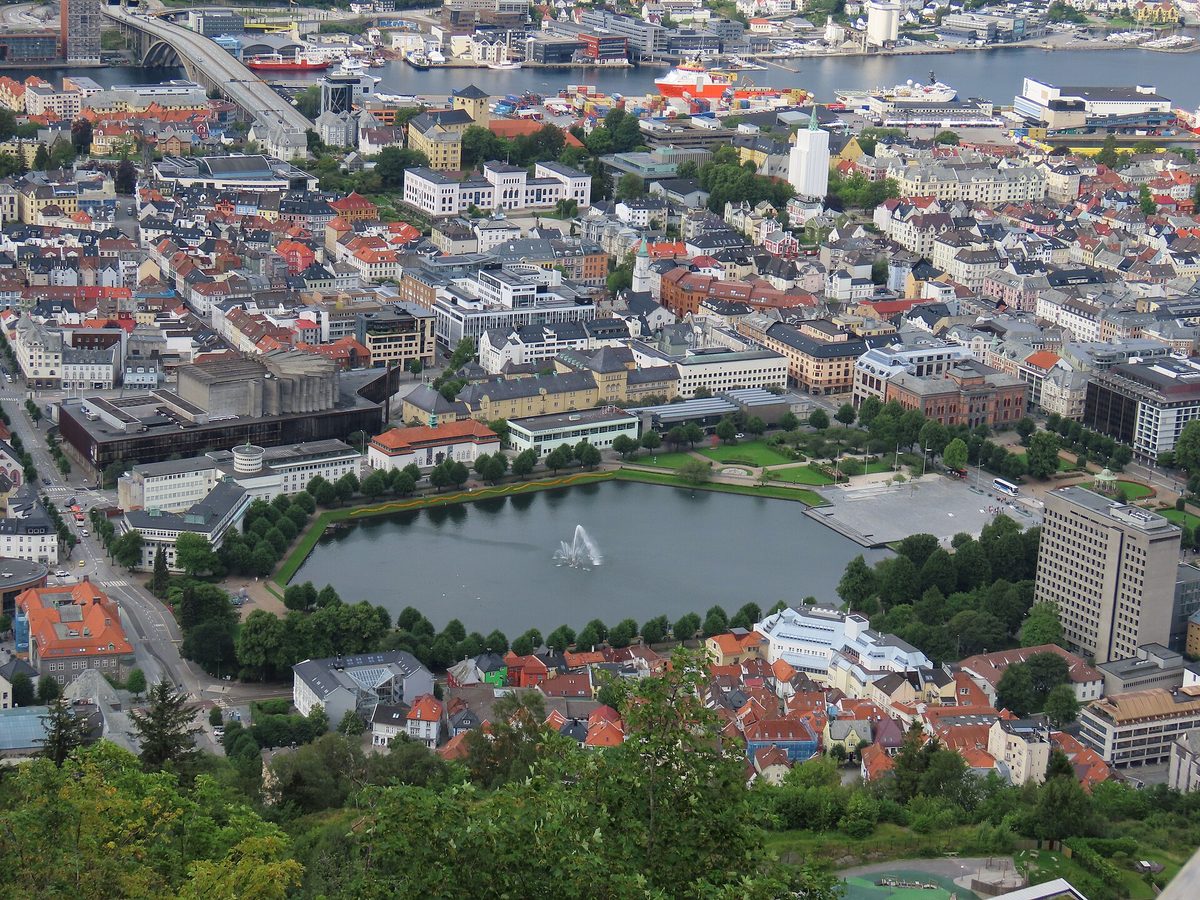
  • Norwegian Fjords: The Complete Guide to Norway’s Fjords

    Norwegian Fjords: The Complete Guide to Norway’s Fjords

    The Norwegian fjords are the reason most people put Norway on their list in the first place — and standing on the deck of a small boat as a kilometre of sheer rock slides past, waterfalls spilling straight into water so still it doubles the sky, you understand why. These aren’t just pretty inlets. They’re the drowned valleys that glaciers spent two million years carving, and Norway has more than a thousand of them.

    The trouble is that “see the fjords” is a vague plan, and the fjords are spread across hundreds of kilometres of coast. This guide fixes that. We’ll cover which fjords are actually worth your time (and which suits which kind of traveler), how to experience them — cruise, local ferry, train, car, or kayak — what it costs, when to come, and where to base yourself. There’s a comparison table, real itineraries, an honest Geirangerfjord-versus-Nærøyfjord verdict, and a note on the big 2026 change that’s reshaping fjord cruising. If you’re still shaping the wider trip, pair this with our guides to the best time to visit Norway and the best things to do in Norway.

    Norwegian fjords at a glance

    Question Short answer
    Most famous fjords Geirangerfjord & Nærøyfjord (both UNESCO World Heritage)
    Longest & deepest Sognefjord — about 205 km long, 1,308 m deep (“King of the Fjords”)
    Closest to Bergen Hardangerfjord
    Best way to see one A sightseeing cruise or a local car ferry through the fjord
    Best base Bergen (gateway city); Flåm or Geiranger to sleep fjord-side
    Best time May–September; waterfalls peak late May–June
    How many days Three minimum; five to seven to do it justice

    What is a fjord, and why does Norway have so many?

    A fjord is a long, narrow, deep inlet of the sea that fills a valley a glacier carved out — and that glacial origin is exactly what separates a true fjord from an ordinary bay. The word itself is Norwegian, an old term related to “crossing point” and to the same root as “ferry,” which tells you how central these waterways have always been to getting around a country chopped up by water.

    The formation story is worth a moment, because it explains what you’re actually looking at. Over roughly two million years, repeated ice ages sent enormous glaciers grinding down existing river valleys. The ice carries embedded rock that works like sandpaper, gouging those valleys far deeper and wider than any river could and leaving the characteristic steep-sided, U-shaped profile — rivers, by contrast, cut narrow V-shapes. Glaciers erode most powerfully in their middle reaches, which is why fjords are often deeper inland than at their mouth, where a shallower “threshold” of deposited rock frequently sits. When the last ice age ended about 11,700 years ago, the sea rose and flooded the valleys, and the fjords as we know them were born.

    So why does Norway have the world’s most famous fjords? Partly its hard, crystalline bedrock, which holds near-vertical walls without crumbling, and partly the sheer intensity and repetition of its glaciations. The result is more than 1,000 fjords, so intricate that they stretch Norway’s coastline from about 2,500 km measured straight to roughly 29,000 km once you trace every inlet. One detail that surprises first-timers: thanks to the warm Gulf Stream, the fjords stay virtually ice-free even in deep winter — which is why cruises run year-round, and why seals, porpoises and white-tailed sea eagles all make a living along them.

    The best Norwegian fjords (and what each is best for)

    Of Norway’s 1,000-plus fjords, only about ten see regular tourist traffic — which is good news, because it means a handful of names cover almost everything you’d want. Here’s how the headline fjords compare, then the detail on each.

    Fjord Region / gateway Length Best for How to visit UNESCO
    Sognefjord Vestland, north of Bergen ~205 km Scale & scenic side-arms Express boat, cruise, rail No
    Nærøyfjord Sognefjord branch ~18 km Drama, kayaking Flåm–Gudvangen electric cruise Yes (2005)
    Geirangerfjord Sunnmøre / Ålesund ~15 km Waterfalls & viewpoints Cruise from Geiranger; Hellesylt ferry Yes (2005)
    Hardangerfjord Closest to Bergen ~183 km Blossom, waterfalls, Trolltunga Road trip; cruise from Bergen No
    Lysefjord Ryfylke / Stavanger ~42 km Clifftop hikes Electric cruise from Stavanger No
    Aurlandsfjord Sognefjord branch ~29 km Train access, Stegastein view Flåm Railway; cruise; drive No

    Sognefjord — the King of the Fjords

    If the fjords had a main artery, this is it. The Sognefjord runs about 205 km inland and plunges to 1,308 m deep — Norway’s longest and deepest, and one of the longest in the world. It’s too vast to “see” in one go; the trick is that its narrow side-arms (the Nærøyfjord and Aurlandsfjord among them) hold the most dramatic scenery, while characterful villages like Balestrand and Flåm make relaxed bases. An express boat runs from Bergen up to Flåm in season — a scenic half-day in its own right. My advice: don’t race its full length; pick one arm and one village and settle in.

    It’s also the gateway to some of the country’s most memorable add-ons: the Flåm Railway climbs out of the Aurlandsfjord through 20 tunnels to the mountains at Myrdal, regularly rated one of the world’s great train rides, while the side-arm to Fjærland leads to the blue tongues of the Jostedalsbreen glacier. If you do nothing else on the Sognefjord, ride a boat up one narrow arm and a scenic train out of another — it’s the cleanest way to feel the sheer scale of the place.

    Nærøyfjord — the narrow, UNESCO-listed wonder

    A branch of the Sognefjord and, for many people, the fjord — narrowing to just 250 metres with walls climbing toward 1,800 m. It’s a UNESCO World Heritage site (inscribed in 2005) and among the most pristine fjord arms in the country, with no road along it, so it looks much as it did a century ago. The classic Flåm–Gudvangen cruise, now on silent electric boats, is the single best fjord-cruise leg most visitors will take, and it’s the marine centrepiece of “Norway in a Nutshell.” For fewer people and closer cliffs, swap the big cruise for a RIB safari or a kayak.

    Geirangerfjord — the iconic one

    The postcard fjord: a 15-km gorge of sheer cliffs, abandoned clifftop farms, and waterfalls pouring straight down the rock. The Seven Sisters waterfall fans out in seven streams opposite a single cascade nicknamed “the Suitor,” and the viewpoints — Dalsnibba (a toll road to around 1,500 m), Flydalsjuvet, and Ørnesvingen (the Eagle’s Bend) — deliver the big-sky shots. It’s also a UNESCO site and, frankly, a victim of its own fame: cruise ships pour visitors in midday in summer.

    The Geirangerfjord and its Seven Sisters waterfall, a UNESCO World Heritage site

    Honest tip: stay overnight in Geiranger, or visit in the shoulder season, and take an early-morning or late-afternoon boat — the difference between a serene fjord and a crowded one is just a couple of hours.

    Hardangerfjord — the Queen of the Fjords

    The Hardangerfjord is the closest big fjord to Bergen and, at around 183 km, the country’s second-longest. It’s gentler and more pastoral than the dramatic western fjords — this is Norway’s orchard country, and in mid-to-late May the apple, cherry and plum trees bloom white and pink against snow-streaked peaks (one of Norway’s loveliest, and shortest, windows). It’s also a region of waterfalls — Vøringsfossen, plunging 182 m into the Måbødalen canyon, has a dramatic stepped viewing structure — and the launch point for the famous Trolltunga hike. Most fjord trips here begin in Bergen, Norway’s gateway to the fjords; our Bergen travel guide covers the best things to do in Bergen and the cruises that leave straight from the harbour.

    Vøringsfossen, one of Norway's most famous waterfalls, in the Hardangerfjord region

    Hardanger rewards a road trip more than a single cruise; the orchards, waterfalls and farm cideries are strung along the shore. If you only have a day and want blossom, gamble on mid-to-late May and check the bloom reports.

    Lysefjord — clifftops and Pulpit Rock

    Down near Stavanger, the 42-km Lysefjord is famous less for the water than for what towers above it: Preikestolen (Pulpit Rock), the flat cliff 604 m up, and Kjeragbolten, a boulder wedged in a chasm with a 1,000-m drop beneath. An electric sightseeing cruise from Stavanger (around 3 hours, roughly NOK 890 / about $80–90) sails right under Pulpit Rock and close to the Hengjane waterfall. For the full regional picture — cruises compared, hike logistics and the city itself — see our complete guide to Stavanger and the Lysefjord.

    Preikestolen (Pulpit Rock) high above the Lysefjord

    One thing to be clear about: the cruise shows you Pulpit Rock from below; to get the famous photo standing on top you have to do the hike (about 8 km round trip, 4–5 hours). They’re two completely different days out.

    Aurlandsfjord and the lesser-known fjords

    The Aurlandsfjord — another Sognefjord branch — is where most rail travellers arrive, via the Bergen Railway and the spectacular Flåm Railway, and it’s home to the Stegastein viewpoint, a platform jutting 30 m out, 650 m above the water (open year-round, about 30 minutes from Flåm). Beyond the headliners, it’s worth knowing the quieter names: Hjørundfjord near Ålesund offers Geiranger-level drama with a fraction of the crowds; Nordfjord pairs glacier arms (Briksdal) with the Loen Skylift cable car up Mount Hoven; and the tiny Trollfjord, far north between Lofoten and Vesterålen, is so narrow that only small boats and the coastal ships can thread in and turn around inside its walls. And the Oslofjord, for the record, is a broad, island-dotted sea inlet near the capital — lovely for summer island-hopping, but not the towering-cliff fjord most people picture.

    Two of those lesser-known fjords genuinely deserve a detour. The Nordfjord pairs deep-blue water with the icy arms of the Jostedalsbreen, mainland Europe’s largest glacier — you can walk to the face of the Briksdal arm or ride the Loen Skylift cable car more than a kilometre up Mount Hoven in about five minutes. The Hjørundfjord, ringed by the jagged Sunnmøre Alps, gives you Geiranger-scale drama with a fraction of the boats; a small excursion from Ålesund here feels far more intimate than the big-ship circuit. Wherever you end up, keep an eye on the water and the cliffs: porpoises and seals surface in the fjords, and white-tailed sea eagles — Europe’s largest — ride the updrafts above them.

    The best fjord for every kind of traveler

    Short on time and not sure which to choose? Here’s the quick matchmaking:

    • Most dramatic scenery: the Nærøyfjord and Geirangerfjord (both UNESCO), or the tiny Trollfjord up north.
    • Easiest day trip from Bergen: the Hardangerfjord, or the Nærøyfjord via the Norway in a Nutshell route.
    • Best for a classic sightseeing cruise: Geirangerfjord, Nærøyfjord and Lysefjord, all served by good electric boats.
    • Best for kayaking: the narrow, calm Nærøyfjord, or paddling toward the Seven Sisters in Geiranger.
    • Best for avoiding crowds: the Hjørundfjord and the inner Sognefjord arms — or any fjord in shoulder season.
    • Best for waterfalls: Geirangerfjord (the Seven Sisters) and Hardangerfjord (Vøringsfossen), fullest in late May and June.
    • Best for hiking above the fjord: Lysefjord (Pulpit Rock and Kjerag) and Hardanger (Trolltunga); Nordfjord for an easy cable-car summit. Our full guide to hiking in Norway compares all the big fjord trails side by side.

    Geirangerfjord vs Nærøyfjord: which should you choose?

    If you only have time for one classic fjord, it usually comes down to these two UNESCO names. The quick verdict: Geirangerfjord wins on sheer waterfall drama and clifftop viewpoints, but it’s busier and further north (best paired with Ålesund and the Trollstigen road). Nærøyfjord wins on intimacy and access — it’s narrower, feels wilder, and slots straight into the easy Oslo–Bergen “Norway in a Nutshell” route. Choose Geiranger if you’re driving the northwest and love a viewpoint; choose Nærøyfjord if you’re doing the classic rail-and-fjord loop or want to kayak. Both are sensational; neither is a wrong answer.

    The famous hikes above the fjords

    Some of Norway’s most iconic hikes look straight down onto the fjords, and they’re a huge part of the draw. Above the Lysefjord, Preikestolen (Pulpit Rock) is the accessible icon — about four hours round trip to a flat cliff 604 m above the water — while Kjeragbolten is the harder, higher cousin. From the Hardangerfjord region, Trolltunga juts out some 700 m above a lake on a demanding all-day trek (self-guided roughly June to September). These are summer outings on real mountain trails, so check conditions and start early; our guide to the best things to do in Norway has the full rundown on each.

    How to experience the fjords (and which way is right for you)

    There’s no single “fjord tour” — there are six good ways in, at very different prices. Here’s how they stack up.

    For the nuts and bolts of fjord travel — car ferries, the AutoPASS discount, express boats and the scenic trains that reach the water — see our full guide to getting around Norway.

    Way to see them Roughly Best for Watch out for
    Public car/passenger ferry NOK 150–600 Budget; flexible; local feel No commentary; schedule-bound
    Sightseeing cruise (electric) NOK 800–1,200 The classic comfortable fjord trip Crowded midday in summer
    RIB safari NOK 700–1,200+ Speed, thrills, close to cliffs Bumpy, cold, weather-dependent
    Sea kayaking (guided) From ~NOK 1,200 Quiet, intimate, water-level views Needs a guide; weather-sensitive
    By train (Flåm/Bergen Railway) From ~NOK 600 Scenery without a car Books out in peak summer
    By car (self-drive) Variable Total flexibility; viewpoints Ferries, tolls and fuel add up

    The single most underrated option is the regular car ferry: working boats like the Geiranger–Hellesylt route double as sightseeing for the price of a local crossing, with a fraction of the tour-boat markup.

    And if you’d rather let the ship do the work for days at a time — sailing into Geirangerfjord on the way up the whole coast — that’s a different decision entirely: our guide to Norway fjord cruises and coastal voyages compares the big ships, Hurtigruten, Havila and the electric day boats honestly.

    Active ways: kayaking and RIB safaris

    If you’d rather feel the fjord than watch it through glass, get on the water yourself. Guided sea kayaking — beginner-friendly with a little instruction — is the most intimate way to experience a fjord, drifting at water level beneath cliffs that feel impossibly tall from a kayak; half-day trips on the Nærøyfjord or in Geiranger start from around NOK 1,200. At the other end of the energy scale, a RIB safari straps you into a fast rigid-inflatable boat that skips deep into narrow arms and chases waterfalls and wildlife, flotation suit and all. Both put you somewhere the big cruise boats can’t go, with a fraction of the crowd — just dress for cold spray and check the weather.

    A cruise ship sailing into the Geirangerfjord in summer

    The coastal voyage: fjords by the dozen

    For the slow, all-in version, the historic coastal route between Bergen and Kirkenes — run by Hurtigruten and the newer, low-emission Havila — calls at 34 ports and threads a whole string of fjords over six to seven days one way (about twelve round trip). The northbound leg leans toward cities and a summer Geirangerfjord detour; the southbound is the nature-lover’s route, past Lofoten and into the dramatic, cliff-walled Trollfjord, where the ships famously turn around inside the rock walls. It’s transport-with-a-view rather than a luxury cruise, and it runs year-round — winter sailings double as a Northern Lights hunt in the far north. Round-trip fares start around $2,000 per person and climb with cabin and season, so compare both operators and book months ahead for summer.

    “Norway in a Nutshell” — the classic combo

    The most popular way to string the fjords together without a car is Norway in a Nutshell, a flexible, self-guided combination of the Bergen Railway, the Flåm Railway, a Nærøyfjord cruise, and a bus, linking Oslo and Bergen. It’s now all-electric, doable in a (long) day or extended with overnights, and starts at roughly NOK 2,698 (about $245). You can book each leg yourself — the train tickets, the Flåm Railway, the cruise — and typically save $100–200, at the cost of doing your own logistics; the route and scenery are identical. Either way, book the Flåm Railway ahead in summer, as it sells out on cruise-ship days.

    Best fjord day trips from Bergen

    Bergen is the natural launchpad, and you don’t need to commit to a multi-day trip to taste the fjords. The quickest hit is a Mostraumen cruise from Bergen harbour — about 3.5 hours up the narrow Osterfjord past waterfalls and tidal currents, no car or train needed (from roughly NOK 800). For the full classic, the Nærøyfjord via Flåm makes a long but doable round trip from Bergen by train and boat. With more time, drive or cruise into the Hardangerfjord (closest of the big fjords) for orchards and Vøringsfossen. From Oslo, the fjords are a full day away — the “Norway in a Nutshell” route is the cleanest option. From Stavanger, the Lysefjord and Pulpit Rock are on the doorstep; from Ålesund, it’s the Geirangerfjord and Hjørundfjord.

    What it costs to visit the fjords

    Norway is expensive, and the fjords are no exception — but the range is wide depending on how you travel. A local car ferry can cost a few hundred kroner; a sightseeing cruise runs roughly NOK 800–1,200; the Flåm Railway is about NOK 600+ one way; and Norway in a Nutshell starts around NOK 2,698. A multi-day coastal voyage (Hurtigruten or Havila), which threads several fjords, runs from roughly $2,000 per person for a round trip and up. As a rough daily budget, plan on around $150–250 per person once you factor in Norwegian hotel and food prices. The big money-savers: use the public ferry network instead of branded cruises where you can, self-cater some meals, book trains early for cheap fares, and travel in shoulder season. For the wider cost picture, our guide to the best time to visit covers seasonal pricing.

    Best time to visit the Norwegian fjords

    The fjords are at their best from May through September, when cruises run full schedules, mountain roads and viewpoints are open, and the days are long. Within that window, late May and June are special: the snowmelt has every waterfall thundering, and the Hardanger orchards blossom in mid-to-late May. July and August bring the warmest weather but also the biggest crowds and cruise-ship traffic. September and early October trade some daylight for golden autumn colour and far fewer people. Winter is quieter but not closed — thanks to the Gulf Stream the fjords stay ice-free, and the Nærøyfjord and coastal cruises run year-round, with snow-dusted peaks and a real chance of the northern lights in the far north. For a full month-by-month breakdown, see our guide to the best time to visit Norway.

    Where to base yourself

    Where you sleep shapes the whole trip. Bergen is the classic gateway — airport, the Oslo railway terminus, a gorgeous UNESCO wharf — but the big fjord scenery is a few hours east, so it’s a launchpad more than a fjord-side base. Flåm is the best hub for the Sognefjord arms and the railways (tiny and tourist-busy by day, magical at night). Geiranger puts you right on the UNESCO fjord for the Seven Sisters and Dalsnibba. Ålesund, a striking Art Nouveau town, is the northern gateway to Geiranger and Hjørundfjord. Stavanger is the base for the Lysefjord and Pulpit Rock. And Balestrand is the quiet, scenic Sognefjord village for travellers who’d rather settle than rush.

    A fjord-side hamlet with farms and orchards in western Norway

    Best fjord viewpoints

    Some of the most jaw-dropping fjord moments come from above, reached by road or cable car rather than boat:

    • Stegastein (Aurlandsfjord) — a platform 650 m up, jutting 30 m out over the fjord; open year-round, ~30 minutes from Flåm.
    • Dalsnibba / Geiranger Skywalk (Geirangerfjord) — a toll road to about 1,500 m for the big-sky panorama (seasonal, roughly late May–October).
    • Flydalsjuvet & Ørnesvingen (Geirangerfjord) — the classic postcard ledge and the Eagle’s Bend hairpin, both looking straight down the fjord.
    • Loen Skylift to Mount Hoven (Nordfjord) — a cable car climbing more than 1,000 m in about five minutes, one of the world’s steepest.

    Norwegian fjord itineraries

    One day: a taste of the fjords

    From Bergen, a Mostraumen cruise (about 3.5 hours) gets you into a narrow fjord and back in an afternoon. With a full day and an early start, the Norway in a Nutshell loop from Bergen (or Oslo) packs in two scenic railways and the Nærøyfjord cruise.

    Two to three days: the classic fjord core

    Base in Flåm for two nights. Day one: the Flåm Railway up to Myrdal and back, plus the Stegastein viewpoint. Day two: the Flåm–Gudvangen Nærøyfjord cruise and a kayak or village wander. Add a third day to push up the Sognefjord to Balestrand, or detour into the Hardangerfjord.

    Five to seven days: the grand fjord loop

    Fly into Bergen and out of Ålesund (or do a loop). String together Bergen → Hardangerfjord (Vøringsfossen, orchards) → the Sognefjord and Flåm/Nærøyfjord → up to the Geirangerfjord via the scenic roads → Ålesund. A week lets you mix cruises, a marquee viewpoint or two, and a hike (Pulpit Rock if you swing south, or Trolltunga from Hardanger) without feeling rushed.

    Practical tips for visiting the fjords

    Watch the weather — all of it. Western Norway can serve up sun, rain and wind in a single afternoon, so pack proper waterproofs and layers whatever the forecast, and don’t pin a whole trip on one clear day.

    Book the bottlenecks ahead. The Flåm Railway, popular cruises and small-village accommodation sell out in peak summer (especially on cruise-ship days) — reserve well in advance for June to August.

    Travel kinder, and dodge the crowds. The famous fjords get genuinely overwhelmed midday in high summer. There’s a big change underway: from 2026, the World Heritage fjords (Geiranger, Nærøy and their neighbours) require zero-emission operation for smaller passenger vessels, with larger ships following from 2032 — which is why so many fjord cruises are now silent electric boats. You can do your bit (and have a better time) by choosing those electric cruises, visiting in shoulder season, going early or late in the day, and seeking out quieter fjords like the Hjørundfjord. In winter, the fjords are at their most serene, and in the far north a fjord trip can pair with the northern lights.

    Are the Norwegian fjords good for families?

    Very — with a little planning. The cruises and car ferries are easy with children (open decks, cafés, and endless things to point at), the Flåm Railway is a hit with kids of every age, and short, gentle walks to waterfalls or viewpoints break up the time on the water. Skip the all-day endurance hikes like Trolltunga with little ones and lean instead on the cable cars (Loen Skylift) and drive-up viewpoints (Stegastein) for the big views without the slog. Pack layers and waterproofs — the one dependable thing about fjord weather is that it changes — and build in downtime, because the travel between fjords is part of the adventure but can run long.

    Frequently asked questions

    What is a fjord, exactly?

    A fjord is a long, narrow, deep inlet of the sea formed when a glacier carved out a U-shaped valley that later flooded with seawater as the ice melted. That glacial origin is what gives fjords their steep walls and great depth, and distinguishes a true fjord from an ordinary bay or river estuary.

    How were the Norwegian fjords formed?

    Over roughly two million years, repeated ice ages sent glaciers grinding down existing valleys, gouging them far deeper and wider than rivers could. When the last ice age ended about 11,700 years ago, sea levels rose and flooded these U-shaped valleys, creating the fjords we see today.

    Which is the most beautiful fjord in Norway?

    It’s subjective, but the Nærøyfjord and Geirangerfjord — both UNESCO World Heritage sites — are the usual top picks for sheer drama. The Nærøyfjord is narrower and wilder; the Geirangerfjord has the famous waterfalls and viewpoints. For quieter beauty, the Hjørundfjord and the inner Sognefjord arms are hard to beat.

    What is the longest fjord in Norway?

    The Sognefjord, at about 205 km, is Norway’s longest fjord and one of the longest in the world. It’s also the deepest, reaching about 1,308 m, which is why it’s nicknamed the “King of the Fjords.”

    What is the deepest fjord in Norway?

    Also the Sognefjord, at around 1,308 m (4,291 ft) at its deepest point. Its inner arms drop hundreds of metres below sea level while the surrounding mountains rise well over a kilometre above it.

    How many fjords does Norway have?

    More than 1,000. They’re so numerous and intricate that they multiply Norway’s coastline from about 2,500 km (without them) to roughly 29,000 km. Only around ten, however, are regularly visited by cruises and tours.

    Where are the Norwegian fjords?

    The most famous fjords are in “Fjord Norway” — the western coast between Stavanger and Ålesund, with Bergen as the main gateway. There are also dramatic fjords much further north, around Lofoten, Tromsø and beyond.

    Which fjord is best for first-time visitors?

    The Nærøyfjord, because it’s easy to reach on the well-organised “Norway in a Nutshell” route from Oslo or Bergen, it’s UNESCO-listed and genuinely dramatic, and the cruise is a manageable couple of hours. If you’re flying into Stavanger, the Lysefjord (with Pulpit Rock) is the easy first fjord.

    Is Geirangerfjord or Nærøyfjord better?

    Geirangerfjord has more waterfall drama and famous viewpoints but bigger crowds, and suits a northwest road trip via Ålesund. Nærøyfjord is narrower, wilder and more accessible, slotting into the classic Oslo–Bergen rail-and-fjord loop. Choose based on your route — both are spectacular.

    What is the best fjord day trip from Bergen?

    For a half-day, the Mostraumen cruise from Bergen harbour. For the full classic, a round trip to the Nærøyfjord via Flåm (train plus boat). With a car or more time, the Hardangerfjord is the closest of the big fjords, with orchards and the Vøringsfossen waterfall.

    Should I take a fjord cruise or the ferry?

    A dedicated sightseeing cruise is more comfortable, has commentary, and is built for photos — but costs more and gets crowded midday. A regular car/passenger ferry (like Geiranger–Hellesylt) covers the same water for far less, with a local feel, if you don’t mind no commentary. For the famous narrow fjords, the purpose-built electric cruises are worth it; elsewhere, ferries are the savvy choice.

    How many days do you need to see the fjords?

    You can taste them in a single “Norway in a Nutshell” day, but three days lets you settle into one fjord region properly, and five to seven days lets you combine two or three fjords with a viewpoint and a hike without rushing. For complete day-by-day routes, see our Norway itinerary guide.

    What is the best time of year to visit the fjords?

    May to September, when cruises and roads are fully open. Late May and June bring the most powerful waterfalls and the Hardanger blossom; September offers autumn colour and fewer crowds. Winter is quiet and serene, with the Nærøyfjord and coastal cruises still running.

    How do you get to the fjords from Oslo?

    The most scenic way is the Oslo–Bergen railway, branching onto the Flåm Railway down to the Sognefjord arms — the backbone of the “Norway in a Nutshell” route. Driving takes the better part of a day; flying to Bergen, Ålesund or Stavanger and starting from there saves time.

    How much does a Norwegian fjord cruise cost?

    A short sightseeing cruise runs roughly NOK 800–1,200 (about $75–110); the Lysefjord cruise from Stavanger is around NOK 890. The “Norway in a Nutshell” combo starts near NOK 2,698, and a multi-day coastal voyage that threads several fjords starts around $2,000 per person. Prices vary by season — always check current rates.

    The fjords on screen and in story

    You may feel a flicker of recognition the first time you round a bend in the Nærøyfjord, and there’s a reason: Norway’s fjord country has seeped deep into pop culture. The fictional kingdom of Arendelle in Disney’s Frozen drew on the architecture of Bergen and the scenery of the western fjords, and filmmakers have used these waterways as shorthand for the wild and the epic for decades. Long before Hollywood, the fjords were the highways of the Viking Age — sheltered, navigable, and dotted with the farms and trading sites whose names still cling to the shore. Part of the pleasure of a fjord trip is feeling that layered history: the abandoned clifftop farms above Geiranger, the stave church at Undredal, the goat-cheese makers and cider farms of Hardanger. The scenery is the headline, but the culture tucked into these valleys is what makes a fjord feel lived-in rather than just looked-at.

    Final thoughts: planning your fjord trip

    The fjords reward a little strategy. Pick one or two rather than trying to see them all, match the way you travel — cruise, ferry, train or kayak — to the experience you want, and come between late May and September for the fullest show (or in winter for serenity and a shot at the lights). Get that right and the Norwegian fjords deliver one of the great travel experiences anywhere. When you’re ready to build out the rest of the trip, our guides to the best things to do in Norway, the best time to visit, and the northern lights pick up where this one leaves off.

    Fjord cruise schedules, prices, ferry timetables and road openings change seasonally — always confirm current details before you travel. Last updated: June 2026.


    About this guide

    Written and maintained by the NorwayTourism.org editorial team — travelers and writers focused on practical, first-hand Norway trip planning. Fjord facts and figures draw on Norway’s official tourism resources, UNESCO, and operator information; we refresh our guides regularly. Last updated: June 2026.

    Sources & further reading

    • Visit Norway — the fjords explained, regions and itineraries
    • UNESCO — West Norwegian Fjords (Geirangerfjord & Nærøyfjord) World Heritage listing
    • Fjord Norway — regional guides and live road/route status
    • Fjord Tours — Norway in a Nutshell route and pricing

    Photo credits

    All photos are used under their respective Creative Commons licenses.

    • A classic Norwegian fjord: the Aurlandsfjord seen from the Stegastein viewpoint — Photo: rheins / CC BY 3.0 via Wikimedia Commons. Source
    • The Geirangerfjord and its Seven Sisters waterfall, a UNESCO World Heritage site — Photo: Sergey Ashmarin / CC BY-SA 3.0 via Wikimedia Commons. Source
    • A fjord-side hamlet with farms and orchards in western Norway — Photo: Vesna Vujicic-Lugassy / CC BY-SA 3.0 IGO via Wikimedia Commons. Source
    • Vøringsfossen, one of Norway’s most famous waterfalls, in the Hardangerfjord region — Photo: Ximonic, Simo Räsänen / CC BY-SA 3.0 via Wikimedia Commons. Source
    • Preikestolen (Pulpit Rock) high above the Lysefjord — Photo: Svein-Magne Tunli / CC BY-SA 3.0 via Wikimedia Commons. Source
    • A cruise ship sailing into the Geirangerfjord in summer — Photo: W. Bulach / CC BY-SA 4.0 via Wikimedia Commons. Source
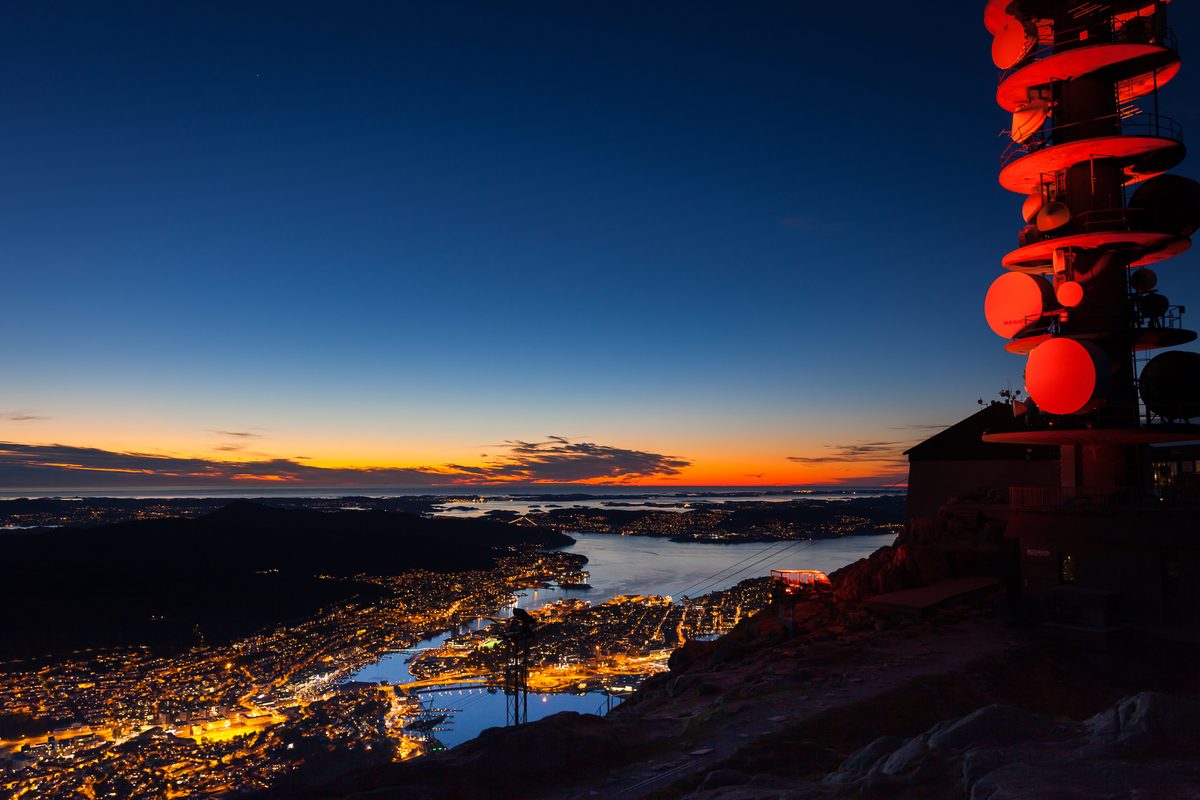
  • Northern Lights in Norway: The Complete Guide to Seeing the Aurora

    Northern Lights in Norway: The Complete Guide to Seeing the Aurora

    Seeing the northern lights in Norway is, for a lot of people, a genuine bucket-list moment — and the good news is that Norway is about the best place on Earth to do it. The far north of the country sits directly under the “auroral oval,” the ring where the aurora is most active, which means that on a clear, dark night you have a real shot at the lights even when solar activity is only middling. The catch is that the aurora is a wild thing: it answers to the sun and the weather, not to your itinerary.

    This guide is built to stack the odds in your favour. We’ll cover when to come, where to base yourself, and — the part most guides skip — exactly how to maximise your chances once you’re here, from reading an aurora forecast to why a guided “chase” usually beats sitting still. There’s honest cost data, real itineraries, camera settings that actually work, and a frank answer to the question everyone asks: are they guaranteed? (They’re not, and anyone who says otherwise is selling something.) If you’re still deciding when to come, pair this with our guide to the best time to visit Norway; for everything else to do while you’re here, see our things to do in Norway guide.

    Northern lights in Norway: at a glance

    Question Short answer
    Best season Late September to early April (peak November–February)
    Best months October, February and March — darkness plus clearer skies
    Best time of night Roughly 6 pm–2 am; sweet spot ~9 pm–midnight
    Best places Tromsø, Alta, Lofoten, Senja, Svalbard
    How many nights Three minimum; four to seven to be safe
    Typical tour cost Minibus “chase” ~NOK 1,300–2,500 (≈ $120–230)
    Guaranteed? No — but the Norwegian Arctic offers the best odds on the planet

    What are the northern lights?

    The northern lights — the aurora borealis — are what happens when electrically charged particles streaming off the sun slam into gases high in our atmosphere. Earth’s magnetic field funnels those particles toward the poles, where they collide with oxygen and nitrogen atoms and make them glow, a bit like the gas in a neon sign. The result is that silent, shifting light that ranges from a faint grey-green smudge to curtains that ripple across the whole sky.

    The southern hemisphere gets its own version, the aurora australis. But the northern show is the famous one, and Norway has a front-row seat.

    What the colours and shapes mean

    Most of what you’ll see is green — that’s oxygen glowing about 100–150 km up, and it’s the colour the human eye picks up most easily. Higher up, oxygen can glow a deep red, while nitrogen adds purple and pink fringes along the lower edge of a bright band. The shapes have a vocabulary too: a quiet arc low on the horizon, rippling curtains (the classic “dancing” lights), and, on a really active night, a corona — rays that seem to radiate from a single point directly overhead, like the sky is opening up. When people describe being moved to tears, it’s usually the corona.

    Green and purple curtains of the aurora borealis over a fjord near Tromso

    Why northern Norway is one of the best places on Earth

    Here’s the key fact that shapes the whole trip: the aurora isn’t strongest at the North Pole. It concentrates in a ring — the auroral oval — that hovers over roughly 65–70° latitude. Tromsø sits at about 69.6°N, smack under that oval. That’s why northern Norway is so reliable: you don’t need a big solar storm to push the lights down to you, because they’re already overhead. Places further south (Oslo, the UK, the northern US) only see the aurora when activity is strong enough to stretch the oval toward them; in Tromsø, a quiet night with clear skies is often all it takes.

    Solar Cycle 25: why the next few winters are special

    The sun runs on an 11-year cycle of activity, and it hit its latest peak — “solar maximum” — around late 2024. That’s why recent winters have been some of the most active in over a decade. As of 2026 we’re in the gentle decline from that peak, but here’s the encouraging part: activity is still well above the long-term average, and historically some of the biggest displays arrive in the year or two after the peak. So 2026 and 2027 remain excellent years to come. By the late 2020s the show will quieten toward the next solar minimum — though, again, at Tromsø’s latitude you’re under the oval regardless of the cycle, so the far north never really has a “bad” year.

    A bit of folklore

    Long before anyone understood solar wind, people told stories about these lights. In parts of Sámi culture the aurora was treated with deep respect — something not to be waved at, whistled at, or mocked, lest it take notice of you. Other Nordic traditions imagined the glow as light glinting off the shields of the Valkyries, or reflections from great shoals of herring. Standing under a full corona, you understand why every culture that lived with it reached for myth.

    When is the best time to see the northern lights in Norway?

    The single most important rule: you need darkness. The aurora is glowing up there year-round, but you can only see it against a properly dark sky — which is why the season runs from late September to early April and why you cannot see the northern lights in Norway in summer, when the midnight sun keeps the sky bright around the clock.

    The best months

    People assume midwinter is best because it’s darkest, and December–February do give you the most hours of darkness. But the coast is also at its cloudiest then, and cloud is the aurora-hunter’s real enemy. My honest pick is the shoulders of the season: late September–October and March (into early April). Statistically, geomagnetic activity tends to spike around the equinoxes, the skies are often clearer and calmer, the temperatures are kinder, and there are fewer crowds. February is a great compromise — deep darkness, reliable snow, and clearer inland skies. So: come November–February for maximum darkness, or September–October and March for the best balance of darkness, clear skies and comfort.

    The best time of night

    Aurora activity can flare at any hour of darkness, but the statistical sweet spot is roughly 9 pm to midnight, with the broader window running from about 6 pm to 2 am. Plan to be out, away from lights, and watching from mid-evening. It often comes in waves — a quiet, cloudy-looking band can erupt into a full dancing display within minutes, so patience pays.

    Month-by-month: the aurora calendar

    Month Darkness Conditions & verdict
    September Returns late month Aurora season opens; mild, often clear; autumn colour. A lovely, underrated start.
    October Plenty Dark enough, frequently clear, cheaper, fewer crowds. One of the best months.
    November Long nights Peak darkness begins; coast can be cloudy/stormy. Go inland (Alta) for clearer skies.
    December Maximum (polar night up north) Darkest of all and very festive, but cloudiest and coldest. Christmas markets are a bonus.
    January Maximum Deep, cold dark; sun returns to Tromsø mid-month. Prime aurora, low prices post-holiday.
    February Long nights Darkness + clearer skies + reliable snow + Sámi Week in Tromsø. Excellent all-rounder.
    March Long, shortening Equinox activity, clearer skies, more daylight for daytime activities. Arguably the best month.
    Early April Closing Last chance before the light returns for good; book the first week or two.

    For the full picture of weather, daylight and crowds across the whole year, see our companion guide to the best time to visit Norway.

    Where to see the northern lights in Norway

    Anywhere above the Arctic Circle puts you in striking distance, but some bases are easier, clearer, or more spectacular than others. Here’s how the main contenders compare, then the detail on each.

    Destination Latitude Min Kp* needed Best months Getting there Best for
    Tromsø 69.6°N ~1–2 Sep–Mar Direct international flights First-timers, tours, choice
    Alta 69.9°N ~1–2 Dec–Mar Fly via Oslo/Tromsø Clearest inland skies
    Lofoten 68°N ~2–3 Sep–Mar Fly to Bodø/Harstad + drive Scenery & photography
    Senja 69°N ~1–2 Sep–Mar Drive/ferry from Tromsø Drama without crowds
    Svalbard 78°N varies Nov–Feb Fly Oslo/Tromsø Daytime aurora, polar night
    Kirkenes 69.7°N ~1–2 Dec–Mar Fly Winter activities, dark skies
    Bodø / Narvik 67–68°N ~2–3 Oct–Mar Train & flights Budget gateway, ski under aurora

    *Kp is the 0–9 scale of geomagnetic activity (more on it below). The far-north spots need only a low Kp because they sit under the auroral oval; figures are rough guidance, not guarantees.

    Tromsø — the Arctic capital and easiest base

    If it’s your first aurora trip, start here. Tromsø has direct flights from several European hubs, a deep bench of tour operators and guides, good hotels and restaurants, and it sits right under the oval. The trade-offs: it’s genuinely busy in peak winter, and the coastal location means cloud is common — which is exactly why guided “chase” tours (that drive to clear skies) shine here. For free DIY viewing, locals head 20–40 minutes out of town to Kvaløya (spots like Ersfjord), Sommarøy, or toward the Lyngen Alps, away from streetlights with an open northern horizon. For everything to see and do once you have your aurora base sorted, see our complete guide to things to do in Tromsø.

    Alta — the City of the Northern Lights

    Alta wears that nickname for good reason: this is where the science began. The world’s first permanent aurora observatory opened on nearby Haldde mountain in 1899. Crucially for visitors, Alta is inland, so when the coast around Tromsø is socked in with cloud, Alta’s colder, drier air is often clear. It’s a quieter, more deliberate aurora base — and home to the Sorrisniva igloo hotel.

    The historic Haldde northern-lights observatory above Alta, opened in 1899

    Lofoten — the most photogenic backdrop

    For aurora over something — jagged peaks, red fishing cabins, a mirror-still fjord — Lofoten is unbeatable, and it’s why you’ve seen a thousand Lofoten aurora photos. It sits just under the oval. The honest caveat: the islands are exposed to fast Atlantic weather, so skies change quickly and you need flexibility (and ideally a rental car to move between Reine, Hamnøy and Henningsvær chasing clear patches). Pairs beautifully with a winter Lofoten road trip — my full Lofoten Islands guide covers bases, rorbu cabins and driving logistics.

    The northern lights over the peaks of the Lofoten Islands

    Senja — drama without the crowds

    Norway’s second-largest island, between Tromsø and Lofoten, gives you Lofoten-grade scenery with a fraction of the people. Viewpoints like Ersfjordbotn, Bergsbotn and Mefjordvær frame the lights over fjords and sharp peaks. It’s a fantastic choice if you want that quiet, just-us-and-the-sky feeling.

    The aurora over the mountains of Senja in northern Norway

    Svalbard — aurora in the middle of the “day”

    Svalbard, at 78°N, has a party trick no one else can match. During the polar night (roughly mid-November to late January) the sun never rises, so it’s dark enough to see the aurora even at midday — Svalbard is essentially the only inhabited place on Earth where you can catch the lights during “daytime” hours. The archipelago also has a dry, clear Arctic climate. It’s remote and pricey (and you can’t leave Longyearbyen without an armed polar-bear guide), so treat it as a bucket-list add-on rather than a budget option.

    The northern lights over Svalbard during the polar night

    Kirkenes, Nordkapp and the far northeast

    Out near the Russian border, Kirkenes delivers deep-winter atmosphere, low light pollution, and a clutch of signature experiences — king-crab safaris, the Snowhotel, dog sledding — that make a cloudy night still feel worthwhile. The North Cape (Nordkapp), mainland Europe’s northernmost point, is wild, exposed and often folded into coastal-cruise itineraries.

    Vesterålen, Narvik and Bodø

    Worth knowing about: Vesterålen (next to Lofoten) combines aurora with superb winter whale watching; Narvik lets you ski or ride a cable car for the lights above the clouds; and Bodø — just north of the Arctic Circle, a 2024 European Capital of Culture with a central airport — is an increasingly handy, more affordable gateway.

    Can you see the northern lights in Oslo or Bergen?

    Rarely, and only during strong solar storms. Both cities sit too far south and have too much light pollution for reliable viewing. During the exceptional May 2024 storm — the strongest in two decades — aurora was visible across southern Norway and much of Europe, but that’s the exception that proves the rule. For a trip you’re actually planning around the lights, go north of the Arctic Circle.

    How to maximise your chances of seeing the aurora

    This is the part that actually moves the needle. Get these right and you’ll dramatically improve your odds, whatever the forecast says.

    Get away from city light

    Light pollution washes out all but the brightest aurora. Even 20–30 minutes out of Tromsø makes a huge difference. Look for an open, north-facing horizon — a frozen lake, a fjord shore, a valley — somewhere your eyes (and camera) aren’t fighting streetlights.

    Chase clear skies — why guided tours win

    Here’s the thing most first-timers get wrong: cloud, not solar activity, is what defeats most aurora trips. The lights can be blazing above the clouds and you’ll see nothing. This is the single best argument for a guided minibus “chase” tour — the guides watch live cloud and aurora data all evening and will drive, sometimes hundreds of kilometres (even across into Finland), to find a hole in the sky. That mobility is worth far more than a fixed viewpoint, however scenic.

    Understand the Kp index — and read a forecast

    The Kp index is a 0–9 scale of global geomagnetic activity, updated every few hours by NOAA. Higher Kp means the auroral oval expands toward the equator, so the lights become visible further south. The crucial point for Norway: because Tromsø, Alta, Senja and Lofoten sit under the oval, even a low Kp of 1–2 is often enough. (By contrast, Scotland needs roughly Kp 5, central Europe Kp 7.) So in the far north, clear, dark sky usually matters more than a high Kp number.

    Useful free tools: NorwayLights (the official tourism-board app), norway-lights.com, NOAA’s Space Weather Prediction Center, and the all-sky cameras and alerts run by the University of Tromsø. Pair an aurora forecast with a cloud forecast (yr.no is the Norwegian standard) — you want the night when both line up. App names change, so search your app store, but check a forecast plus the weather, not just one.

    Mind the moon — and let your eyes adjust

    A bright full moon won’t hide a strong aurora, but it does wash out fainter displays; a darker, new-moon sky shows more. And give your eyes 15–20 minutes away from your phone screen and any white light to fully dark-adapt — faint aurora that was invisible at first will start to appear. Use a red light if you need to see.

    Stay several nights

    Because the weather is a gamble on any single night, the real strategy is simply more nights. Three is the sensible minimum; four to seven dramatically raises your odds of catching at least one clear, active night. People who fly in for one night and miss out usually blame bad luck — really they didn’t give themselves enough chances.

    The aurora-hunter’s checklist

    • Base yourself above the Arctic Circle (Tromsø, Alta, Lofoten, Senja) — not southern Norway.
    • Come in season (late Sept–early April) and give yourself 3+ nights.
    • Get away from light and find an open northern horizon.
    • Chase the clear skies — book a mobile guided tour, or have a rental car and stay flexible.
    • Check an aurora forecast plus a cloud forecast each evening.
    • Dress for standing still in the cold for hours (see packing, below).
    • Be patient — be out by 9 pm and give it until the early hours.
    • Manage expectations: the camera sees more colour than your eye, and nothing is guaranteed.

    How to see them: tours, cruises or self-drive?

    You don’t need a tour to see the northern lights — but a good one genuinely improves your odds and your comfort. Here’s an honest comparison of the three ways to do it, and what they cost.

    Guided minibus “chase” tours — the sweet spot

    Small groups (often 8–16 people), 6–9 hours, with a local guide who chases clear skies. The good ones include thermal suits and boots, hot drinks and a campfire snack or hot meal, tripods, and free photos taken by the guide. This is what I’d book for a first trip: you get mobility (the whole point), warmth, and someone who knows where to go. Expect roughly NOK 1,300–2,500 (≈ $120–230) per person.

    Northern lights cruises

    Norway’s coastal voyage (the historic Bergen–Kirkenes route, run by Hurtigruten and Havila) doubles as a brilliant aurora trip: the ship moves up the coast each night, so you’re not stuck under one cloud bank, and most northern ports are inside the aurora zone. Both lines offer a “Northern Lights Promise” on qualifying winter voyages — broadly, if the aurora doesn’t appear during your voyage, you get a complimentary short voyage another time (you usually must sign up for the onboard alert; terms and date windows vary, so confirm the current promise before booking). Cabins have an aurora alert so you’re woken when it shows. It’s transport-with-a-view, not a luxury cruise — but few aurora experiences beat watching the lights from the deck of a moving ship. For ships, cabins, costs and how the route actually works, see our full Norway fjord cruise and coastal voyage guide.

    Self-drive and independent viewing

    If you’re comfortable on winter roads (studded tyres, short days, snow), renting a car gives you total flexibility to chase clear skies on your own schedule and stop wherever the sky opens up — especially good in Lofoten and on Senja. Just respect Arctic driving: leave margins, check road status, and don’t park on blind bends to gawk at the sky (everyone wants to).

    Are the northern lights guaranteed?

    No — and be wary of any marketing that implies otherwise. The aurora is a natural phenomenon at the mercy of the sun and the weather. What some Tromsø operators offer is a “see them or go again” deal: if your tour draws a blank, you can rejoin another night free or at a steep discount, subject to availability — which only helps if you’ve got spare nights in town. The cruise “promises” work similarly, compensating with another voyage rather than guaranteeing a sighting. The only real guarantee is stacking the odds: right place, right season, enough nights, clear skies.

    What northern lights tours cost

    Option Typical price (approx) Best for
    Big-bus group tour NOK 900–1,300 ($85–120) Budget; less nimble at dodging cloud
    Minibus “chase” tour NOK 1,300–2,500 ($120–230) Best all-round odds and comfort
    Aurora boat cruise (evening) NOK 950–1,900 ($90–175) Comfort, sea views, dinner
    Photography tour NOK 2,000–3,500+ ($185–320+) Getting great shots with coaching
    Snowmobile / snowcat aurora NOK 2,500+ ($230+) Adventure + remote dark skies
    Coastal cruise (Hurtigruten/Havila) From ~$1,400 (6–12 days) Combining aurora with the whole coast

    Prices are approximate, vary by season and operator, and the Norwegian krone moves — always check current rates when booking. Many trips bundle the aurora hunt with daytime activities like dog sledding, which is the smart way to fill an Arctic itinerary.

    A husky sled team at night — dog sledding is a popular add-on to a northern lights trip

    Where to stay for the northern lights

    Your bed can be part of the show. A few options worth knowing:

    Glass igloos and aurora cabins

    Transparent-roofed “igloos,” aurora domes and glass-fronted cabins let you watch the sky from under a duvet — the dream for anyone who’d rather not stand in −15°C at 1 am. You’ll find them around Tromsø, the Lyngen Alps, Alta and beyond. They book out early in peak season and command a premium, but waking to the lights overhead is hard to top. (I compare glass igloos, snow hotels and the rest of the Arctic’s bed options — with prices — in my guide to where to stay in Norway.)

    Rorbu cabins and fjord-side lodges

    In Lofoten and Senja, the converted fishermen’s cabins (rorbuer) sit right on the water with mountains behind — superb aurora foregrounds, and many have hot tubs or saunas so you can soak while you wait.

    Ice and snow hotels

    For a one-night experience (it’s an experience, not a comfy sleep), Sorrisniva near Alta — the world’s northernmost ice hotel — and Snowhotel Kirkenes are rebuilt from snow and ice each winter, usually open roughly December to early April. Most people sleep one night on the ice and otherwise stay in warm cabins.

    Aurora camps and Sámi lavvo stays

    Out in the wilderness, heated lavvo (tent) camps put you under dark skies with a fire and a guide watching for activity — a more atmospheric, lower-tech way to spend the night hunting.

    How to photograph the northern lights

    The aurora is one of the few subjects where a camera genuinely sees more than your eyes — so even a faint display can produce a stunning photo. Here’s how.

    Camera settings that work

    Shoot in full Manual. Use a wide-angle lens at its fastest aperture (f/2.8 or wider). Start around ISO 1600 (push to 3200 if it’s very dark, drop toward 800 under a bright moon). Set the shutter to about 5–15 seconds — shorter if the lights are moving fast so the curtains stay crisp, longer for faint glows. Focus manually to infinity (focus on a bright star and fine-tune). Shoot RAW if you can, set white balance around 3500–4000K, and turn off the flash. A solid starting recipe: f/2.8, ISO 1600, 15 seconds — then adjust.

    Gear checklist

    A tripod is essential (any long exposure needs it), plus a remote or the 2-second self-timer to avoid shake. Bring spare batteries and keep them in an inner pocket — the cold drains them fast — and a head torch with a red mode.

    Shooting the aurora on a phone

    Modern iPhones, Pixels and Samsung flagships take genuinely good aurora shots using Night Mode, which automatically stretches the exposure to several seconds. The trick is to hold the phone dead still — prop it on a wall, rock or mini-tripod — turn off the flash, avoid zoom, and let the countdown finish. If your phone has a Pro/manual mode, mirror the camera settings above.

    Composition

    The best aurora photos aren’t just sky — they have a foreground: a mountain, a cabin, a person in silhouette, or a reflection in still water. Scout your spot in daylight if you can, so you’re not composing blind in the dark.

    What to pack and wear for an Arctic night

    You will be standing still, outdoors, for hours, often well below freezing — which feels far colder than moving around. Dressing properly is the difference between a magical night and a miserable one.

    Use the three-layer system: a base layer of merino wool or synthetic (never cotton, which traps sweat and chills you); an insulating mid layer of fleece or down; and a windproof, waterproof outer — an insulated parka and snow trousers. Then protect the bits that actually get cold: insulated waterproof boots with thick wool socks, a warm hat, neck gaiter, and gloves (thin liners under mittens so you can work a camera), and hand and foot warmers, which are cheap and transformative. Add ice grips for your boots. Coastal Tromsø is often milder than people expect (around −1°C to −5°C), but inland chase routes and Finnmark can hit −15°C to −30°C. Many minibus tours lend thermal oversuits and boots — but the base layers, hat and gloves are on you.

    Northern lights itineraries

    How long you need depends on how much you want to do beyond the aurora hunt. Three sample shapes:

    3 days: a Tromsø quick trip

    Fly into Tromsø, do a guided aurora chase on each of two nights (the second is your insurance against one cloudy night), and use the daylight hours for the Fjellheisen cable car, the city, and a half-day activity. Tight but doable — and the bare minimum I’d risk for a realistic chance.

    5 days: Tromsø plus activities

    Same base, but three aurora nights (much safer odds) and full days for dog sledding, a whale safari (in season), a Sámi reindeer-and-lavvo experience, and a fjord day. The sweet spot for most first-timers.

    7 days: a Northern Norway road trip

    Rent a car and string together Tromsø → Senja → Lofoten (or fly into Tromsø and out of Bodø), chasing clear skies across three very different, very photogenic regions. More driving and more weather risk, but the scenery — aurora or not — is extraordinary.

    Adding Svalbard or a cruise

    For something singular, bolt on a few days in Svalbard in the polar night for daytime aurora, or swap the land trip for a Hurtigruten or Havila coastal voyage that hunts the lights up the whole coast.

    Other things to do on a northern lights trip

    The aurora only comes out at night, which leaves the short Arctic days free — and the daytime activities are half the fun. Dog sledding behind a team of huskies, whale watching in Vesterålen or near Tromsø, meeting reindeer and hearing joik at a Sámi camp, snowmobiling into the backcountry, king-crab safaris near Kirkenes, or just soaking in a fjord-side sauna. For the full menu, see our guide to the best things to do in Norway. For winter specifically — what runs when, what it costs and where to base yourself — our complete guide to things to do in Norway in winter puts every Arctic experience in one place. Think of the lights as the spectacular bonus on top of a brilliant winter trip — that way you go home happy even on a cloudy night.

    Frequently asked questions

    When is the best time to see the northern lights in Norway?

    Between late September and early April, when the nights are dark enough. The darkest months (November–February) give the most viewing hours, while the equinox shoulders — late September to October and March — often combine good darkness with clearer skies and milder weather.

    What is the best month to see the northern lights in Norway?

    There’s no single best month, but October, February and March are hard to beat — they balance plenty of darkness with statistically clearer skies and (in spring) more comfortable temperatures. December and January are darkest but cloudiest and coldest on the coast.

    Where is the best place to see the northern lights in Norway?

    Tromsø is the most accessible and well-equipped base. Alta has the clearest inland skies, Lofoten and Senja the most dramatic scenery, and Svalbard the unique daytime aurora during the polar night. All sit under the auroral oval, so any of them gives you strong odds.

    Is Tromsø or Lofoten better for the northern lights?

    Tromsø is easier (direct flights, more tours, more backup activities) and better for first-timers. Lofoten is more spectacular for photography but harder to reach and more exposed to fast-changing weather. Many travellers combine both on a road trip.

    Can you see the northern lights in Oslo?

    Only rarely, during strong solar storms, and city light pollution works against you. Oslo sits too far south for reliable viewing — for a trip planned around the aurora, head north of the Arctic Circle to Tromsø, Alta, Lofoten or Senja.

    Can you see the northern lights in Norway in summer?

    No. From roughly mid-April to mid-August the midnight sun keeps northern Norway’s sky too bright, so the aurora — though still present — is invisible. Summer is the season for the midnight sun instead; come between late September and early April for the lights.

    How many nights do you need to see the northern lights?

    Plan at least three nights in the aurora zone, and ideally four to seven. Because clear skies on any single night are a gamble, more nights dramatically improve your odds of catching at least one clear, active display.

    Are the northern lights guaranteed?

    No — they’re a natural phenomenon dependent on solar activity and clear skies, so no one can guarantee a sighting. Some tours and cruises offer a “see them or go again” deal that lets you retry, but that improves your odds rather than guaranteeing anything.

    Do you need a tour, or can you see them on your own?

    You can absolutely see them independently if you have a car and get away from light. But a guided minibus “chase” tour improves your odds by driving to wherever the skies are clear, and includes warm gear and photos — which is why it’s the most popular choice for first-timers.

    How much does a northern lights tour in Norway cost?

    A small-group minibus chase typically runs about NOK 1,300–2,500 (roughly $120–230) per person, including thermal gear, hot drinks and photos. Big-bus tours are cheaper (around NOK 900–1,300) and aurora boat cruises start near NOK 950. Prices vary by season and operator.

    Can you see the northern lights with the naked eye?

    Yes, but they often look paler than in photos. A faint aurora can appear grey or whitish-green to the eye, while a camera reveals vivid greens, pinks and reds. A strong, active display is unmistakably colourful and clearly dances even to the naked eye.

    What Kp index do you need in Tromsø?

    Because Tromsø sits directly under the auroral oval, even a low Kp of 1–2 is often enough to see the lights — far less than the Kp 5+ needed in Scotland or the northern US. In the far north, clear, dark skies usually matter more than a high Kp.

    What should you wear to see the northern lights?

    Dress for standing still in deep cold: a merino or synthetic base layer, an insulating fleece or down mid layer, and a windproof, waterproof insulated outer. Add insulated boots, wool socks, a warm hat, gloves or mittens, and hand and foot warmers. Many tours lend thermal suits.

    Will you see the northern lights on a cruise?

    You have a good chance on a winter coastal voyage (Hurtigruten or Havila), because the ship moves up the coast each night and most northern ports are in the aurora zone. Both lines offer a northern-lights “promise” with compensation if the aurora doesn’t appear — confirm current terms when booking.

    So, will you see the northern lights in Norway?

    If you come in season, base yourself above the Arctic Circle, give yourself several nights, and chase the clear skies, your odds are about as good as they get anywhere on Earth — and in these post-solar-maximum years, especially so. Treat a sighting as the glorious bonus on top of a brilliant Arctic winter trip, and you’ll go home happy regardless. When you’re ready to plan the rest, our guides to the best time to visit Norway and the best things to do in Norway will help you build the trip around the lights.

    Aurora activity and weather are inherently unpredictable, and tour terms, prices and forecasts change — always check current forecasts and operator details before you travel. Last updated: June 2026.


    About this guide

    Written and maintained by the NorwayTourism.org editorial team — travelers and writers focused on practical, first-hand Norway trip planning. Aurora timing and science draw on NOAA’s Space Weather Prediction Center, the University of Tromsø, and Norway’s official tourism resources; we refresh our guides regularly. Last updated: June 2026.

    Sources & further reading

    Photo credits

    All photos are used under their respective Creative Commons or public-domain licenses.

    • The northern lights in Norway, arcing over a snowy fjord in the Lyngen Alps — Photo: Ximonic (Simo Räsänen) / CC BY-SA 3.0 via Wikimedia Commons. Source
    • Green and purple curtains of the aurora borealis over a fjord near Tromso — Photo: Svein-Magne Tunli – tunliweb.no / CC BY-SA 4.0 via Wikimedia Commons. Source

    • The historic Haldde northern-lights observatory above Alta, opened in 1899 — Photo: Kristian Birkeland (CC0/public domain) via Wikimedia Commons. Source
    • The northern lights over the peaks of the Lofoten Islands — Photo: Russo Francesco / CC BY 3.0 via Wikimedia Commons. Source
    • The aurora over the mountains of Senja in northern Norway — Photo: Russo Francesco / CC BY 3.0 via Wikimedia Commons. Source
    • The northern lights over Svalbard during the polar night — Photo: Martyn Smith / CC BY 2.0 via Wikimedia Commons. Source
    • A husky sled team at night — dog sledding is a popular add-on to a northern lights trip — Photo: PaterMcFly / CC BY-SA 3.0 via Wikimedia Commons. Source
  • The Best Time to Visit Norway: A Month-by-Month & Region Guide

    The Best Time to Visit Norway: A Month-by-Month & Region Guide

    The honest answer to when you should go to Norway is: it depends entirely on what you want to see. This is a country that stretches from Oslo at around 60°N all the way past the Arctic Circle to the North Cape at 71°N, and that long, skinny shape means the “right” month for a Northern Lights trip is almost exactly the wrong month for hiking a fjord. There is no single best time to visit Norway — there’s a best time for your trip.

    So this guide does something most don’t: it sorts the year by what you’re actually chasing. We’ll start with a quick decision table, then go deep — season by season, month by month (with real temperatures and daylight hours), and region by region, because the weather in rainy Bergen has almost nothing in common with Arctic Tromsø on the same date. I’ve leaned on Norwegian Meteorological data and years of watching how trips actually play out, and I’ll be candid about the months I’d avoid for certain plans. Once you’ve nailed the when, our guide to the best things to do in Norway covers the what.

    The short answer: best time to visit Norway at a glance

    If you want the one-line version: late May through September is the safest all-round window — long days, open roads, fjords in full swing — with June and September as the sweet spots for fewer crowds and better value. But if your trip is built around the Northern Lights, flip everything and come in winter. Here’s the year in one table.

    Season Months Best for Crowds Cost Weather
    Summer Jun–Aug Midnight sun, fjords, hiking, road trips Highest Highest Mild, very long days
    Autumn Sep–Oct Fall colour, value, aurora returns Low Low Cooler, wetter in the west
    Winter Nov–Mar Northern Lights, skiing, polar night Low (Arctic high) Low (holiday spikes) Cold, dark, snowy
    Spring Apr–May Waterfalls, blossom, 17 May, value Low Shoulder Unpredictable, days lengthening

    Best time to visit Norway by goal

    This is the part to actually use. Pick the thing you most want out of the trip, and let that choose your month — not the other way around.

    If you mainly want… Go in… Why
    Northern Lights Late Sept–March (peak Nov–Feb) Dark, clear Arctic nights
    Midnight sun Late May–mid-July 24-hour daylight above the Arctic Circle
    Fjords & waterfalls May–September (falls peak late May–June) Snowmelt roaring, cruises and roads open
    Big hikes (Trolltunga, Besseggen) Late June–September Trails snow-free
    Skiing & snow December–April (best Feb–March) Reliable snow plus returning daylight
    Road trip / mountain passes Late June–September High passes open and safe
    Fjord cruise / coastal voyage May–September Full schedules, kinder weather
    Whale watching Nov–Jan (orcas) · June–Aug (sperm whales) Follow the species
    City breaks (Oslo, Bergen) May–Sept, or December for markets Mild, long days (or festive)
    Fewer crowds & lower cost May, late Aug–Sept, October Shoulder-season value

    If a sailing holiday is the goal, month matters more than anything else you’ll book — our Norway fjord cruise guide breaks down when the big ships, Hurtigruten and Havila each make sense.

    The best time for the Northern Lights

    The aurora needs darkness, so the season runs roughly late September to late March, and you simply can’t see it from mid-April to mid-August because the sky never gets dark enough. The longest, darkest nights of November to February give the best odds, though I have a soft spot for the equinox shoulder — late September, October, and March often bring clearer, less stormy skies and a bit more daylight to fill the days. Base yourself in the north (Tromsø is the easy choice), give it at least three or four nights to beat the clouds, and treat any sighting as a bonus rather than a guarantee — it depends on solar activity and clear skies, neither of which takes bookings. For the full guide, see our northern lights in Norway guide.

    The northern lights glowing over snowy peaks in northern Norway

    The best time for the midnight sun

    Flip the calendar. Above the Arctic Circle the sun refuses to set for weeks in high summer: roughly May 25–July 17 in Lofoten, May 20–July 22 in Tromsø, and from mid-May to the end of July at the North Cape. Even southern Norway gets “white nights” in June where it never truly goes dark. It’s genuinely magical for late-night hiking and kayaking — just pack an eye mask, because not every room has blackout curtains and your body clock will thank you.

    The best time for the fjords and waterfalls

    Fjord country is at its best from May through September, when the sightseeing cruises run full schedules and the mountain roads are open. Our complete Norwegian fjords guide covers which to visit and how. If the waterfalls are your priority, come in late May or June, when the snowmelt has every cliff thundering — by late August many of the smaller falls have thinned out. Winter shuts a lot of this down: scenic mountain roads close and cruise options shrink, so deep winter is the wrong time for a classic fjord road trip (it’s prime Arctic time instead).

    A cruise ship in the Geirangerfjord; summer is the best time for a Norwegian fjord cruise

    The best time for hiking

    The marquee trails are summer-only. Trolltunga is self-guided from about June 1 to the end of September; Besseggen runs roughly mid-June to mid-October on the boat schedule; Preikestolen (Pulpit Rock) is doable year-round in good conditions but easiest and safest June–September. July and August are peak — and crowded — so if you can hike in late June or early September you’ll get the trails with thinner queues. Below the tree line, lower coastal walks open earlier.

    The best time for skiing and snow

    Norway is the birthplace of skiing, and the season runs December to April, with the most reliable snow December to February and the bonus of long, sunny days in March and April. Resorts like Trysil, Hemsedal, and Geilo typically open around November and run into late April or May, though exact dates swing with the year’s snowfall — worth checking before you book.

    Skiing across the snow in Norway in winter

    The best time for a road trip

    For a self-drive trip you want the high mountain passes open, which generally means late June through September. The famous Trollstigen road is a good cautionary tale: after major rockfall problems it was closed for much of 2024 and 2025, then reopened unusually early in 2026 — so the old “it opens in May” rule isn’t reliable. Always check the current road status with the Norwegian Public Roads Administration before you plan a route over a high pass, whatever the month.

    The best time for whale watching

    Match the season to the species. In winter (mid-November to late January), orcas and humpbacks follow the herring into the fjords near Tromsø and Skjervøy — you watch them in low Arctic light, which is dramatic. In summer (June–August), sperm whales are reliably seen off Andenes in Vesterålen, where a deep canyon sits close to shore. Don’t expect orcas in July or sperm whales in January.

    Norway’s seasons explained

    If the goal-based table got you in the right ballpark, here’s the texture of each season — what it actually feels like, and the trade-offs.

    Summer (June–August): the easy choice

    This is high season for good reason. Days are long (18–24 hours of light depending how far north you go), the weather is at its mildest — Oslo highs around 20–22°C / 68–72°F, the Arctic a cooler but pleasant 15°C / 59°F — and everything is open: every hiking trail, every mountain road, every cruise. The catch is crowds and cost. July is the absolute peak, with Norwegian school holidays in full swing; fjord villages and Lofoten get genuinely busy, cruise ports see several ships a day, and accommodation in small places books out months ahead. If you come in summer, reserve early and consider the quieter fringe — late August is still mild but noticeably calmer. If your trip centres on the capital, our things to do in Oslo guide breaks the city down season by season.

    Golden midnight-sun light over a Lofoten fishing village in summer

    Autumn (September–October): the underrated one

    Autumn is my quiet favourite. The crowds vanish after late August, prices drop, the birch forests turn gold and the mountain plateaus go red and orange, and — crucially — the Northern Lights become possible again from late September as the Arctic nights darken. The trade-off is weather: rain and wind climb sharply, especially on the west coast, and some seasonal roads and attractions start closing in October. September is the sweet spot; October is quieter and cheaper still, but pack for wet.

    Autumn colours reflected in a lake in the Lofoten Islands, Norway

    Winter (November–March): two very different halves

    Winter is for the Northern Lights, skiing, dog sledding, winter whale watching, and the strange, beautiful half-light of the polar night up north. But “winter” hides a big difference: November is the toughest month in much of the country — dark and wet in the south, snow not yet reliable for skiing, and many summer sights shut — whereas February and March bring better snow, clearer skies, and more daylight. Prices are generally low, with sharp spikes around Christmas, New Year, and the ski-holiday weeks. One regional twist: Tromsø and the Arctic are in their high season in winter thanks to aurora demand, so northern hotels can be pricey even when the rest of the country is cheap.

    A snow-covered Lofoten village under a winter twilight sky in Norway

    Spring (April–May): waterfalls and great value

    Spring in Norway has, as the locals say, many faces — sun, rain, and snow showers can all turn up in a single afternoon. But it’s a genuinely rewarding shoulder season. The snowmelt swells the waterfalls to their most dramatic, the Hardanger orchards bloom white and pink around mid-May, days stretch back out to 17–19 hours by late May, and prices and crowds stay low until the late-June surge. Just know that high mountain passes and altitude trails may still be snowbound into May. And if you’re around on 17 May — Norway’s Constitution Day — you’ll catch the whole country in folk costume and full celebration (it’s also the busiest domestic travel day of the year, so book ahead).

    Fruit-tree blossom beside the Hardangerfjord in spring

    Norway weather and daylight, month by month

    Here’s the hard data most guides skip. Temperatures are typical daytime highs; daylight is approximate for mid-month. Notice the Arctic columns — Tromsø swings from barely any daylight in December to 24 hours in June. That single fact should shape your whole trip.

    Month Oslo high Tromsø high Oslo daylight Tromsø daylight
    January −1°C (30°F) −3°C (27°F) ~6 hrs Polar night → ~2 hrs
    February 1°C (34°F) −2°C (28°F) ~9 hrs ~7 hrs
    March 5°C (41°F) −1°C (30°F) ~12 hrs ~12 hrs
    April 10°C (50°F) 2°C (36°F) ~14 hrs ~16 hrs
    May 16°C (61°F) 6°C (43°F) ~18 hrs ~20 hrs (sun never sets late May)
    June 20°C (68°F) 12°C (54°F) ~18.5 hrs 24 hrs (midnight sun)
    July 22°C (72°F) 15°C (59°F) ~18 hrs 24 hrs → ~21 hrs
    August 21°C (70°F) 14°C (57°F) ~15 hrs ~18 hrs
    September 16°C (61°F) 9°C (48°F) ~12.5 hrs ~13 hrs
    October 9°C (48°F) 4°C (39°F) ~9.5 hrs ~8 hrs
    November 3°C (37°F) −1°C (30°F) ~7 hrs ~3 hrs → polar night
    December 0°C (32°F) −3°C (27°F) ~6 hrs Polar night (no sunrise)

    January

    The coldest, darkest month — and, paradoxically, one of the best for the Arctic. Oslo gets about six hours of weak daylight; Tromsø is just emerging from the polar night (the sun returns around January 15–21). It’s prime Northern Lights and skiing time, prices are low after the holidays, and the snowy quiet has its own appeal. Just don’t come expecting fjord cruises or hiking.

    February

    Reliable snow, clearer skies than midwinter, and fast-lengthening days make February arguably the best all-round winter month. It’s peak aurora and excellent skiing. Time it with Sami Week in Tromsø (early February) for reindeer racing through the city centre — confirm the exact dates for your year.

    March

    By the end of March, day and night are roughly equal across the country. You get good snow and long, sunny ski days, plus late-season Northern Lights. A strong, slightly underrated month — though Easter timing varies year to year and can spike prices and pack the resorts.

    April

    Shoulder season proper. Snow is melting in the south, the weather is unpredictable, and many high mountain roads are still closed — but it’s one of the cheapest months, with spring skiing still good and the waterfalls starting to swell. A quiet, good-value time if your plans stay flexible and low-altitude.

    May

    One of the best-value months on the calendar. Days are long (17–19 hours), the landscape is lush, dry sunny spells are common, the Hardanger blossom peaks mid-month, and the midnight sun begins in the far north. Crowds and prices stay moderate until late May. The fjords are gorgeous and far less busy than they’ll be in six weeks.

    June

    For my money, the best single month to visit Norway. You get the long days and open infrastructure of summer, the waterfalls are still at full strength, the hiking season opens (Trolltunga from June 1), the midnight sun is in full swing up north — and prices haven’t yet hit their July peak. Book ahead for late June, when the surge begins.

    July

    The warmest month and the busiest. Everything is open and the weather is at its kindest, but this is peak crowds and peak prices — fjord and Lofoten lodging books out far in advance and trails can be congested. If July is your only option, reserve early, hike at dawn, and seek out the less-famous fjords.

    August

    A near-twin of July with a quiet secret: after mid-month, the crowds thin and prices ease while the weather stays mild. Late August is one of my favourite windows — still warm enough for hiking and fjords, but calmer. A little more rain creeps in toward the end.

    September

    The shoulder-season sweet spot. Fall colour begins (the north turns first), the crowds are gone, prices drop, and the Northern Lights return to Arctic skies late in the month. The west coast gets wetter, so pack for rain — but September delivers a lot of Norway for noticeably less.

    October

    Peak foliage in the south, the cheapest hotels of the year in many areas, and good early-season aurora. The flip side: it’s Bergen’s wettest month (over 200 mm of rain), days are short, and Trollstigen and other scenic roads typically close. Great for budget city-and-aurora trips; poor for fjord road trips.

    November

    The honest low point in the south — dark, grey, wet, with many summer sights closed and snow not yet reliable for skiing. But the Arctic tells a different story: it’s the start of peak Northern Lights season and winter whale watching near Tromsø. The rule for November is simple — go north, or wait.

    December

    Short days (Oslo gets about six hours; Tromsø and the North Cape are in full polar night), but real magic: Christmas markets in Oslo, Bergen, Trondheim and Tromsø, the Northern Lights, early skiing, and winter whales. Prices are low until the Christmas–New Year spike. Note that much of Norway genuinely shuts down for a few days around Christmas, so plan meals and transport accordingly.

    Daylight, the midnight sun and the polar night

    Norway’s defining feature for trip-planning isn’t temperature — it’s light. The further north you go, the more extreme the swing, and it’s the single biggest thing to get right.

    The Voringsfossen waterfall, fed by spring snowmelt

    Midnight sun: when the sun never sets

    Above the Arctic Circle the sun stays up around the clock in high summer. The commonly cited windows are roughly May 25–July 17 in Lofoten, May 20–July 22 in Tromsø, and mid-May to the end of July at the North Cape (the longest stretch of the three). Dates shift by a few days depending on your exact spot, but plan around late May to mid-July if 24-hour daylight is the dream.

    Polar night: when the sun never rises

    The mirror image. The sun stays below the horizon for weeks: about four weeks in Lofoten (early December to early January), roughly November 27–January 15 in Tromsø, and over two months at the North Cape (around November 20–January 22). It’s not pitch black all day, though — there are several hours of soft blue-and-pink twilight the Norwegians call the “blue hour,” which photographers adore. Just plan activities for the limited bright window.

    Best time to visit Norway by region

    Here’s the thing almost every other guide glosses over: “Norway weather” isn’t one thing. The Gulf Stream keeps the coast surprisingly mild for the latitude, but conditions vary enormously across the country, and the best month genuinely changes depending on where you’re headed.

    Eastern Norway and Oslo

    The most continental climate — the coldest, snowiest winters, but also the warmest, driest, sunniest summers and the least rain of the major regions. Best visited late spring through summer for warmth, or in December for snow and Christmas markets.

    Fjord Norway and the west coast (Bergen, Stavanger, Ålesund)

    This is the rain story. Bergen is one of the wettest cities in Europe — well over 200 rainy days a year, with October its soggiest month — so pack proper waterproofs whatever the season and don’t pin your whole trip on a clear day. The best odds of dry weather come in early summer (June); autumn is notably wet. The fjords themselves are at their best from late May to September.

    Northern Norway and the Arctic (Tromsø, Lofoten, Alta)

    The north runs on the light calendar, not the thermometer. There are really two seasons that matter: midnight-sun summer (late May to July) for hiking, kayaking, and endless golden light, and aurora winter (late September to March) for the Northern Lights, dog sledding, and whales. It’s colder year-round and far from the south, so budget a domestic flight and extra days.

    Tromso in winter, the gateway to the Norwegian Arctic

    The mountains and inland

    Jotunheimen, the Hardangervidda plateau, and the high passes are firmly seasonal. The big ridge hikes and scenic mountain roads are reliably open only from late June into September; outside that, expect snow, closed passes, and winter-sports conditions instead.

    Best time to visit Norway by destination

    Zoom in from regions to specific places and the timing sharpens further. Here’s when to visit the spots most people build a trip around.

    Best time to visit Oslo

    The capital works year-round, but it’s at its best from May to September, when the harbour promenade, the island ferries on the Oslofjord, and the park life all come alive under long, mild evenings. December is the other sweet spot — Christmas markets, lights, and a decent shot at snow. The months I’d manage expectations for are November to January, when daylight is short and the weather is grey; that’s a museums-and-cafés trip rather than an outdoors one (and Oslo’s museums are very good).

    Best time to visit Bergen

    Bergen’s calendar is ruled by one thing: rain. Your best odds of dry, bright weather come in May and June, while October — its wettest month — is the one to avoid if blue sky matters to you. That said, locals will tell you to just embrace it and pack proper waterproofs, because a clear-day guarantee doesn’t exist here. As the gateway to the western fjords, summer in Bergen also doubles as the best window for day trips into fjord country and the “Norway in a Nutshell” route.

    Best time to visit Tromsø

    Tromsø is unusual in having two distinct peak seasons. Come late September to March for the Northern Lights, dog sledding, and winter whale watching — accepting short days, real cold, and the fact that this is Tromsø’s high season, so prices hold up. Or come in June and July for the midnight sun, hiking, and a buzzing summer city. The shoulder weeks in between (April–May, late August–September) are quieter and cheaper, but they fall between the two headline experiences, so you trade the marquee sights for value and calm. Our complete Tromsø travel guide breaks down both seasons, the activities and the costs in detail.

    Best time to visit the Lofoten Islands

    Lofoten is spectacular in two completely different moods. Late May to July brings the midnight sun, green peaks, beach weather (by Arctic standards), and the best hiking — Reinebringen and the rest are snow-free. February and March swing the other way: the Northern Lights arcing over snow-dusted summits, with more daylight than midwinter. Summer is the easier, more forgiving trip; winter is moodier and more dramatic but means short days, cold, and more careful driving on island roads. Avoid November, when it’s dark and wet without reliable snow.

    Best time to visit the Geirangerfjord and the fjords

    The classic fjords — Geirangerfjord, the Nærøyfjord, the Sognefjord — are firmly seasonal. Late May to September is when sightseeing cruises run full schedules and the scenic mountain roads and viewpoints (Trollstigen, Dalsnibba) are open. Within that, June is best for waterfalls at full snowmelt, while September trades some daylight for fall colour and far fewer cruise ships. Deep winter closes much of the fjord infrastructure, so it’s the wrong season for a classic fjord road trip — save that idea for the Arctic instead.

    The cheapest time to visit Norway

    Norway is expensive whenever you come, but timing helps a lot. Broadly, October and January are the cheapest months, and the whole October-to-April low season undercuts summer significantly — fjord-town hotels can drop 30–60% off their July rates. There’s an important regional inversion, though: the Arctic north stays pricey through the dark months because that’s aurora high season, and it’s actually cheapest in the post-aurora lull of late March to May. The genuine value sweet spots, balancing decent conditions against price, are May and late August through September — long-enough days, mostly open infrastructure, and noticeably lower costs than peak. (Prices move with the year and the exchange rate, so treat any figure as a rough guide.) For the full money picture — daily budget tiers, food and transport prices, and what a week really totals — see my Norway travel costs and budget guide.

    How far ahead should you book a Norway trip?

    Timing your booking matters almost as much as timing your trip, because Norway’s best-value lodging is also its most limited. For a summer trip — especially July — reserve fjord and Lofoten accommodation six to twelve months ahead; the characterful places (waterfront rorbuer cabins, small fjord-village hotels) sell out first and rarely discount. Winter aurora trips to Tromsø book up surprisingly early too, since the city has limited rooms and high demand from late September onward. For shoulder season (May, September), three to six months is usually comfortable.

    A few money-savers tied to timing: flights to Norway tend to be cheapest booked roughly two to four months out; the scenic Bergen Railway and Flåm Railway release cheap “minipris” fares around 90 days ahead, so grab those as soon as they open; and genuine last-minute travel only really works in the deep low season (October, and January to April outside the Christmas, New Year, and ski-holiday weeks), when you can often just turn up. Whenever you book, build in a buffer day or two — Norwegian weather doesn’t read itineraries.

    The worst time to visit Norway (and how to avoid it)

    No month is universally bad, but there are mismatches worth flagging. November is the weakest all-rounder in the south — dark, wet, with summer sights closed and skiing not yet reliable — so if you must travel then, go north for the aurora and whales instead. July and early August are the “worst” time for budget and crowd-averse travellers: top prices, booked-out lodging, busy trails. Shift to June or September, or target lesser-known fjords. Deep winter (December–February) is wrong for classic fjord road trips and big hikes — short days and closed passes — but it’s perfect if you repurpose the trip around the Arctic. And April into early May frustrates high-altitude hikers, with trails still snowbound and passes closed; stick to coastal and lower routes and enjoy the waterfalls instead.

    Festivals and events worth timing a trip around

    Norway’s calendar has a few highlights worth building around — confirm exact dates for your travel year, as they move.

    Event Roughly when Where
    Northern Lights Festival Late January / February Tromsø
    Sami Week (reindeer racing) Early February Tromsø
    Constitution Day (Syttende Mai) 17 May Nationwide (biggest in Oslo)
    Bergen International Festival Late May–early June Bergen
    Midnight Sun Marathon June Tromsø
    Øya Festival (music) August Oslo
    Christmas markets Late November–late December Oslo, Bergen, Trondheim, Tromsø

    What to pack for each season

    Whatever the month, Norway rewards layers and waterproofs — the weather changes fast, especially in the mountains and on the west coast. For summer, bring layers, a rain shell, good walking shoes, and an eye mask for the midnight sun. For spring and autumn, add a warm mid-layer and waterproof trousers; the shoulder seasons are the most changeable. For winter, you need a proper insulated coat, thermal base layers, hat, gloves, and grippy, waterproof boots — and if you’re chasing the aurora, hand warmers and a tripod. Year-round, skip the bottled water: Norwegian tap water is excellent and free.

    Frequently asked questions

    What is the best month to visit Norway?

    For most travellers, June is the best single month — long days, open roads and trails, waterfalls at full strength, the midnight sun in the north, and prices still below the July peak. If your trip is about the Northern Lights, the best months flip to November–February.

    What is the cheapest time to visit Norway?

    October and January are generally the cheapest months, and the broader October–April low season is well below summer prices. The exception is the Arctic north, which stays expensive through aurora season and is cheapest from late March to May.

    What is the worst time to visit Norway?

    November is the hardest month in southern and fjord Norway — dark, wet, with many sights closed and skiing not yet reliable. It’s still good for the Northern Lights and whales in the Arctic, so the fix is to head north or wait for February–March.

    What is the best time to visit the Norwegian fjords?

    May to September, when cruises and mountain roads are open. For the most dramatic waterfalls, come in late May or June at peak snowmelt. Deep winter closes many fjord roads and limits cruising.

    When is the best time to see the Northern Lights in Norway?

    The season runs from late September to late March, with the best odds from November to February in the far north (Tromsø, Lofoten, Alta). You need dark, clear skies, so stay several nights to improve your chances.

    When can you see the midnight sun in Norway?

    From roughly mid/late May to late July above the Arctic Circle — about May 25–July 17 in Lofoten, May 20–July 22 in Tromsø, and mid-May to end of July at the North Cape. Southern Norway gets bright “white nights” around the June solstice.

    What is the coldest month in Norway?

    January is the coldest month, with Oslo highs around −1°C (30°F) and Tromsø around −3°C (27°F), colder still inland and overnight. It’s also one of the best months for the Northern Lights and skiing.

    What is the warmest month in Norway?

    July is the warmest, with Oslo highs around 22°C (72°F) and the Arctic a milder 15°C (59°F). It’s also the busiest and most expensive month of the year.

    Is Norway very rainy?

    It depends where you go. The west coast (Bergen and the fjords) is genuinely one of the wettest parts of Europe, especially in autumn, while eastern Norway around Oslo is much drier with sunnier summers. Pack waterproofs regardless and weight your plans accordingly. Our Norway travel tips guide covers exactly what to pack, along with the money, visa and safety essentials.

    How many days do you need in Norway?

    Plan four to six days for the fjords around Bergen, seven to ten to add Oslo and a marquee hike, and ten to fourteen if you want to reach the Arctic for the lights or midnight sun. For complete day-by-day routes, see our Norway itinerary guide. Our guide to things to do in Norway breaks down what to fit into each.

    Is Norway worth visiting in winter?

    Absolutely — as long as you come for winter’s strengths. From roughly December to March, especially February and March, Norway is the best it gets for the Northern Lights, skiing, dog sledding, and the quiet beauty of the snow-covered north, often at lower prices than summer. Just don’t expect fjord cruises, open mountain passes, or long daylight hours; for those, summer is your season. For the full winter menu — activities, prices and where to go — see our guide to things to do in Norway in winter.

    When is the busiest time to visit Norway?

    July is the busiest month, during the Norwegian school holidays, with the highest crowds and prices — fjord villages and Lofoten get packed and accommodation books out months in advance. The quietest months are October through April, outside the Christmas, New Year, and ski-holiday weeks (though the Arctic north is busy throughout aurora season).

    What is the best time to visit the Lofoten Islands?

    Late May to July for the midnight sun, hiking, and green landscapes; February and March for the Northern Lights over snowy peaks. Summer is the easier trip, while winter is moodier and more dramatic but comes with short days and trickier driving.

    What is the best time to visit Tromsø?

    Two windows work: late September to March for the Northern Lights and winter activities, or June to July for the midnight sun. Tromsø is busiest and most expensive during aurora season, so book well ahead for a winter visit.

    When do the mountain roads in Norway open?

    Most high scenic passes open between mid-May and late June and close again in October or November, depending on snow. Dates vary year to year — and roads like Trollstigen have had recent closures for safety work — so always check current status with the Norwegian Public Roads Administration before driving a high route.

    So, when should you visit Norway?

    Strip it back to one decision: are you chasing light or dark? If you want green landscapes, open fjords, and the midnight sun, come between late May and September — and if you can swing June or September, you’ll dodge the worst of the crowds and cost. If you want the Northern Lights, snow, and Arctic adventure, come between late September and March, ideally February or March for the best mix of darkness, snow, and daylight. Get that one choice right and almost everything else falls into place. When you’re ready to fill in the days, our guide to the best things to do in Norway picks up where this one leaves off.

    Weather figures are typical averages and light dates are approximate — Norwegian conditions are famously changeable, so check current forecasts, road status, and event dates before you travel. Last updated: June 2026.


    About this guide

    Written and maintained by the NorwayTourism.org editorial team — travelers and writers focused on practical, first-hand Norway trip planning. Climate and daylight figures are drawn from the Norwegian Meteorological Institute and timeanddate.com; we refresh our guides regularly. Last updated: June 2026.

    Sources & further reading

    Photo credits

    All photos are used under their respective Creative Commons or public-domain licenses.

    • A sunny summer day in Norway’s Lofoten Islands, peak season for fjords and hiking — Photo: Virtual-Pano / CC BY-SA 4.0 via Wikimedia Commons. Source
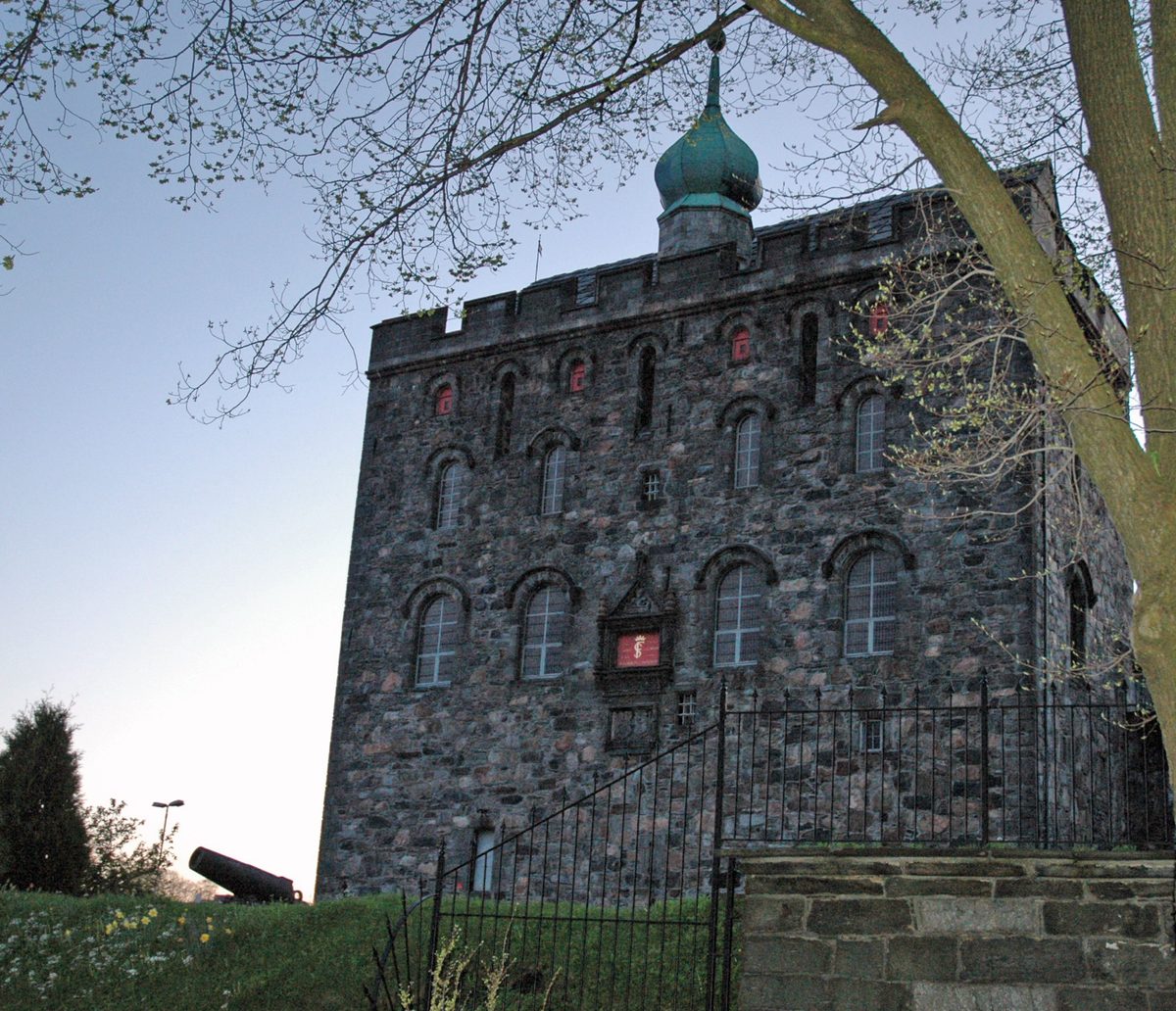
    • The northern lights glowing over snowy peaks in northern Norway — Photo: Adithya Ananth hashinclude (CC0) via Wikimedia Commons. Source
    • A cruise ship in the Geirangerfjord; summer is the best time for a Norwegian fjord cruise — Photo: Virtual-Pano / CC BY-SA 4.0 via Wikimedia Commons. Source
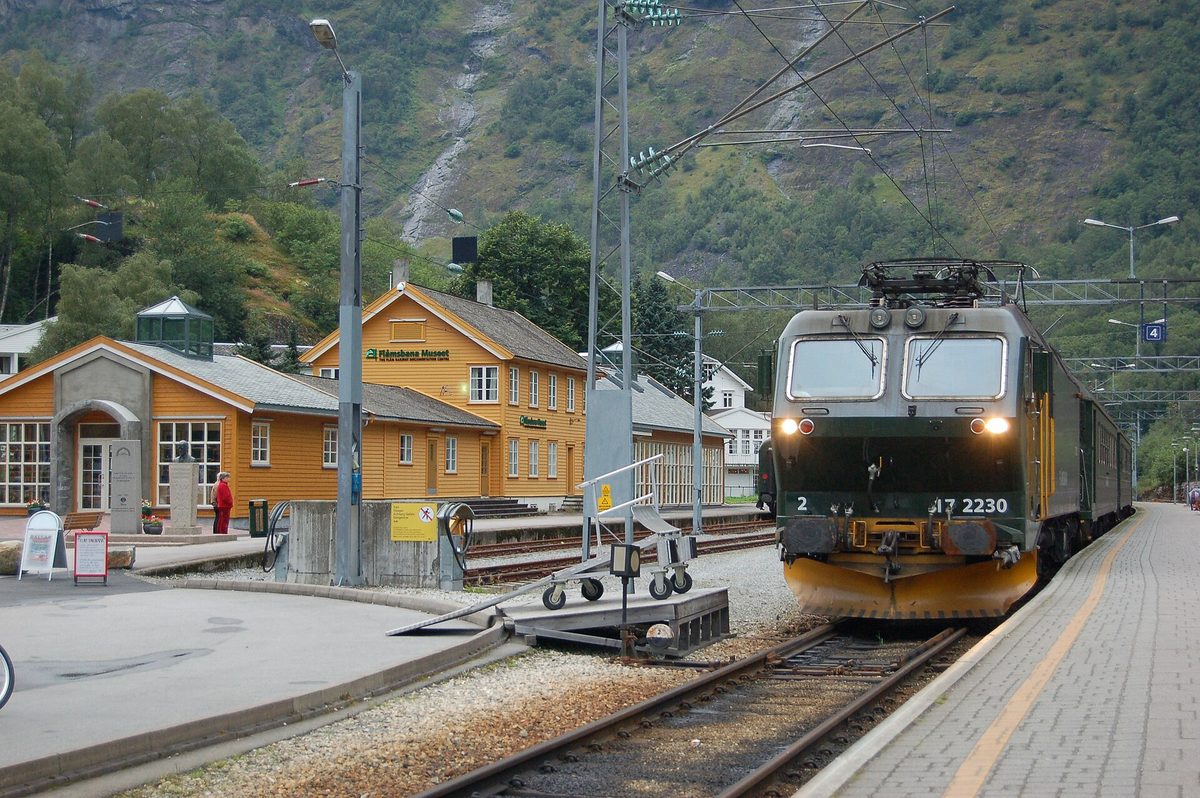
    • Golden midnight-sun light over a Lofoten fishing village in summer — Photo: Ximonic (Simo Räsänen) / CC BY-SA 4.0 via Wikimedia Commons. Source
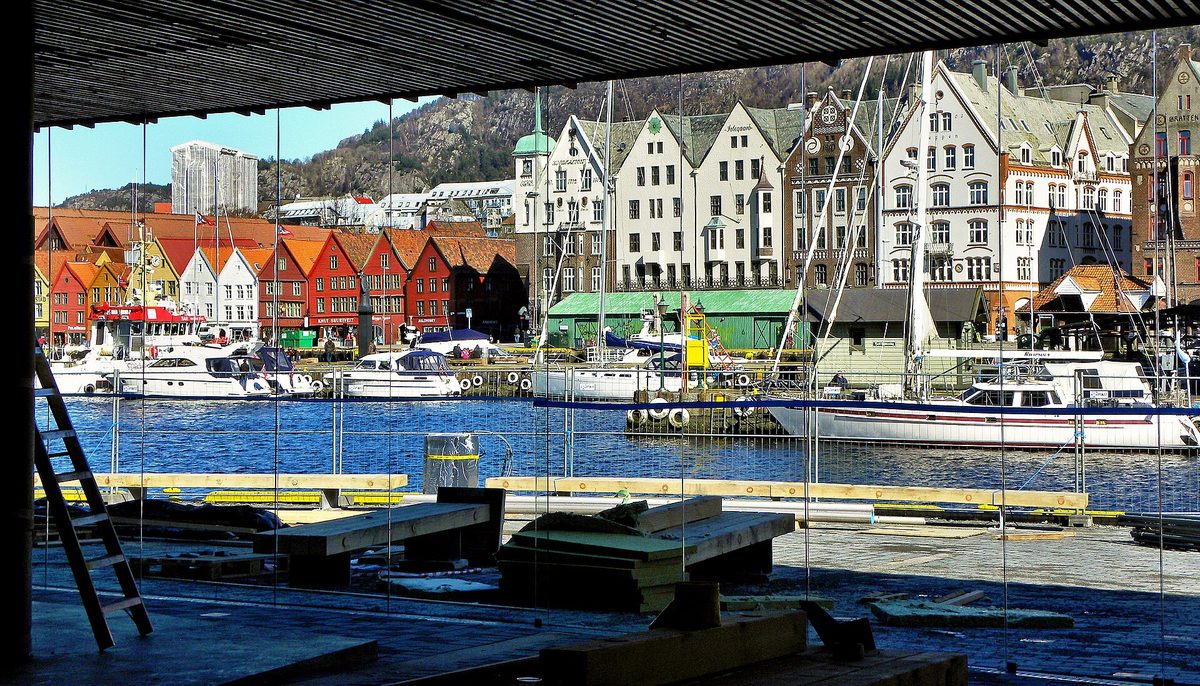
    • Autumn colours reflected in a lake in the Lofoten Islands, Norway — Photo: Ximonic, Simo Räsänen / CC BY-SA 3.0 via Wikimedia Commons. Source
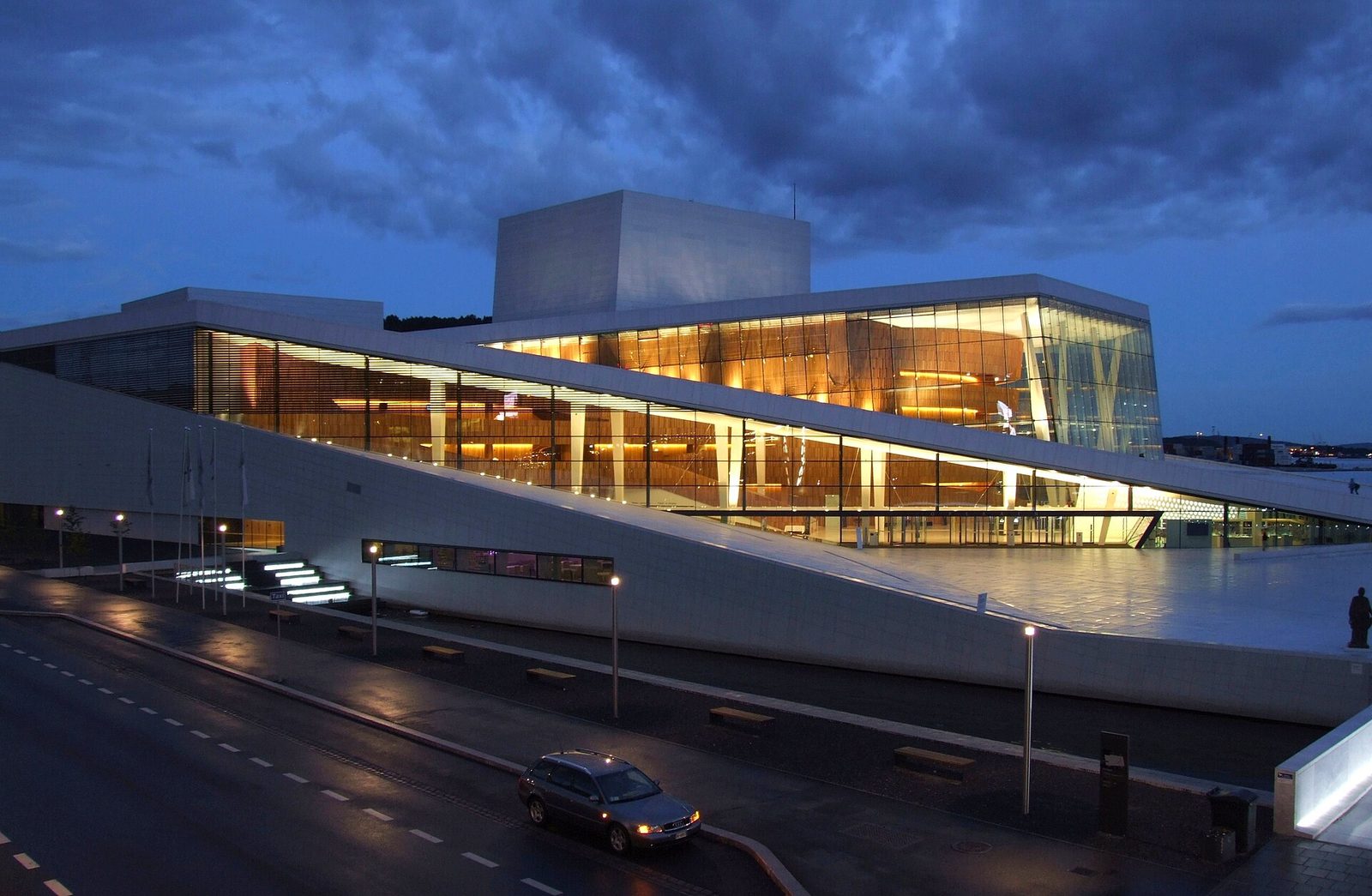
    • A snow-covered Lofoten village under a winter twilight sky in Norway — Photo: Smtunli / CC BY-SA 4.0 via Wikimedia Commons. Source
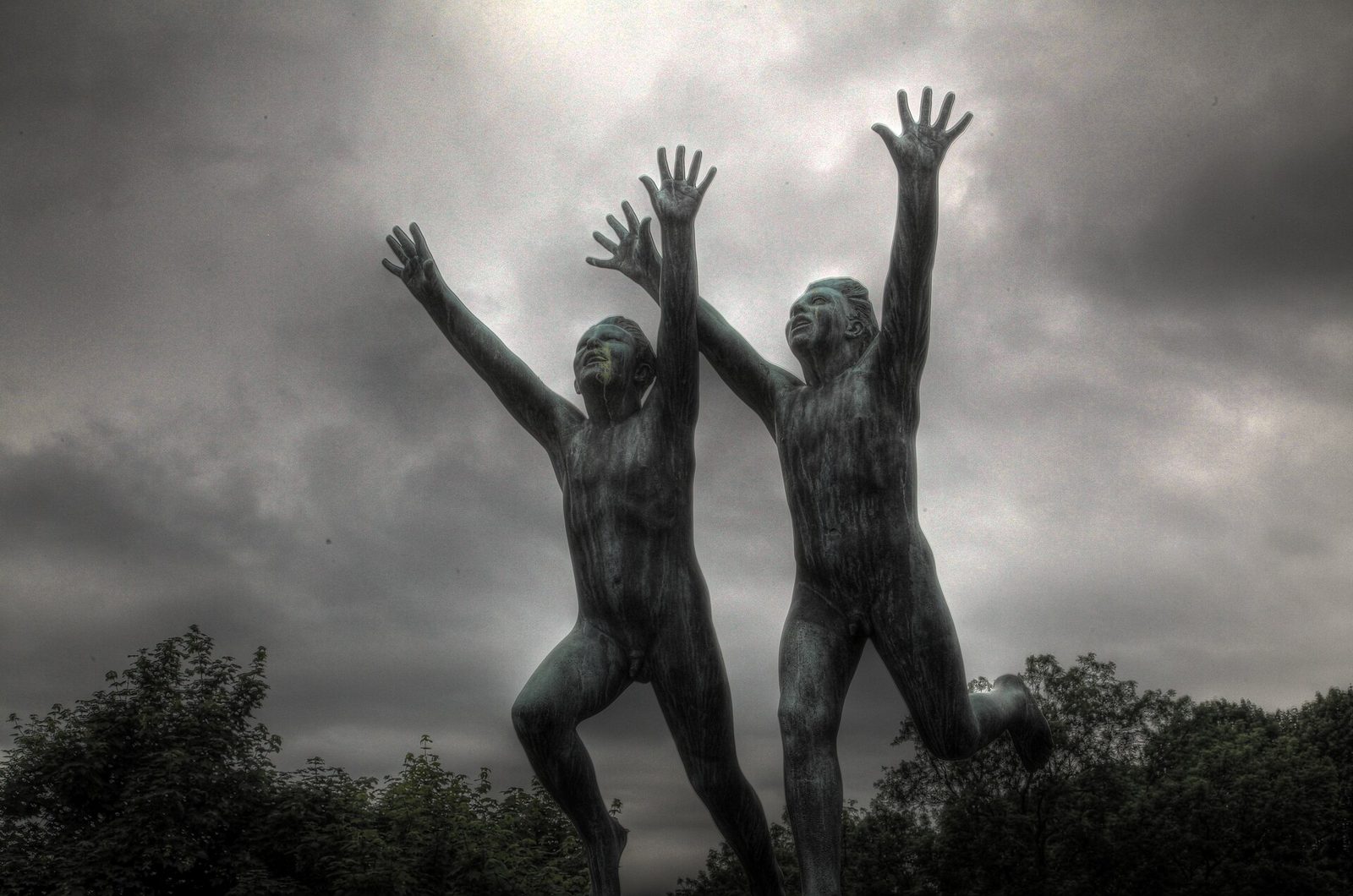
    • Fruit-tree blossom beside the Hardangerfjord in spring — Photo: Svein Magne Tunli / CC BY-SA 4.0 via Wikimedia Commons. Source
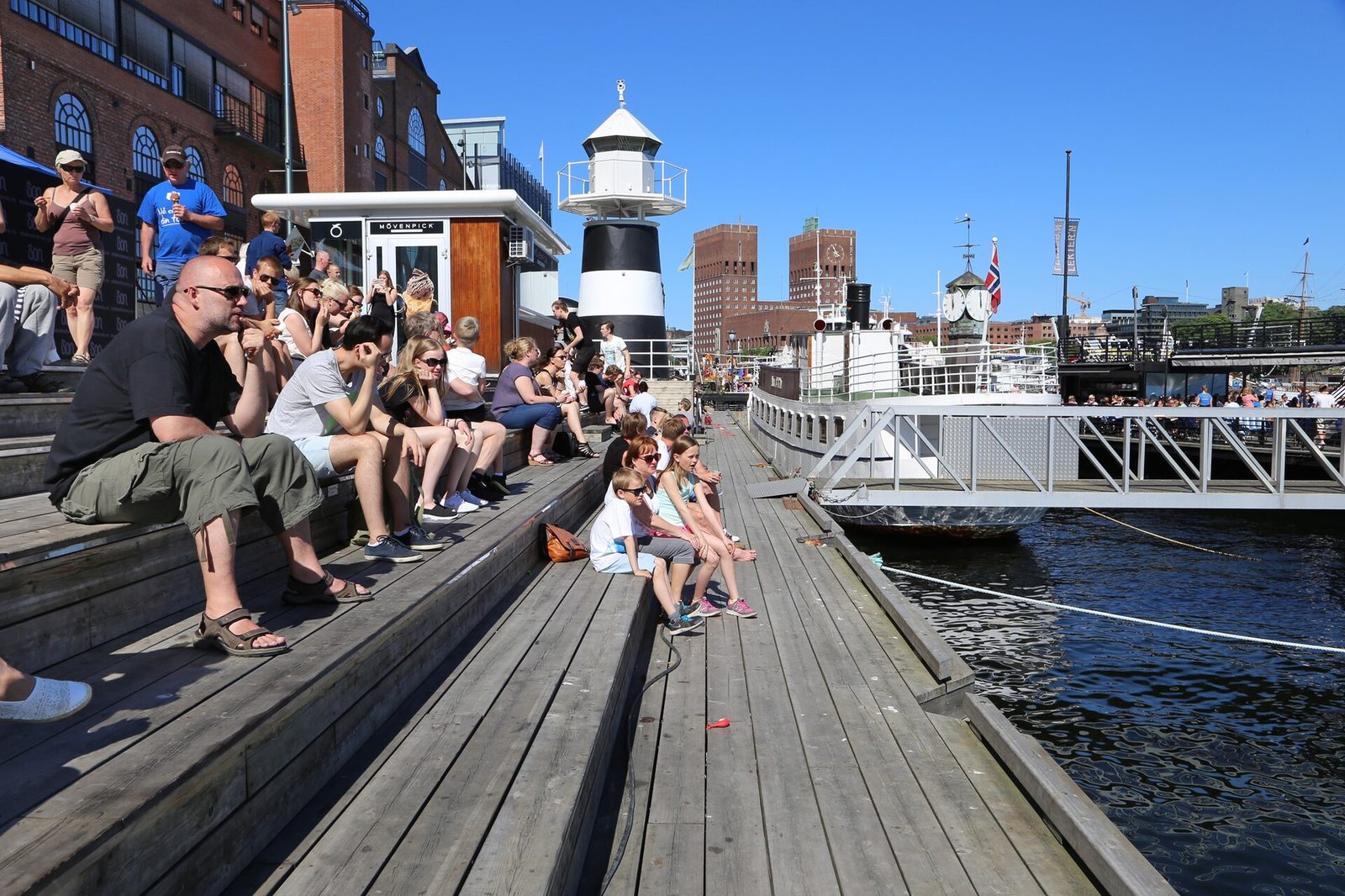
    • Skiing across the snow in Norway in winter — Photo: Erik Fløan (CC0) via Wikimedia Commons. Source
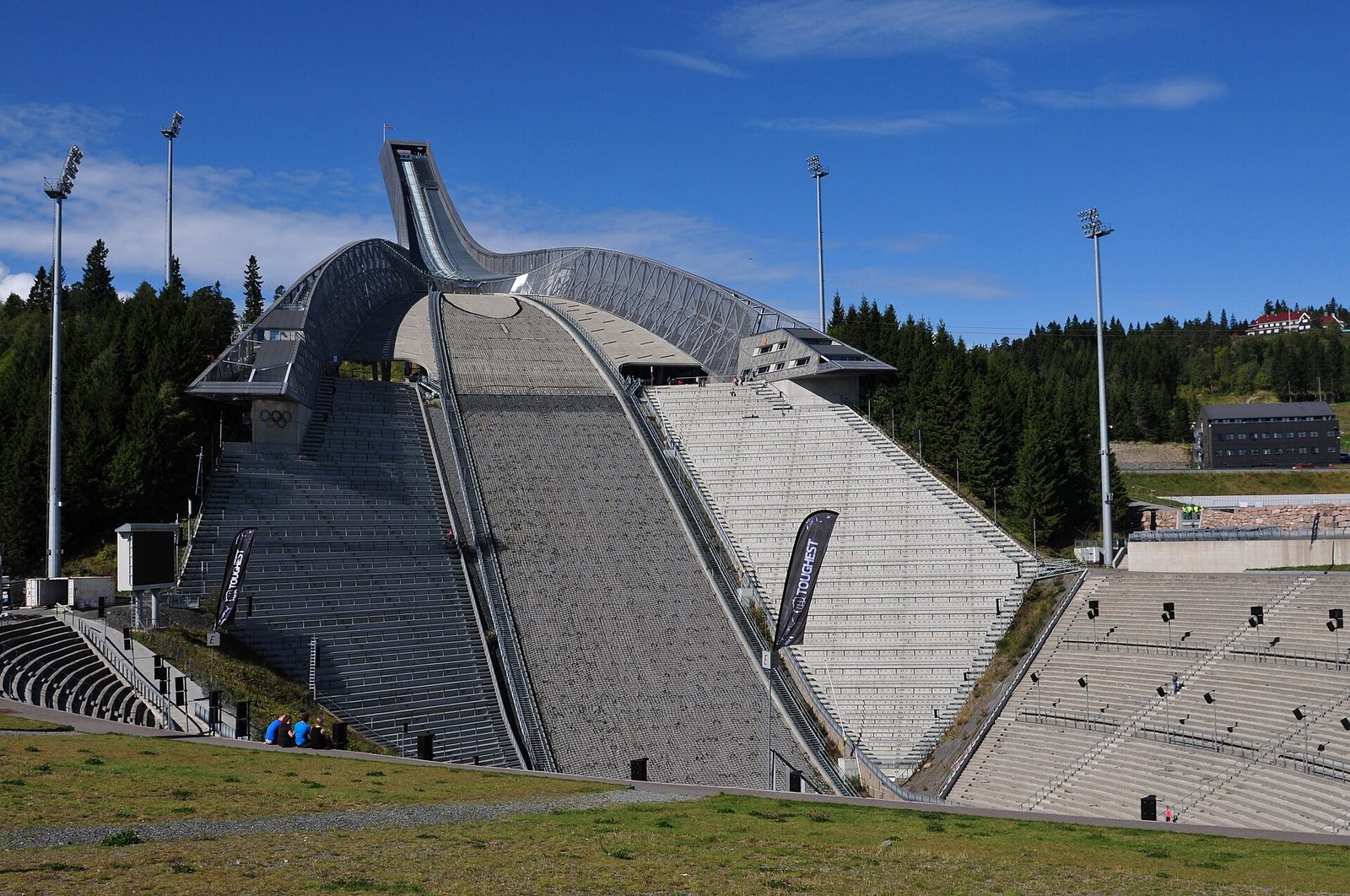
    • The Voringsfossen waterfall, fed by spring snowmelt — Photo: Ximonic, Simo Räsänen / CC BY-SA 3.0 via Wikimedia Commons. Source
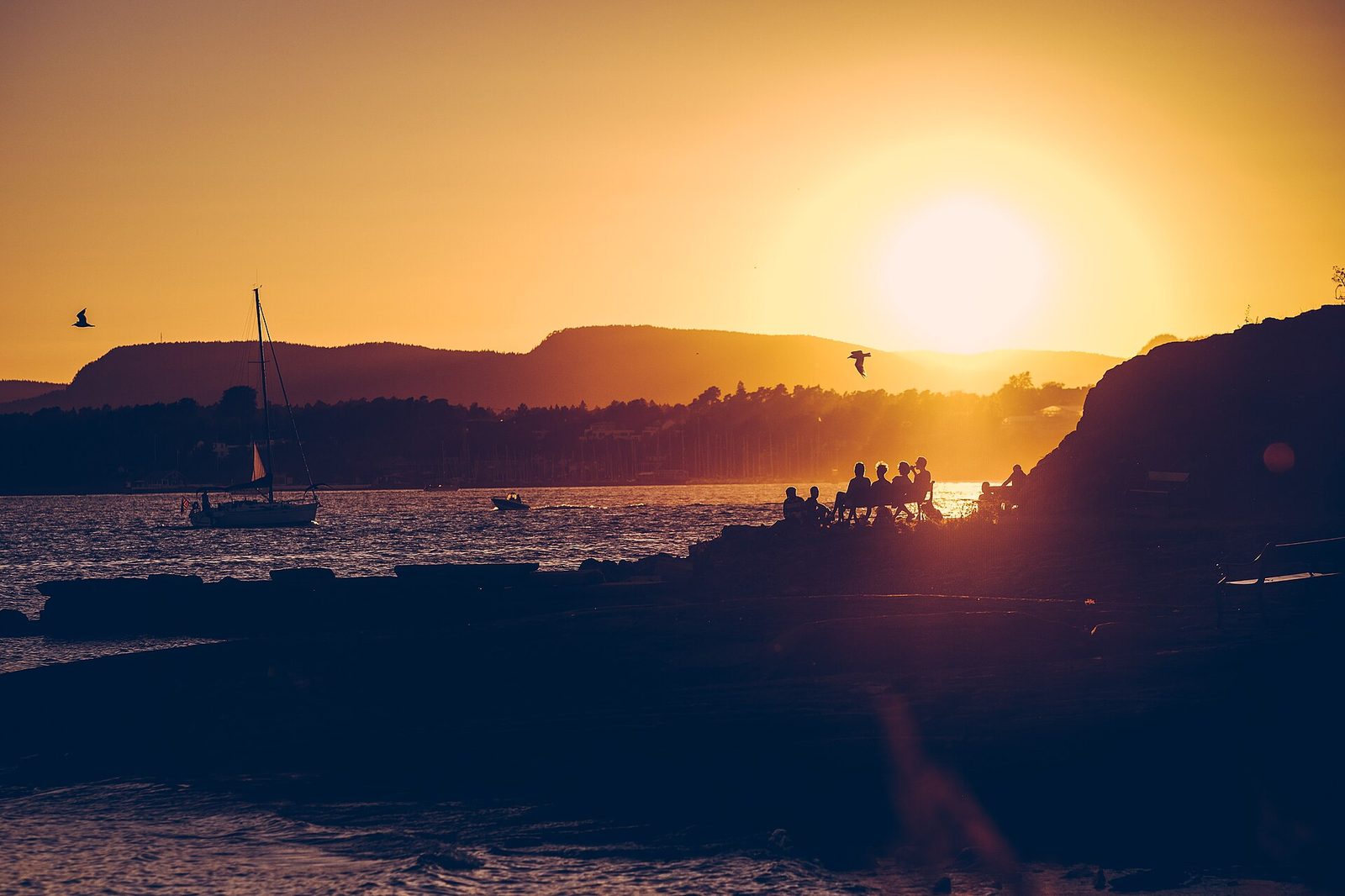
    • Tromso in winter, the gateway to the Norwegian Arctic — Photo: Harald Groven from Tromsø, Norway / CC BY-SA 2.0 via Wikimedia Commons. Source
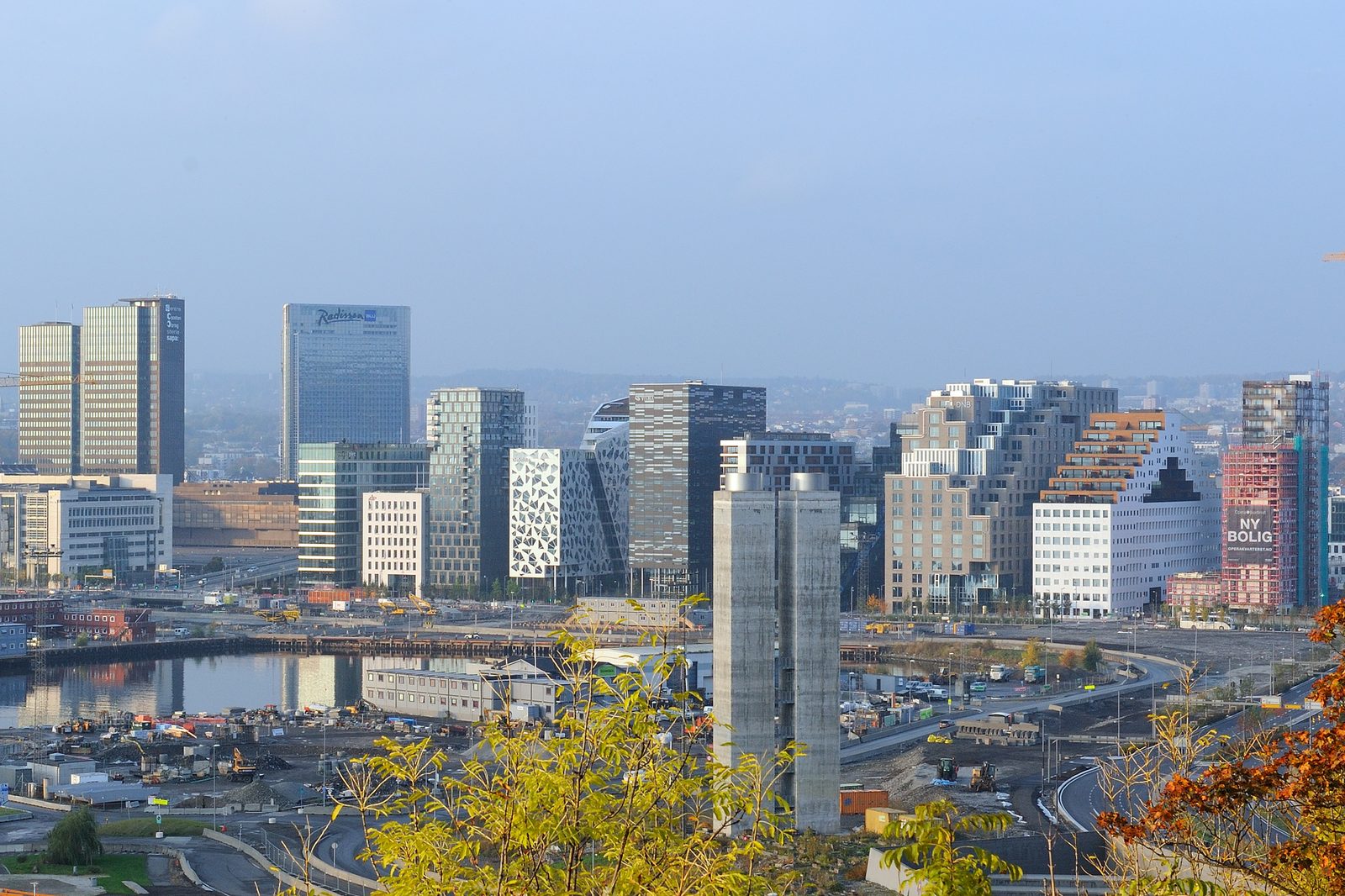
  • Best Things to Do in Norway: Fjords, Hikes, Cities & the Arctic

    Best Things to Do in Norway: Fjords, Hikes, Cities & the Arctic

    There are more spectacular things to do in Norway than any single trip can hold — which is a wonderful problem to have. If you only have the budget for one big trip in the next few years, Norway makes a strong case for being it. This is a country where the scenery does the heavy lifting: glacier-carved fjords with waterfalls dropping straight into the sea, a coastline that runs all the way into the Arctic, and a summer where the sun simply refuses to set. I’ve spent a lot of time figuring out how to actually see it without going broke or spending the whole trip in a rental car, and this guide is the result.

    So here are the best things to do in Norway, organized the way you’d actually plan a trip — by what you want out of it. Fjords and big-view hikes. Scenic train and road journeys. Cities with real character. The Arctic north, with its Northern Lights and midnight sun. We’ll cover the famous stuff (because it’s famous for a reason) and the quieter corners, and I’ll be honest about what’s worth the effort and what you can skip. There’s a planning section at the end with costs, timing, and how to get around, plus answers to the questions people ask me most.

    The short version: the single most popular thing to do in Norway is cruise a fjord — Geiranger or the Nærøyfjord are the headline acts — ideally paired with a scenic train like the Flåm Railway. Add a clifftop hike (Pulpit Rock is the accessible one), a couple of days in Bergen and Oslo, and, if you can reach the north, the Northern Lights in winter or the midnight sun in summer. Do that and you’ve seen the best of the country.

    Norway at a glance: the best experiences by season and effort

    Before we get into detail, here’s a quick-pick table of the marquee experiences. Use it to sketch a rough shape for your trip; every row gets a full write-up below.

    Experience Region Best season Time needed Effort
    Geirangerfjord cruise Western Norway May–Sept Half day Easy
    Nærøyfjord cruise (Norway in a Nutshell) Sognefjord Year-round 1–2 days Easy
    Preikestolen (Pulpit Rock) hike Stavanger / Lysefjord May–Oct 4 hrs Moderate
    Trolltunga hike Hardanger / Odda Jun–Sept 8–12 hrs Very hard
    Flåm Railway Sognefjord Year-round 1 hr each way Easy
    Northern Lights Tromsø / Lofoten / Alta Late Sept–Mar 2–4 nights Easy
    Midnight sun Above the Arctic Circle Late May–mid-Jul Easy
    Lofoten Islands road trip Northern Norway Jun–Sept (summer) / Feb–Mar (aurora) 3–5 days Easy–Moderate
    Bergen & Bryggen Western Norway Year-round 1–2 days Easy
    Oslo museums & Opera House Eastern Norway Year-round 2 days Easy
    Atlantic Ocean Road drive Møre og Romsdal Year-round 1–2 hrs Easy

    Experience the fjords (the number-one reason people come)

    The fjords are the thing. For the full rundown, see our complete guide to the Norwegian fjords. Glaciers gouged these deep sea inlets over successive ice ages, leaving sheer rock walls, hanging valleys, and farms clinging improbably to ledges hundreds of metres up. Two of the western fjords — the Geirangerfjord and the Nærøyfjord — are jointly inscribed on the UNESCO World Heritage list, and honestly, photos undersell them. You need the scale of a boat sliding under a 1,400-metre wall to get it.

    A fjord sightseeing boat cruising Norway's narrow fjord country near Flam

    Geirangerfjord

    If you see one fjord, this is the one most people mean. The Geirangerfjord is about 15 km of near-vertical cliffs, with the Seven Sisters waterfall fanning out across the rock face opposite a single cascade the locals nicknamed “the Suitor.” Sightseeing cruises run from Geiranger village from roughly late May into September — there’s a classic 75-minute trip and a quieter hybrid-electric boat. For the postcard view from above, drive up to the Dalsnibba skywalk (around 1,500 m, weather permitting) or stop at the Flydalsjuvet ledge just outside the village.

    My honest take: Geiranger gets swarmed by cruise-ship day-trippers in the middle of the day in July and August. Stay overnight and take an early-morning or evening boat instead — flat water, gold light, and a fraction of the crowd.

    The Nærøyfjord, Aurlandsfjord and Sognefjord

    The Sognefjord is the “King of the Fjords” — one of the world’s longest and deepest at around 205 km, branching into narrower arms as it reaches inland. The most spectacular of those arms is the Nærøyfjord, which pinches down to about 250 m wide with walls towering well over a kilometre. The Flåm–Gudvangen cruise through the Aurlandsfjord and Nærøyfjord (now on quiet electric boats) is the single best fjord cruise most visitors will do, and it’s the centrepiece of the famous “Norway in a Nutshell” route described later.

    Hardangerfjord and Lysefjord

    The Hardangerfjord, the “Queen of the Fjords,” is the closest big fjord to Bergen and the gateway to Trolltunga. Time a visit for fruit-blossom season — usually a few weeks from around mid-May — and the orchards turn the hillsides pink and white. Further south, the Lysefjord near Stavanger is the one with the two famous cliffs above it, Pulpit Rock and Kjeragbolten; sightseeing boats from Stavanger sail right under the 604-metre Preikestolen face.

    How to actually experience a fjord

    You’ve got four good options, roughly in order of cost: take a regular car ferry (cheap, scenic, and you’re on the water like everyone else); ride a dedicated sightseeing cruise; go kayaking for the quiet, low-to-the-water version (half-day guided trips from around 1,200 NOK); or book a fast RIB safari if you want wind-in-your-face speed. If you’re driving anyway, the local ferries are an underrated way to see fjords for the price of a road crossing.

    Norway’s iconic hikes and viewpoints

    Some of the most photographed spots on the planet are Norwegian clifftops, and reaching them on foot is one of the best things to do in Norway if your knees are up for it. A reality check first: these are real mountain hikes with fast-changing weather, and the marquee ones are summer-only (roughly June to September) unless you go with a guide and winter gear. Bring layers, food, water, and proper boots — trainers don’t cut it.

    Hikers on Preikestolen (Pulpit Rock) high above the Lysefjord

    Preikestolen (Pulpit Rock) — the accessible icon

    This flat-topped slab hangs 604 m above the Lysefjord, and it’s the one to do if you want the big-cliff experience without an epic. It’s about 8 km round trip with roughly 500 m of climbing — call it four hours — on a well-built, busy trail. The trailhead is about 40 minutes from Stavanger; parking runs around 250 NOK. Go early or late to dodge the midday rush, and mind your footing near the edge: there are no railings, by design.

    Trolltunga — the big one

    The “Troll’s Tongue” is the slab of rock that launched a thousand vertigo-inducing photos, jutting out about 700 m above a lake near Odda. It’s also a serious undertaking: roughly 20 km round trip from the upper parking, around 800 m of ascent, and 8–12 hours on your feet. The self-guided season is short, roughly June through September. Start at dawn, use the higher P3 parking or shuttle to shorten it, and be ready to queue for the photo in peak summer. If that sounds like a lot, it is — this is a full day of endurance hiking, not a casual walk. For trail-by-trail details on this and every other big Norwegian trail — parking costs, season windows, the DNT hut system — see our complete guide to hiking in Norway.

    The Trolltunga rock ledge jutting out above Ringedalsvatnet lake

    Kjeragbolten — the boulder over the void

    The other Lysefjord icon: a boulder wedged in a crevasse with about 984 m of nothing beneath it. The hike is around 11 km and 6–10 hours, with steep granite slabs and fixed chains that get genuinely treacherous when wet. Stepping onto the boulder is optional and properly exposed — plenty of people enjoy the view without doing it, and you should only attempt it in dry conditions.

    Besseggen and Reinebringen

    For a classic without the cliff-edge fear factor, the Besseggen ridge in Jotunheimen National Park walks a knife-edge between a turquoise lake and a blue one — about 14 km, 6–8 hours, usually done by taking the early boat from Gjendesheim to Memurubu and hiking back. Up in the Lofoten Islands, Reinebringen delivers arguably the best view in the country for far less time: a short but brutally steep climb of nearly 2,000 Sherpa-built stone steps to look down over Reine. It’s only a couple of hours, but skip it in the rain — those steps get slick.

    Not a hiker? You can still get the views. The Stegastein viewpoint near Flåm cantilevers out 650 m above the Aurlandsfjord (reachable by car or an electric-minibus tour), and the Dalsnibba and Flydalsjuvet lookouts hand you the Geiranger panorama for the price of a short drive.

    Legendary scenic journeys

    Half the joy of Norway is the getting-around. The country has turned its railways and roads into attractions in their own right, and several deserve a spot on any best-of list.

    The Flam Railway descending through the mountains toward the fjord

    The Flåm Railway and “Norway in a Nutshell”

    The Flåm Railway (Flåmsbana) drops from the mountain station at Myrdal down to the fjord at Flåm — 20 km, about an hour, through 20 tunnels and past the thundering Kjosfossen waterfall, where the train pauses for photos. It’s touristy and brief, but it earns the hype; sit on the left going down for the best waterfall views. Expect to pay roughly 570 NOK one-way (around 850 round trip). The “Norway in a Nutshell” tour bundles this train with the Bergen Railway and the Nærøyfjord cruise into one self-guided day — the easiest way to string together the greatest hits without a car. For how it stacks up against every other guided and self-guided option — operators, prices, and what’s actually worth booking — see our complete guide to Norway tours and excursions. You can also DIY the exact same legs by booking train and boat tickets separately, often for less, if you don’t mind doing the logistics yourself.

    The Bergen Railway

    The Oslo–Bergen line is one of Europe’s great train rides — 6.5 to 7.5 hours across forests, lakes, and the bare, arctic-feeling Hardangervidda plateau, topping out at the lonely station of Finse (around 1,222 m, reachable only by rail). Book early for “minipris” fares as low as ~290 NOK; walk up on the day and you’ll pay a lot more. The line ends in Bergen — when you arrive, our guide to the best things to do in Bergen has you covered.

    The Atlantic Ocean Road and Trollstigen

    The Atlantic Ocean Road is a short, world-famous stretch of causeways and eight bridges hopping between skerries near Kristiansund — the curving Storseisundet Bridge is the money shot. The drive itself is only about 20 minutes, but give it a couple of hours for the boardwalk viewpoints. It’s open year-round; summer is easy, while autumn storms send waves crashing over the road for the dramatic photos.

    The curving Storseisundet Bridge on Norway's Atlantic Ocean Road

    Trollstigen — the “Troll’s Ladder,” 11 hairpins climbing a sheer mountainside — is Norway’s most thrilling drive, usually open from late spring into October. One important note: after major rockfall problems it was closed for much of 2024, reopened in 2025 after extensive safety work, and was operating normally for the 2026 season. Heavy rain can still trigger short temporary closures, so check the live road status before you commit to driving it.

    The coastal voyage and the great road trip

    For the slow, all-in version of the coast, the Hurtigruten (and newer Havila) coastal ships sail the working route between Bergen and Kirkenes, calling at 34 ports — about 6–7 days one way, or 11–12 round trip. Northbound leans toward cities and excursions; southbound is pitched at nature. It’s transport-with-a-view rather than a luxury cruise, and in winter the sailings double as Northern Lights hunts. If you’d rather drive, Norway’s 18 National Tourist Routes are purpose-built for road-tripping, and the country’s “right to roam” (allemannsretten) even lets you wild camp responsibly almost anywhere.

    Cities and culture

    Don’t let anyone tell you to skip Norway’s cities. They’re small, walkable, and full of character, and the museums punch well above their weight. A day or two in Bergen and Oslo bookends a fjord trip nicely, and our full guide to the best things to do in Oslo shows how to make the most of the capital.

    The colorful wooden Hanseatic houses of Bryggen in Bergen, Norway

    Bergen — gateway to the fjords

    Bergen is the obvious base for the western fjords, and a lovely place in its own right. The headline sight is Bryggen, the UNESCO-listed row of leaning, brightly painted Hanseatic trading houses — duck into the narrow wooden passages behind the facades, where the galleries and workshops are. Ride the Fløibanen funicular up Mount Fløyen for the city-and-fjord panorama and easy walking trails, browse the fish market, and accept that it will probably rain: Bergen gets well over 200 wet days a year, so pack a proper jacket and don’t pin everything on blue sky.

    Oslo — small capital, big museums

    Oslo has quietly become one of Scandinavia’s best city breaks. Walk up the sloping marble roof of the Opera House for free, any time, for harbour views. Wander Vigeland Park, the world’s largest sculpture park by a single artist (over 200 figures, including the famous stamping “Angry Boy”). The waterfront MUNCH museum holds versions of The Scream, and the new National Museum is the largest art museum in the Nordics. One heads-up: the Viking ships are between homes — the old Viking Ship Museum on Bygdøy is closed for a major rebuild, with the new Museum of the Viking Age expected to open around 2027, so check before you plan a trip around them. In the meantime, the Fram polar-exploration and Kon-Tiki museums are open and excellent.

    The sloping white marble roof of the Oslo Opera House

    Stavanger, Ålesund and Trondheim

    Stavanger is the launchpad for Pulpit Rock, but its white-painted old town and the smart Norwegian Petroleum Museum make it worth a night — here’s our full guide to the best things to do in Stavanger, Lysefjord cruises included. Ålesund was rebuilt entirely in Art Nouveau style after a 1904 fire and is one of Europe’s prettiest towns — climb the 418 steps up Mount Aksla at sunset for the view over the islands. Trondheim, the former Viking capital, has Nidaros Cathedral (the northernmost Gothic cathedral in the world) and the colourful, café-filled Bakklandet district by the river.

    The Arctic north and the islands

    Cross the Arctic Circle and Norway changes character entirely: sharper peaks, fishing villages on stilts, reindeer by the roadside, and a sky that does extraordinary things depending on the season. The north is far — budget extra time and probably a domestic flight — but it’s where some of the most memorable things to do in Norway are.

    The fishing village of Reine in the Lofoten Islands

    The Lofoten Islands

    If your social feed has ever shown you red fishing cabins beneath jagged peaks reflected in still water, that was almost certainly Lofoten. The villages of Reine and Hamnøy are the classic shots; you can sleep in a converted rorbu (fisherman’s cabin) right over the water. Summer is for hiking, the midnight sun, and even surfing at Unstad; winter brings the Northern Lights arcing over the peaks, though the short days and snowy roads make it more of a commitment. Either way, it’s a destination in its own right — give it three to five days, and see my complete Lofoten Islands guide for routes, rorbuer and real costs.

    Tromsø and the far north

    Tromsø, at 69°N, is the most accessible Arctic base: an airport, good restaurants, and the widest range of tours anywhere in the north. It’s the hub for Northern Lights chases in winter and whale watching, dog sledding, and Sami experiences year-round. Ride the Fjellheisen cable car for the view over the city and the dramatic Arctic Cathedral below. Further afield, Senja rivals Lofoten with a fraction of the crowds, the North Cape (Nordkapp) marks the road’s end at a 307-metre cliff over the Barents Sea, and Svalbard — a flight beyond the mainland, where polar bears outnumber people — is the ultimate Arctic add-on for those with the time and budget. For everything waiting up there, see our complete guide to things to do in Tromsø and Arctic Norway.

    Natural phenomena: the lights, the sun and the ice

    Two of Norway’s biggest draws are essentially about light, and which one you get depends entirely on when you come.

    The northern lights glowing green over the Arctic near Tromso

    The Northern Lights

    The aurora season runs roughly from late September to late March, when the nights are dark enough — peak visibility is November to February in the far north. You need darkness, clear skies, and a bit of luck, so base yourself in the north (Tromsø, Lofoten, or Alta, the self-styled “City of the Northern Lights”) and give it several nights to beat the weather odds. A guided “aurora chase” in a minibus is the sweet spot: the guides drive to wherever the sky is clearest. Activity has been unusually strong the last couple of winters, near the peak of the solar cycle, but never treat a sighting as guaranteed — plan a few nights and enjoy the snowy landscape regardless. For the full guide, see our northern lights in Norway guide.

    The midnight sun

    Flip the calendar and, above the Arctic Circle, the sun simply doesn’t set for weeks — roughly late May to mid-July in Lofoten and Tromsø, and a touch longer at the North Cape. It’s genuinely disorienting and wonderful: you can hike, kayak, or fish at midnight in soft gold light. Bring an eye mask, because the daylight is relentless and not every room has blackout curtains.

    Glaciers and waterfalls

    Mainland Europe’s largest glacier, the Jostedalsbreen, sprawls across the western mountains, and you can walk on its blue ice with a certified guide — Nigardsbreen is the most popular spot, with family-friendly options. Never step onto a glacier without a guide; the crevasses are lethal. For waterfalls, you’re spoiled: the Vøringsfossen near Hardanger has a dramatic stepped viewing platform, and in May the spring snowmelt has every cliff in the country running with water.

    Outdoor adventures and wildlife

    Beyond the big hikes, Norway is a playground for active travellers, and the wildlife is a genuine draw rather than an afterthought.

    • Dog sledding: gliding behind a team of huskies through the Arctic winter (roughly November–April) is unforgettable. You can ride along or, on longer tours, learn to drive your own team. Tromsø, Alta, and Kirkenes are the main bases.
    • Whale watching: match the season to the species. In winter (around November–January), orcas and humpbacks follow the herring into the fjords near Tromsø and Skjervøy. In summer, sperm whales are reliably seen off Andenes in Vesterålen, where deep canyons sit close to shore.
    • Skiing and snowmobiling: Norway is the birthplace of skiing, with reliable cross-country trails and downhill resorts like Trysil and Hemsedal. Guided snowmobile safaris are a fast way to cover the winter backcountry.
    • Wildlife safaris: see Ice-Age musk oxen on a guided safari in Dovrefjell (summer only), puffins and sea eagles on boat trips from Lofoten, Vesterålen, or the bird island of Runde, and semi-wild reindeer almost anywhere in the north.
    • Viking history: with Oslo’s ships in storage until ~2027, the Lofotr Viking Museum in Lofoten — a reconstructed chieftain’s longhouse — is the best place to step into the Viking Age.

    Norwegian food and drink worth trying

    Norway is expensive to eat in, but the quality of the raw ingredients — especially seafood — is exceptional. A few things to seek out: just-caught salmon and Arctic cod (the dried cod, or skrei in season, is a national institution); king crab in the far north, often on a “safari” where you pull the pots yourself; and brown cheese (brunost), the caramel-coloured, slightly sweet cheese Norwegians shave onto waffles and bread. In Sami areas, look for bidos, a hearty reindeer stew. Norwegians are also serious about coffee — they’re among the world’s biggest per-capita drinkers — so the café culture in Oslo, Bergen, and Trondheim is excellent. To save money, do what locals do and assemble picnics from the supermarket (Rema 1000, Kiwi); the tap water is some of the best in the world and completely free.

    The best things to do in Norway by season

    Norway is really two different countries depending on when you visit, so let your season pick your trip rather than the other way around.

    Long golden summer light over the peaks of the Lofoten Islands

    Summer (June–August): midnight sun and open roads

    This is peak season for good reason — all the mountain roads and hikes are open, fjord cruises run at full tilt, the landscapes are green, and above the Arctic Circle the sun never sets. The trade-off is crowds and the highest prices, especially in July. Book accommodation and the marquee experiences well ahead.

    Winter (December–March): aurora and snow

    Winter is for the Northern Lights, dog sledding, snowmobiling, skiing, and ice hotels, with the moody half-light of the polar night in the far north. The high mountain passes (Trollstigen, Sognefjellet) close, and daylight is short, so plan a focused trip — usually built around the Arctic — rather than a big driving loop. February and March often bring clearer skies and a little more daylight.

    Shoulder season (May, September–October): the value sweet spot

    If I had to pick, I’d often go in May or September. You get roaring waterfalls from the snowmelt (May) or fall colour (September), far fewer crowds, and prices noticeably below peak. The catch is that some high roads and hikes may still be snowbound in early May or closing by late October — so build in a little flexibility.

    Plan your trip: timing, costs and getting around

    The experiences above are the fun part; this section is the homework that makes them happen smoothly.

    The best time to visit Norway

    There’s no single best time — it depends on what you’re after. For a full month-by-month breakdown, see our guide to the best time to visit Norway. Come June to August for fjords, hiking, and the midnight sun; late September to March for the Northern Lights; and May or September for the best balance of decent weather, lower prices, and elbow room. For a month-by-month breakdown, the official Visit Norway weather guide is a useful reference.

    How many days do you need?

    Here’s a rough guide based on how trips usually shake out:

    • 4–6 days: Bergen plus the fjords (Norway in a Nutshell and a fjord base) — the classic short trip.
    • 7–10 days: the southern loop — Oslo, the fjords, Bergen, and one marquee hike. A week is enough to see the highlights without rushing.
    • 10–14+ days: add the Arctic — Tromsø or Lofoten for the lights or the midnight sun. The north is far, so give it the time it deserves.

    How much does a trip to Norway cost?

    Let’s be straight: Norway is one of Europe’s most expensive countries, especially for alcohol, restaurants, and fuel. As a rough per-person daily budget excluding flights, plan on around $85/day if you’re backpacking (hostels, self-catering, free hikes), $125–140/day mid-range (a 3-star hotel or rental, one restaurant meal, some paid activities), and $300+/day at the luxury end. The big money-savers: cook some of your own meals, drink the free tap water, hike instead of paying for attractions, book trains early for cheap “minipris” fares, and take advantage of the right to roam for free wild camping. Tipping isn’t expected, which softens the blow a little.

    Getting around

    Your main choice is car versus public transport. A rental car is best for the fjords, the Atlantic Road, and Lofoten — anywhere you want flexibility — but budget for tolls (automatic, via AutoPASS), frequent car ferries, and slow average speeds on winding roads; rentals run roughly 500–1,200 NOK/day plus fuel. Trains are scenic and comfortable on the main lines (book early for cheap fares), though there’s no rail north of Bodø. Ferries and express boats are essential — and beautifully scenic — in fjord country. To reach the Arctic, you’ll likely fly (Tromsø, Bodø for Lofoten, Alta). The free Entur app plans trains, buses, and ferries nationwide in one place.

    Entry requirements and a note on responsible travel

    Norway is in the Schengen Area but not the EU. US, UK, Canadian, and Australian visitors don’t need a visa for short stays, but a new European travel authorization called ETIAS (around €20, valid up to three years) is expected to take effect in late 2026 — check the official EU ETIAS site before you book, as the exact start date may shift. Finally: a few honeypot spots (Geiranger, parts of Lofoten, Trolltunga) now get genuinely overwhelmed in peak summer. Visiting in shoulder season, going early or late in the day, and treading lightly under the right-to-roam rules all help keep these places special.

    Frequently asked questions

    What is Norway best known for?

    Norway is best known for its fjords — deep, glacier-carved sea inlets like the Geirangerfjord and Nærøyfjord — along with the Northern Lights, the midnight sun, dramatic clifftop hikes such as Pulpit Rock and Trolltunga, Viking heritage, and scenic journeys like the Flåm Railway. It’s a nature-first destination above all.

    How many days do you need in Norway?

    For complete day-by-day routes, see our Norway itinerary guide.

    For the fjord highlights around Bergen, four to six days is enough. To add Oslo and a marquee hike, plan seven to ten. If you want to reach the Arctic for the Northern Lights or midnight sun, give yourself ten days to two weeks, since the north is a long way from the south.

    Is Norway expensive to visit?

    Yes — it’s one of the priciest countries in Europe, particularly for eating out, alcohol, and fuel. A mid-range traveller should budget roughly $125–140 a day excluding flights. You can cut costs significantly by self-catering, hiking (free), drinking the excellent tap water, booking trains early, and wild camping under the right-to-roam rules.

    What is the best time of year to visit Norway?

    June to August for fjords, hiking, and the midnight sun; late September to March for the Northern Lights; and May or September for the sweet spot of fewer crowds and lower prices. Your ideal season depends entirely on whether you’re chasing summer scenery or winter lights.

    When can you see the Northern Lights in Norway?

    The aurora season runs from roughly late September to late March, with the best odds from November to February in the far north (Tromsø, Lofoten, Alta). You need dark, clear skies, so stay several nights to improve your chances and consider a guided chase that drives to the clearest weather.

    Which fjord should I visit?

    For the most dramatic, classic scenery, the Geirangerfjord is the headline. For the best cruise experience, the narrow Nærøyfjord (part of “Norway in a Nutshell”) is hard to beat. If you’re near Stavanger, the Lysefjord pairs with Pulpit Rock; near Bergen, the Hardangerfjord is closest and lovely in blossom season.

    Is Pulpit Rock or Trolltunga the better hike?

    Choose Pulpit Rock (Preikestolen) if you want a spectacular clifftop with a manageable four-hour round trip — it’s the accessible icon. Choose Trolltunga only if you’re a fit, experienced hiker ready for an 8–12 hour day. They’re in different regions (Stavanger versus Odda), so most trips realistically do one or the other.

    What is “Norway in a Nutshell” and is it worth it?

    It’s a self-guided combination ticket linking the Bergen Railway, the Flåm Railway, and a Nærøyfjord cruise into one greatest-hits route between Oslo and Bergen. It’s genuinely scenic and saves you planning headaches. If you’re comfortable booking each leg yourself, you can usually replicate it for less — but the packaged version handles the timing for you.

    Do you need a car in Norway?

    Not necessarily. The classic fjord route (Oslo–Flåm–Bergen) is easily done by train and boat, and the Arctic is reached by plane plus local tours. A car shines for the Atlantic Road, remote fjord country, and a Lofoten road trip, where flexibility matters most. Many travellers happily do a southern trip car-free.

    Is Norway safe for tourists?

    Norway is consistently ranked among the safest countries in the world, with very low crime. The real risks are outdoors: fast-changing mountain weather, unfenced clifftops, and slippery winter roads. Respect the conditions, check trail and road status, and don’t push a summit hike in bad weather.

    Can you drink the tap water in Norway?

    Yes — Norwegian tap water is clean, cold, and among the best in the world. Skip the bottled water and refill your own; it’s one of the easiest ways to save money in an expensive country.

    Final thoughts

    Norway rewards a bit of planning more than almost anywhere I’ve travelled. Pick your season first — summer for fjords and the midnight sun, winter for the aurora — then build around one or two anchor experiences and leave room to slow down. The country’s real magic tends to happen in the quiet moments: an evening fjord with the cruise ships gone, a ridge to yourself before the crowds, the sky going green over a snowy fjord. Get the timing right and almost everything on this list delivers. Use the planning section above to shape your days, and start with the experience that made you want to come in the first place.

    This guide will be kept up to date as seasons, prices, and access change. Always confirm current opening dates, road status, and ticket prices with official sources before you travel.


    About this guide

    Written and maintained by the NorwayTourism.org editorial team — travelers and writers focused on practical, first-hand Norway trip planning. We cite official tourism, transport, and heritage sources and refresh our guides regularly. Last updated: June 2026.

    Sources & further reading

    • Visit Norway — the official tourism board (seasons, regions, activities)
    • UNESCO — West Norwegian Fjords (Geirangerfjord & Nærøyfjord) World Heritage listing
    • Norwegian Scenic Routes — National Tourist Routes and live road status (Trollstigen, Atlantic Road)
    • European Union — official ETIAS travel authorization information

    Photo credits

    All photos are used under their respective Creative Commons or public-domain licenses.

    • The Geirangerfjord, one of the most popular things to do in Norway — Photo: Andreas Trepte / CC BY-SA 2.5 via Wikimedia Commons. Source
    • A fjord sightseeing boat cruising Norway’s narrow fjord country near Flam — Photo: Fosgate at Norwegian Wikipedia (CC0) via Wikimedia Commons. Source
    • Hikers on Preikestolen (Pulpit Rock) high above the Lysefjord — Photo: Svein-Magne Tunli / CC BY-SA 3.0 via Wikimedia Commons. Source
    • The Trolltunga rock ledge jutting out above Ringedalsvatnet lake — Photo: Tanya Tulupenko tulutanya (CC0) via Wikimedia Commons. Source
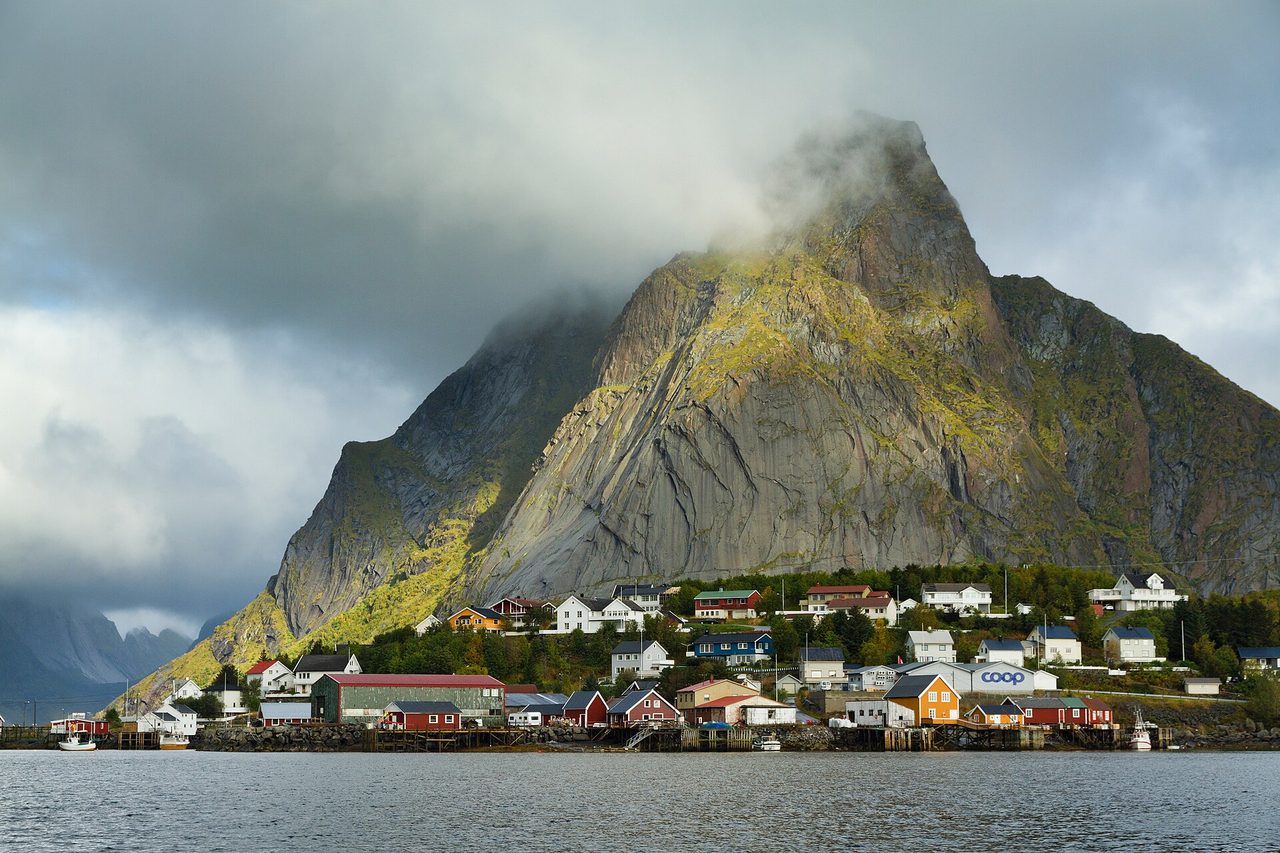
    • The Flam Railway descending through the mountains toward the fjord — Photo: W. Bulach / CC BY-SA 4.0 via Wikimedia Commons. Source
    • The colorful wooden Hanseatic houses of Bryggen in Bergen, Norway — Photo: scott1346 from Mechanicsville, MD, USA / CC BY 2.0 via Wikimedia Commons. Source
    • The sloping white marble roof of the Oslo Opera House — Photo: Pudelek (Marcin Szala) / CC BY-SA 4.0 via Wikimedia Commons. Source
    • The fishing village of Reine in the Lofoten Islands — Photo: Virtual-Pano / CC BY-SA 4.0 via Wikimedia Commons. Source
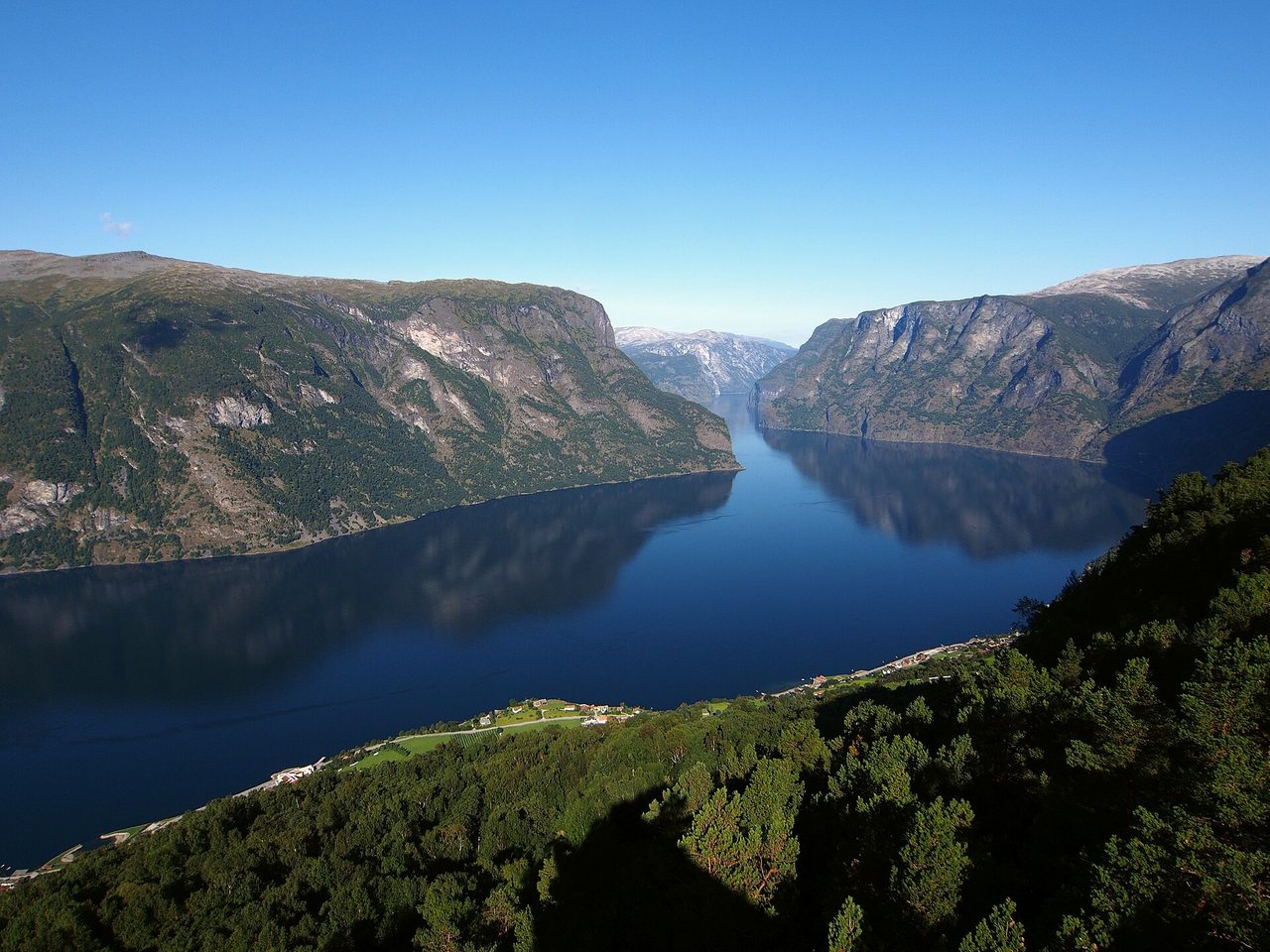
    • The northern lights glowing green over the Arctic near Tromso — Photo: Adithya Ananth hashinclude (CC0) via Wikimedia Commons. Source
    • The curving Storseisundet Bridge on Norway’s Atlantic Ocean Road — Photo: CHG / CC BY 3.0 via Wikimedia Commons. Source
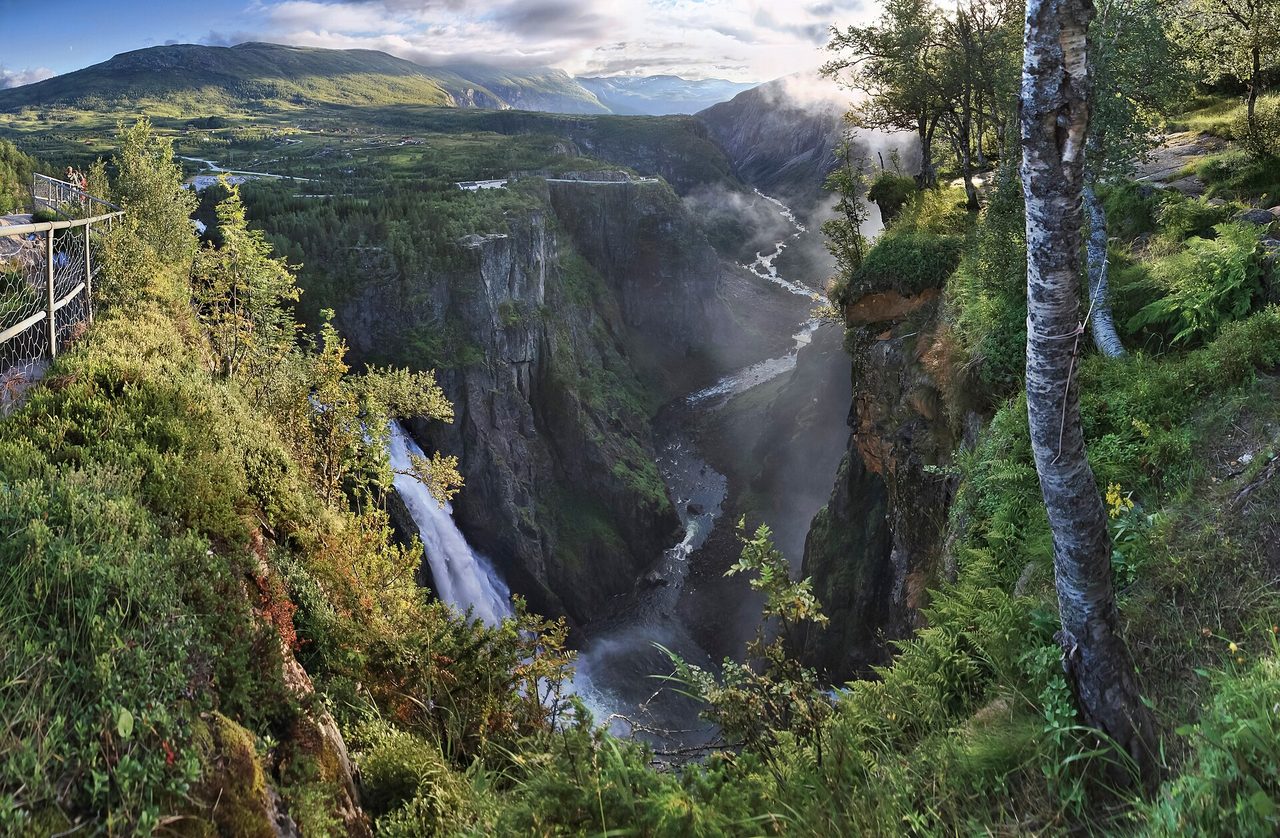
    • Long golden summer light over the peaks of the Lofoten Islands — Photo: Ximonic (Simo Räsänen) / CC BY-SA 4.0 via Wikimedia Commons.
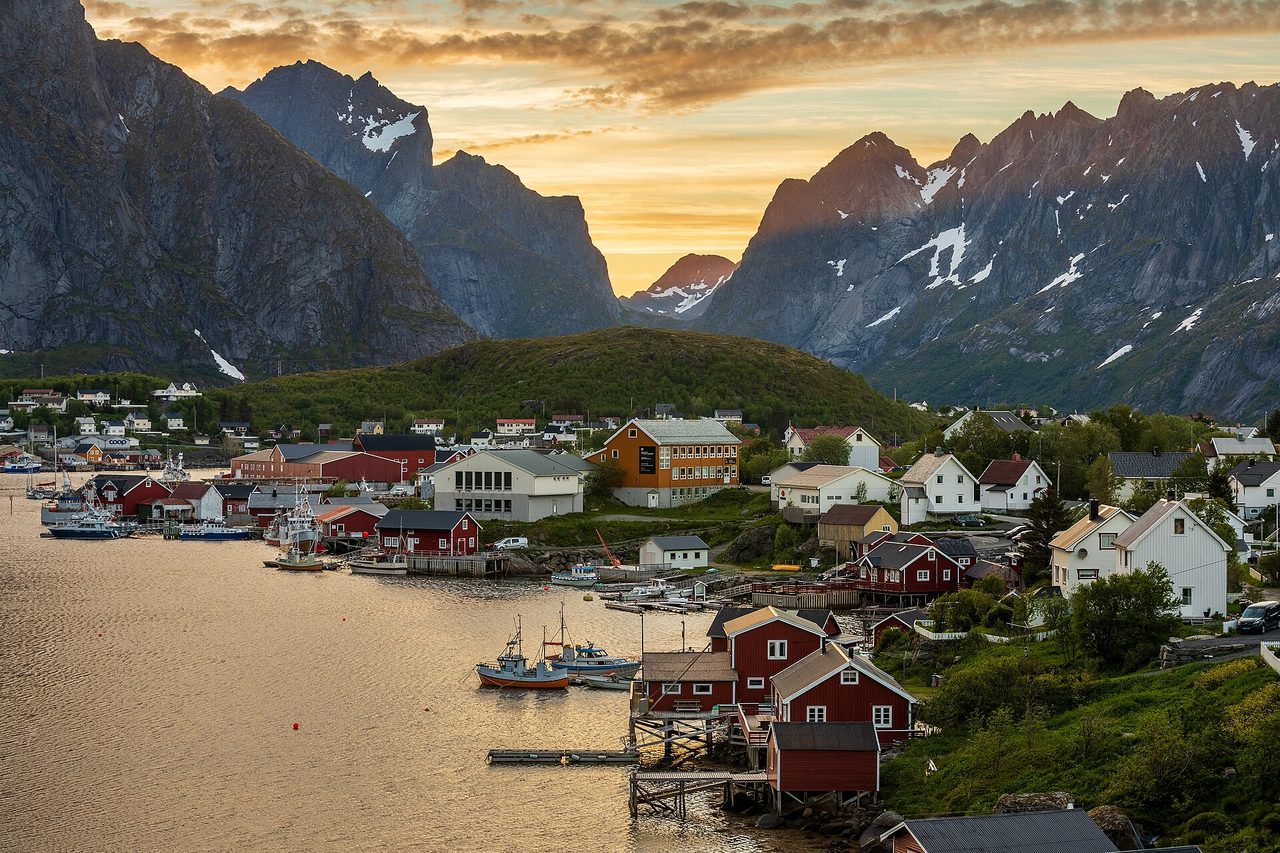
  • Hello world!

    Welcome to WordPress. This is your first post. Edit or delete it, then start writing!